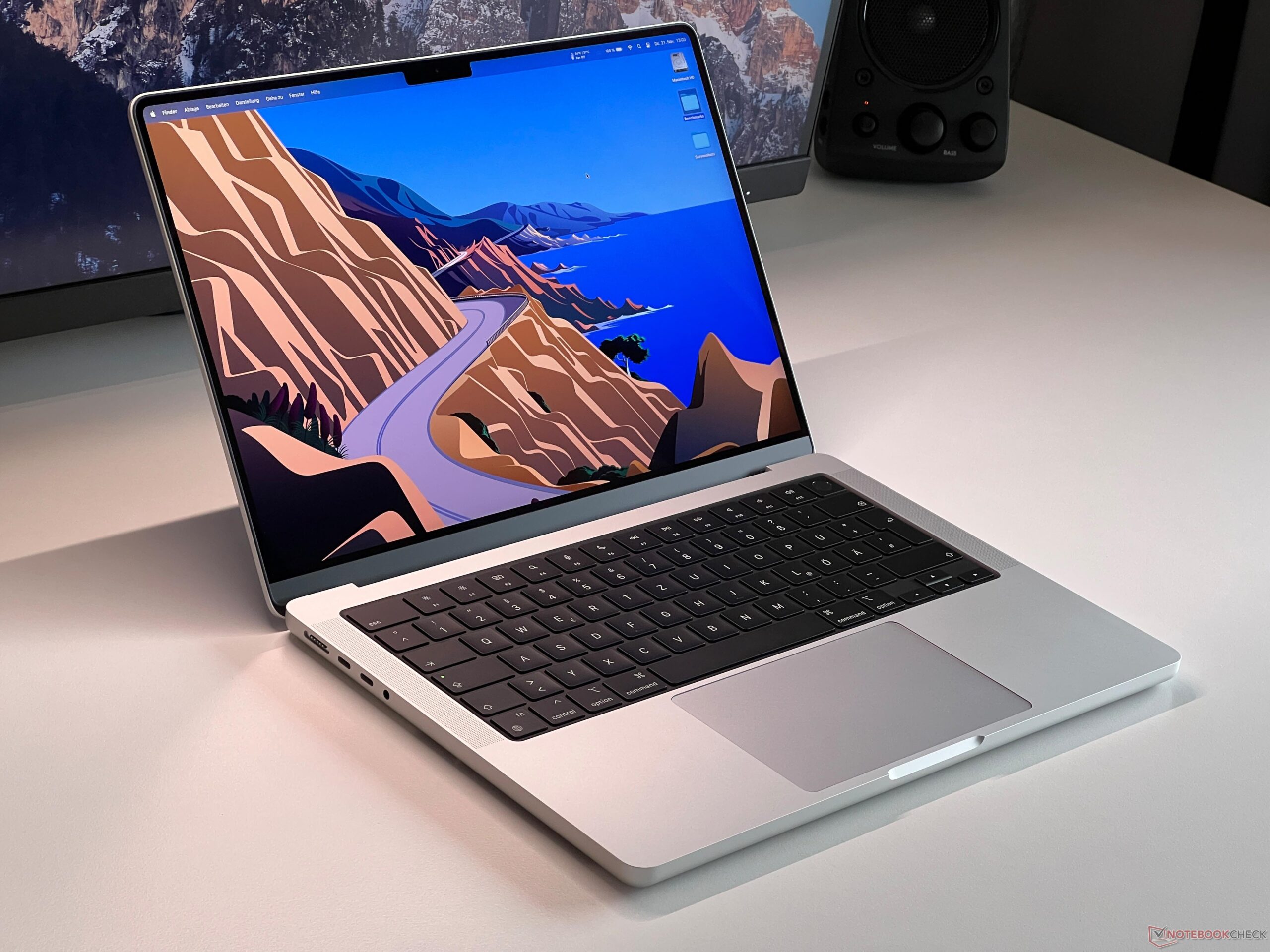

The Future Unleashed: A Full Review and Performance Deep Dive into the Anticipated MacBook Pro M4 (2025)
The landscape of professional computing has been irrevocably reshaped by Apple Silicon. From the revolutionary M1 to the iterative yet potent M3, each generation has pushed the boundaries of performance, power efficiency, and integrated capabilities. As we peer into the near future, the whispers and educated guesses converge on one highly anticipated machine: the MacBook Pro M4, expected to grace the market in 2025. This article aims to provide an exhaustive review and performance analysis, dissecting what we can realistically expect from this next-generation powerhouse, based on Apple’s relentless innovation cycle and the ever-increasing demands of professional workflows.
1. Introduction: The Dawn of a New Era in Pro Computing
The MacBook Pro M4 isn’t just another incremental update; it represents a significant leap in Apple’s custom silicon journey, poised to redefine what’s possible in a portable workstation. Building upon the foundational strengths of its predecessors, the M4 is anticipated to deliver an unprecedented blend of raw processing power, advanced graphics capabilities, and — crucially — a dramatically enhanced Neural Engine, catering to the burgeoning demands of AI and machine learning.
For professionals in fields ranging from 8K video editing and complex 3D rendering to intensive software development and scientific simulations, the M4 MacBook Pro will not merely be a tool but a strategic advantage. It promises to unlock new levels of productivity, creativity, and efficiency, all within the iconic, meticulously engineered chassis that has become synonymous with Apple’s pro-grade laptops. Our review will delve into every facet, from the expected architectural advancements to the real-world performance implications, connectivity, and the overall user experience.
2. Design and Build Quality: Refinement of an Icon
Apple’s design philosophy for its MacBook Pro line has matured into an understated elegance characterized by robust construction and functional aesthetics. For the 2025 M4 models, radical design overhauls are unlikely. Instead, we anticipate a continued refinement of the current acclaimed chassis.
- Materials and Finish: Expect the familiar, precision-machined aluminum unibody, offering exceptional rigidity and a premium feel. Apple may introduce subtle new finishes or slightly tweak existing ones, but the Space Gray and Silver options will likely remain core. The focus will be on sustainability, with an increased percentage of recycled materials in its construction.
- Form Factor: The existing 14-inch and 16-inch form factors are ideal for balancing portability with screen real estate for professionals. We might see further marginal reductions in thickness and weight, pushing the boundaries of what’s achievable while maintaining robust thermal management. Bezels around the display could become even thinner, though the current design is already quite minimalist.
- Durability and Longevity: Apple’s build quality is legendary, and the M4 MacBook Pro will undoubtedly continue this tradition. Its robust construction ensures it can withstand the rigors of professional use, from studio environments to on-location shoots, making it a reliable long-term investment.
3. The Display: A Window to Unparalleled Visuals
The Liquid Retina XDR display on current MacBook Pros is already an industry benchmark, and the M4 generation will only solidify this lead.
- Mini-LED Technology: The continuation of mini-LED backlighting is a certainty, delivering incredible contrast ratios (likely exceeding 1,000,000:1), true-to-life HDR content, and deep, inky blacks that rival OLED. Expect further refinements to the local dimming zones, potentially increasing their number for even finer control over light and shadow, resulting in zero-bloom performance.
- ProMotion Technology: Variable refresh rates up to 120Hz will remain a cornerstone, providing butter-smooth scrolling, incredibly responsive content creation, and an immersive gaming experience. The M4 chip’s enhanced GPU will fully leverage ProMotion, ensuring consistent high frame rates even in demanding applications.
- Brightness and Color Accuracy: Expect sustained brightness for SDR content around 600 nits and peak HDR brightness reaching or exceeding 1600 nits. Professional color spaces like P3 will be covered with absolute precision, making it an indispensable tool for photographers, videographers, and graphic designers who demand perfect color representation.
- Anti-Reflective Coating: The display will feature Apple’s advanced anti-reflective coating, minimizing glare in various lighting conditions and ensuring a clear, distraction-free viewing experience.
4. Performance: The M4 Silicon – A New Paradigm of Power
This is where the MacBook Pro M4 truly shines, with its custom-designed Apple Silicon at the heart of its capabilities. Based on the progression from M1 to M3, we can anticipate significant architectural advancements.
- Manufacturing Process: The M4 chip is highly likely to be fabricated on an even more advanced 3nm process node (e.g., TSMC N3P or an even newer variant) than the M3’s N3B. This translates to higher transistor density, improved power efficiency, and greater raw performance within the same thermal envelope.
- CPU Architecture:
- Cores: Expect an increased number of both performance (P-cores) and efficiency (E-cores), or a re-balancing to optimize for specific workloads. For instance, the M4 Pro/Max could see a 12-core or 14-core CPU configuration, building on the M3’s structure.
- IPC (Instructions Per Cycle): Architectural refinements will lead to a notable increase in IPC, meaning each core can do more work per clock cycle.
- Performance Gains: We can realistically anticipate a 20-30% leap in multi-core CPU performance over the M3 generation, and a solid 10-15% improvement in single-core performance. This will translate to:
- Video Editing: Blistering speeds for 4K and 8K ProRes/ProRes RAW workflows, real-time effects rendering, and faster exports in applications like Final Cut Pro, DaVinci Resolve, and Adobe Premiere Pro.
- 3D Rendering: Accelerated rendering times in Blender, Cinema 4D, and Octane Render, handling complex scenes with greater ease.
- Software Development: Faster code compilation, seamless execution of multiple virtual machines, and rapid development cycles for large projects.
- Scientific Computing: Significantly reduced computation times for complex simulations and data analysis.
- GPU Architecture:
- Cores and Capabilities: The integrated GPU will see a substantial boost in core count and architectural enhancements. Expect a minimum of 30-40% performance uplift over the M3 GPU.
- Hardware Ray Tracing: While introduced with M3, the M4’s ray tracing capabilities will be significantly matured and accelerated, providing more realistic lighting, reflections, and shadows in games and professional rendering applications.
- Mesh Shading: Improvements to mesh shading will enable developers to create more detailed and geometrically complex scenes with greater efficiency.
- Dynamic Caching: This innovative memory optimization technique will be further refined, ensuring optimal GPU utilization across diverse workloads, from gaming to professional visualization.
- Performance Scenarios:
- Gaming: High frame rates at native resolutions, even for demanding AAA titles, with enhanced visual fidelity.
- Professional Graphics: Smooth, real-time manipulation of massive 3D models, complex visual effects composition, and faster AI-powered image generation.
- Neural Engine: The AI Powerhouse:
- Dedicated AI Acceleration: This will be the M4’s standout feature. Apple is expected to dramatically increase the number of Neural Engine cores and their overall throughput, possibly doubling or even tripling the M3’s 16-core architecture and 18 trillion operations per second.
- On-Device AI: A hyper-efficient Neural Engine is crucial for Apple’s vision of on-device AI. This means faster and more private execution of machine learning tasks without relying on cloud processing.
- Applications:
- Generative AI: Rapid text-to-image, text-to-video, and code generation directly on the device.
- Smart Assistants: A significantly more responsive and intelligent Siri, capable of complex multi-step commands and context awareness.
- Video & Image Enhancement: Real-time AI noise reduction, upscaling, object recognition, and advanced computational photography features for professional video and photo editing.
- Productivity: Intelligent content summarization, predictive text, and advanced search capabilities across macOS.
- Developer Tools: Accelerating machine learning model training and inference for AI/ML engineers.
- Unified Memory Architecture:
- Bandwidth: Expect even higher memory bandwidth, reducing latency and allowing the CPU, GPU, and Neural Engine to access data simultaneously with greater efficiency.
- Capacity: The M4 Pro/Max configurations will likely support even larger unified memory capacities, potentially reaching up to 192GB or even 256GB for the most demanding applications, future-proofing the machine for years to come.
- Storage Performance:
- NVMe SSD: Apple’s integrated SSDs are already among the fastest in the industry. The M4 MacBook Pro will continue this trend, offering blazing-fast read/write speeds (e.g., 7-8 GB/s or more), crucial for working with large files and complex projects.
- Capacities: Base models will likely start at 512GB or 1TB, configurable up to 8TB for professionals requiring massive local storage.
- Thermal Management: With increased performance comes increased heat. Apple’s advanced thermal architecture, featuring efficient heat pipes and low-noise fans, will be refined to ensure the M4 chip can sustain peak performance for extended periods without throttling, remaining remarkably quiet under heavy load.
5. Connectivity and Ports: Comprehensive and Future-Ready
Apple has wisely listened to its professional users, re-introducing a robust port selection. The M4 MacBook Pro will continue this trend, ensuring broad compatibility and future-proofing.
- Thunderbolt 4 Ports: Multiple Thunderbolt 4 ports (likely 3-4, depending on the model) will provide unparalleled versatility, supporting external displays, high-speed storage, and a wide array of peripherals with bandwidth up to 40Gb/s. There’s an outside chance Apple might even incorporate early Thunderbolt 5 support if the standard gains traction by 2025.
- HDMI 2.1: A full-size HDMI 2.1 port will allow for direct connection to high-resolution external displays (up to 8K at 60Hz or 4K at 120Hz), critical for video professionals.
- SDXC Card Slot: The indispensable SDXC card slot will remain, offering convenient high-speed media ingestion for photographers and videographers.
- MagSafe 3: The beloved magnetic charging port will return, providing both convenience and a critical safety feature against accidental disconnections.
- Headphone Jack: A high-impedance headphone jack will cater to audio professionals.
- Wireless Connectivity: Expect Wi-Fi 7 (802.11be) for next-generation wireless speeds and reduced latency, alongside Bluetooth 5.3 or 5.4 for robust accessory connections.
6. Keyboard and Trackpad: The Gold Standard
Apple’s Magic Keyboard and Force Touch trackpad are widely regarded as industry leaders, and the M4 MacBook Pro will carry this legacy forward.
- Magic Keyboard: The keyboard will offer a comfortable and precise typing experience with good key travel and a satisfying tactile response. Backlighting will be uniform and adjustable.
- Force Touch Trackpad: The expansive Force Touch trackpad will provide incredibly accurate cursor control, multi-touch gestures, and pressure-sensing capabilities, making it intuitive for creative work.
7. Audio and Camera: Immersive and Crystal Clear
- Spatial Audio System: The six-speaker sound system with force-cancelling woofers will continue to deliver rich, immersive audio with Spatial Audio support, enhancing both media consumption and creative audio work.
- Microphones: A studio-quality three-mic array will ensure crystal-clear audio capture, essential for video conferencing, podcasting, and voiceovers, with enhanced noise reduction powered by the M4’s Neural Engine.
- 1080p FaceTime HD Camera: The camera will offer excellent video quality, further enhanced by the M4’s image signal processor and Neural Engine for improved low-light performance, dynamic range, and intelligent framing features.
8. Battery Life: All-Day Endurance
Apple Silicon is synonymous with power efficiency, and the M4 MacBook Pro will push this even further. Despite the significant performance gains, the more efficient 3nm process and optimized architecture of the M4 chip are expected to maintain or even slightly improve upon the already stellar battery life of its predecessors. Professionals can anticipate an impressive 18-22 hours of mixed-use battery life, freeing them from the constant search for power outlets and enabling true mobile productivity.
9. Software Experience: macOS and M4 Synergy
The true magic of Apple Silicon lies in its deep integration with macOS. The M4 MacBook Pro will launch with the latest iteration of macOS (likely a version beyond Sonoma, perhaps "Yukon" or similar), which will be meticulously optimized to harness the M4’s unique capabilities.
- AI-Powered Features: Expect a slew of new macOS features powered by the M4’s Neural Engine, from advanced on-device generative AI tools to more intelligent system automation, enhanced search, and real-time accessibility improvements.
- Pro App Optimization: Apple’s professional applications (Final Cut Pro, Logic Pro, Xcode) will be perfectly tuned to extract maximum performance from the M4, as will third-party creative and engineering software, thanks to ongoing developer support and Metal API advancements.
- Seamless Ecosystem: The integration with the broader Apple ecosystem (iPhone, iPad, Apple Watch) will be tighter than ever, offering seamless Handoff, Universal Control, and Continuity features that enhance productivity across devices.
10. Pricing and Configurations: Premium Performance, Premium Price
As a professional-grade machine, the MacBook Pro M4 will command a premium price.
- Base Models: Expect the 14-inch M4 MacBook Pro to start around $1599-$1999, with the 16-inch models beginning closer to $2499-$2799.
- Pro/Max Variants: Configurations with the M4 Pro and M4 Max chips, offering increased CPU/GPU cores and higher unified memory capacities (e.g., 36GB, 48GB, 64GB, 96GB, 128GB, 192GB), will scale upwards significantly, potentially reaching $6000-$8000+ for fully specced-out 16-inch M4 Max models.
- Build-to-Order Options: Customers will have extensive build-to-order options for unified memory and SSD storage, allowing them to tailor the machine precisely to their professional needs.
11. Target Audience: Who is the M4 MacBook Pro For?
The MacBook Pro M4 is unequivocally designed for professionals and power users who demand the absolute best in portable computing:
- Video Editors: Handling 8K footage, complex color grading, and VFX in real-time.
- 3D Artists & Animators: Rendering intricate scenes, sculpting high-poly models, and running simulations.
- Software Developers: Compiling large codebases, running virtual machines, and developing AI/ML applications.
- Audio Engineers: Managing massive track counts, complex plugins, and real-time audio processing.
- Photographers: Processing high-resolution RAW files, intricate retouching, and AI-powered enhancements.
- Scientists & Researchers: Running data analysis, simulations, and machine learning models.
- Architects & Engineers: Working with complex CAD models and rendering high-fidelity visualizations.
12. Pros and Cons (Anticipated):
Pros:
- Unrivaled Performance: Leading CPU, GPU, and Neural Engine capabilities.
- Exceptional Power Efficiency: Industry-leading battery life for all-day use.
- Stunning Liquid Retina XDR Display: Best-in-class visuals for creative work.
- Robust Connectivity: Comprehensive port selection (Thunderbolt 4, HDMI 2.1, SDXC, MagSafe).
- Premium Build Quality: Durable, elegant, and sustainable design.
- Deep Software Integration: macOS optimized to leverage M4’s full potential.
- Advanced AI Capabilities: Transformative on-device machine learning and generative AI.
- Excellent Audio and Camera: High-fidelity sound and sharp video conferencing.
Cons:
- High Price Point: A significant investment for many users.
- Limited Repairability: Apple’s integrated design makes user upgrades and repairs challenging.
- No External GPU Support: While the integrated GPU is powerful, some niche workflows might still benefit from dedicated eGPU options (though less critical with Apple Silicon).
- Closed Ecosystem: While an advantage for integration, it limits hardware customization.
13. Conclusion: The Definitive Professional Workstation of 2025
The anticipated MacBook Pro M4 (2025) is poised to be more than just an upgrade; it’s an evolution that solidifies Apple’s dominance in the professional portable computing space. By pushing the boundaries of custom silicon with an advanced manufacturing process, a significantly more powerful CPU and GPU, and a groundbreaking Neural Engine, Apple is creating a machine that is not only ready for today’s most demanding tasks but is also future-proofed for the burgeoning era of on-device AI.
For professionals, the M4 MacBook Pro will represent an unparalleled combination of raw power, extraordinary efficiency, and a meticulously crafted user experience. It will empower creators, developers, and innovators to push their limits, transforming complex workflows into seamless, real-time endeavors. While the price of entry will remain premium, the investment will yield a workstation that is robust, reliable, and capable of tackling any challenge thrown its way, truly unleashing the future of professional computing. The M4 MacBook Pro won’t just keep pace; it will set the pace.


