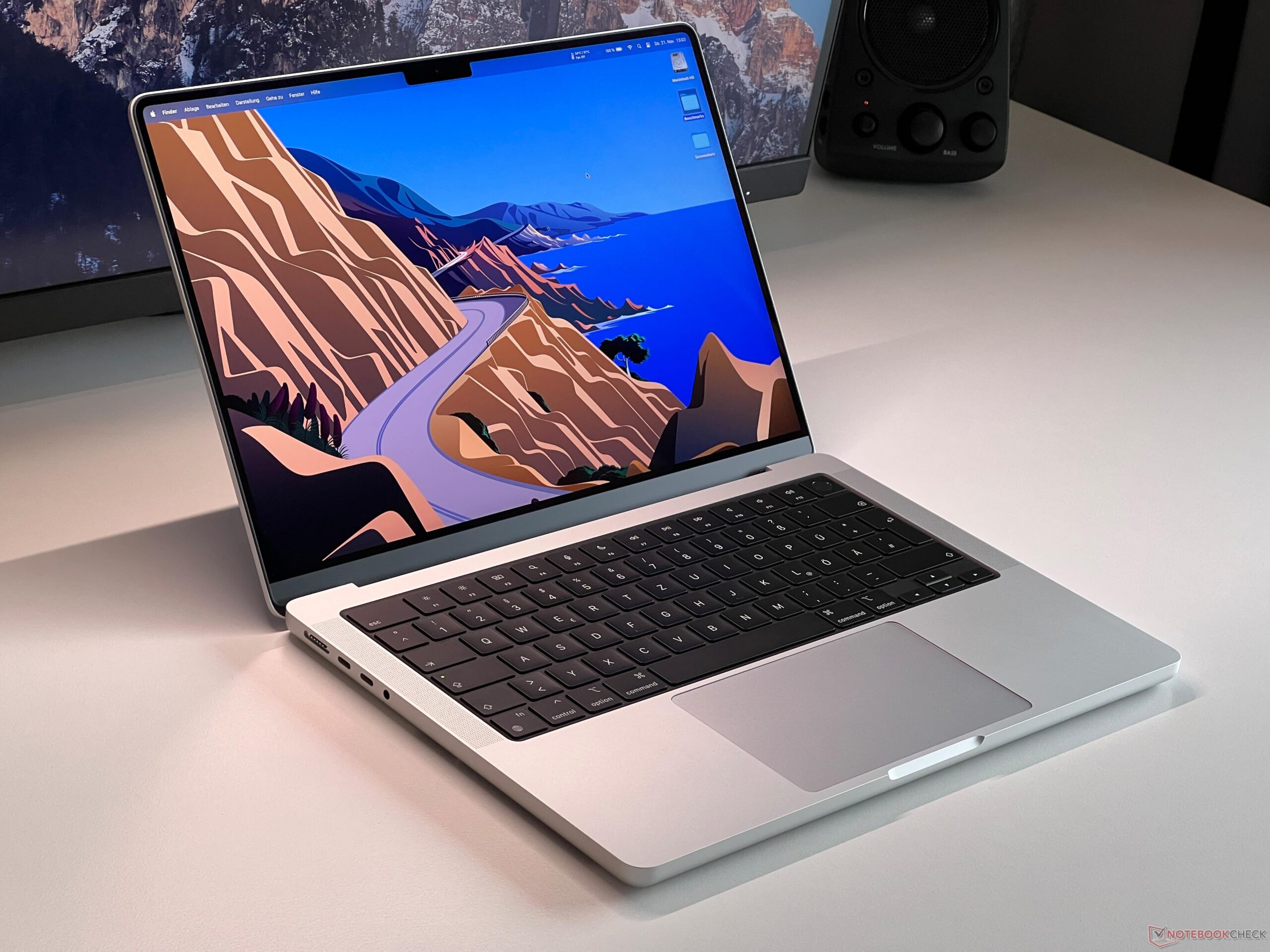

MacBook Pro M4: Price and Value Analysis 2025
Introduction: The Evolution of Power in Portable Form
Since its debut, Apple Silicon has fundamentally reshaped the landscape of portable computing, particularly with the MacBook Pro line. The transition from Intel to Apple’s in-house M-series chips marked a pivotal moment, delivering unprecedented levels of performance, power efficiency, and integrated capabilities. Each successive generation – M1, M2, and M3 – has built upon this foundation, pushing the boundaries of what a professional laptop can achieve. As we look towards 2025, the anticipation for the next iteration, the M4 chip, is reaching a fever pitch.
The MacBook Pro M4, expected to launch in late 2024 or early 2025, is poised to continue this trajectory of innovation. It will not merely be an incremental upgrade but a critical step forward, especially in an era where Artificial Intelligence (AI) and Machine Learning (ML) are rapidly integrating into every facet of our digital lives. This article will delve into a comprehensive price and value analysis of the MacBook Pro M4 in 2025, considering its anticipated technological advancements, market positioning, competitive landscape, and the diverse needs of its target audience. We aim to project its potential cost, assess its long-term value proposition, and determine who stands to benefit most from this powerhouse machine.
The Anticipated M4 Chip: A Deep Dive into Future Performance
The core of any MacBook Pro’s value lies in its silicon. The M4 chip, while still speculative, is expected to represent a significant leap over its M3 predecessor, particularly in areas critical for professional workflows and emerging technologies.
1. Architectural Foundation and Manufacturing Process:
Building on the success of TSMC’s 3-nanometer process used for the M3, the M4 is likely to leverage an enhanced variant, such as N3E or N3P, offering further improvements in transistor density, performance-per-watt, and overall efficiency. This refinement will allow Apple to pack more transistors into the same die space, enabling greater computational power without compromising battery life. The "Pro" and "Max" variants of the M4 will naturally scale up in core count and capabilities, adhering to Apple’s established tiered approach.
2. CPU Performance: Raw Power and Efficiency:
The M4 is expected to feature a next-generation CPU architecture, building upon the "Avalanche" and "Blizzard" cores seen in previous M-series chips. We anticipate substantial gains in both single-core and multi-core performance. Single-core improvements are crucial for everyday responsiveness and lightly threaded applications, while multi-core enhancements will directly benefit demanding tasks like video rendering, code compilation, and scientific simulations. Efficiency cores will also see a boost, contributing to even longer battery life during less intensive workloads, further cementing the MacBook Pro’s reputation for endurance.
3. GPU Prowess: Graphics and Compute Reinvented:
While M3 brought hardware-accelerated ray tracing and mesh shading, M4 will likely refine and amplify these capabilities. We can expect a higher core count, improved architecture, and potentially new acceleration blocks within the GPU. This will translate into:
- Faster Rendering: For 3D artists and animators using applications like Blender, Cinema 4D, or DaVinci Resolve.
- Enhanced Gaming: While not primarily a gaming machine, the M4’s GPU will further bridge the gap with dedicated gaming laptops, offering smoother frame rates and more realistic visuals in demanding titles, especially with Apple’s Metal API optimizations.
- Accelerated Scientific Computing: For researchers and engineers relying on GPU-accelerated libraries and simulations.
4. The Neural Engine: The AI Powerhouse:
This is where the M4 is truly expected to shine. As AI integration becomes paramount, the Neural Engine (NPU) will be the cornerstone of Apple’s strategy. We anticipate a significantly more powerful Neural Engine in the M4, potentially doubling or even tripling the performance of the M3’s NPU. This will unlock:
- On-device AI Processing: Faster and more private execution of AI tasks, such as advanced image and video editing features (e.g., real-time object removal, intelligent upscaling), enhanced voice recognition, and predictive text, without relying heavily on cloud services.
- Machine Learning Workloads: Data scientists and AI/ML developers will benefit from accelerated model training and inference directly on the device, reducing the need for expensive cloud compute instances for prototyping and smaller-scale projects.
- System-wide AI Enhancements: Deeper integration of AI into macOS, improving everything from search functionality and file organization to personalized user experiences.
5. Unified Memory Architecture: Bandwidth and Capacity:
Apple’s unified memory architecture is a fundamental differentiator, providing incredibly high bandwidth and low latency access for the CPU, GPU, and Neural Engine. The M4 is expected to further optimize this, potentially offering even higher peak bandwidth and the option for greater maximum RAM capacities (e.g., a standard maximum of 128GB or even 192GB for the M4 Max, depending on the tier). This is crucial for professionals dealing with massive datasets, high-resolution video, or complex 3D scenes that can quickly saturate conventional memory systems.
6. Media Engine: Unrivaled Video Processing:
The dedicated media engine, a hallmark of Apple Silicon, will likely see further refinements in the M4. This means even faster hardware acceleration for encoding and decoding popular video codecs like ProRes, H.264, and HEVC. For video professionals, this translates to seamless playback of multiple 8K ProRes streams and significantly quicker export times, directly impacting productivity and workflow efficiency.
MacBook Pro M4: Expected Hardware Enhancements Beyond the Chip
While the M4 chip is the star of the show, the MacBook Pro chassis and peripheral technologies will also see incremental, yet meaningful, upgrades to complement the new silicon.
1. Display Technology: Liquid Retina XDR Evolution:
The Liquid Retina XDR display is already industry-leading, but Apple rarely stands still. We might see minor improvements in peak brightness for HDR content, enhanced contrast ratios, or even more precise ProMotion variable refresh rate technology, further refining the visual experience for creative professionals who demand color accuracy and fluid motion.
2. Design and Connectivity: Refinements and Future-Proofing:
Apple’s design language for the current MacBook Pro is highly praised, so a radical overhaul is unlikely. Expect subtle refinements, perhaps slightly thinner bezels or minor weight reduction. Connectivity, however, is an area ripe for upgrades:
- Thunderbolt 5: The M4 MacBook Pro is highly likely to feature Thunderbolt 5 ports, offering up to 80 Gbps bidirectional bandwidth (and potentially 120 Gbps for display-specific applications), a significant leap from Thunderbolt 4. This will enable support for even higher resolution external displays, faster external storage, and more robust docking solutions.
- Wi-Fi 7 (802.11be): As Wi-Fi 7 becomes more prevalent, its inclusion in the M4 MacBook Pro is a given. This next-generation wireless standard offers significantly higher throughput, lower latency, and improved reliability, essential for professionals working with large files over networks or in dense wireless environments.
- Bluetooth 5.4: Minor improvements to Bluetooth for enhanced peripheral connectivity and audio quality.
- HDMI 2.1a: Potential upgrade for improved external display compatibility and features.
3. Battery Life: The Endurance Champion Continues:
Leveraging the M4’s enhanced power efficiency and Apple’s continued optimization of macOS, the MacBook Pro M4 is expected to maintain, if not slightly extend, its already class-leading battery life. This is a critical value proposition for professionals who need to work untethered for extended periods.
4. Cooling System: Sustained Performance:
To extract maximum performance from the M4 Pro and M4 Max chips, the MacBook Pro’s advanced thermal architecture will be crucial. Expect further refinements to the fan design and heat dissipation pathways to ensure sustained peak performance during intensive, prolonged workloads, preventing thermal throttling.
5. Software Integration: macOS and the M4 Synergy:
Apple’s vertical integration means macOS is meticulously optimized for Apple Silicon. With the M4, we’ll see macOS 15 (expected to launch in late 2024) specifically designed to harness the new chip’s capabilities, particularly its advanced Neural Engine. This means core system functions, built-in apps, and third-party software will leverage the M4’s power more efficiently, leading to a smoother, faster, and more intelligent user experience.
Price Predictions for the MacBook Pro M4 in 2025
Pricing is always a sensitive topic, especially for premium professional-grade hardware. Apple’s strategy tends to be stable, but factors like R&D costs, component prices, manufacturing expenses, and market positioning can influence the final retail figures. Based on current trends and the anticipated advancements, here are our price predictions for the MacBook Pro M4 in 2025:
1. Baseline Pricing (14-inch MacBook Pro M4):
The 14-inch MacBook Pro, typically the entry point for the "Pro" line, will likely see a slight increase or maintain its current pricing structure with improved base specifications.
- 14-inch MacBook Pro (M4 Pro chip, 18GB Unified Memory, 512GB SSD): Starting around $1,999 – $2,199 USD. This reflects a potential slight bump due to inflation and the significant M4 upgrade.
2. Higher-Tier 14-inch Models:
Configuring with higher core count M4 Pro or the M4 Max chip, increased unified memory (e.g., 36GB, 48GB, 64GB, 96GB), and larger SSDs (1TB, 2TB, 4TB, 8TB) will escalate the price significantly.
- 14-inch MacBook Pro (M4 Max chip, 36GB/48GB Unified Memory, 1TB SSD): Potentially ranging from $2,899 – $3,499 USD.
3. 16-inch MacBook Pro M4:
The 16-inch model, offering a larger display and superior thermal performance for sustained workloads, naturally commands a higher price.
- 16-inch MacBook Pro (M4 Pro chip, 18GB Unified Memory, 512GB SSD): Starting around $2,499 – $2,699 USD.
- 16-inch MacBook Pro (M4 Max chip, 36GB/48GB Unified Memory, 1TB SSD): Expected to range from $3,499 – $3,999 USD.
4. Fully Maxed-Out Configurations:
A fully loaded 16-inch MacBook Pro M4 Max with the highest core count, maximum unified memory (e.g., 96GB or 128GB+), and an 8TB SSD could easily breach the $6,000 – $7,500 USD mark, aligning with current top-tier configurations.
Factors Influencing Price:
- R&D Investment: Apple’s continuous investment in chip design is substantial.
- Manufacturing Costs: Advanced fabrication processes (like 3nm) are inherently expensive.
- Component Costs: Memory, storage, and display components contribute significantly.
- Inflation: General economic inflation can push prices up.
- Market Positioning: Apple positions the MacBook Pro as a premium, professional-grade tool.
Value Analysis 2025: Who is the M4 MacBook Pro For?
Value is not just about the price tag; it’s about the return on investment (ROI), the productivity gains, the longevity of the device, and how well it meets the specific needs of its user. In 2025, the M4 MacBook Pro’s value proposition will be exceptionally strong for several key demographics.
1. Creative Professionals: The Unquestionable Powerhouse
- Video Editors (DaVinci Resolve, Final Cut Pro, Adobe Premiere Pro): The M4’s enhanced media engine, powerful GPU, and high-bandwidth unified memory will enable seamless editing of multiple 8K ProRes streams, faster rendering, and real-time effects. The Liquid Retina XDR display’s color accuracy is critical. For these users, time is money, and the M4 MacBook Pro will significantly accelerate workflows, offering immense value.
- 3D Artists & Animators (Blender, Cinema 4D, ZBrush): The M4’s improved GPU and unified memory will accelerate rendering times, viewport performance, and complex simulations. On-device AI capabilities could assist with texture generation or object recognition, further enhancing productivity. The ability to work on complex scenes on a laptop without constant tethering to a power source is a huge benefit.
- Music Producers & Audio Engineers (Logic Pro, Ableton Live, Pro Tools): Low-latency audio processing, the ability to run hundreds of tracks with numerous plugins, and the sheer processing power for complex audio effects will be paramount. The silent operation of Apple Silicon under heavy load is also a significant advantage in a studio environment.
- Photographers (Adobe Photoshop, Lightroom): Faster image processing, AI-powered enhancements (e.g., content-aware fill, subject selection), and the superb display make it an ideal tool for high-volume photo editing.
Value Proposition for Creatives: Exceptional. The M4 MacBook Pro is purpose-built for these workflows, delivering performance that translates directly into saved time, higher quality output, and greater creative freedom. The cost is justified by the professional-grade results and efficiency.
2. Software Developers & Engineers: The Efficient Workstation
- Code Compilation & Development Environments: The M4’s raw CPU power will significantly reduce compilation times for large codebases, boosting developer productivity. Running multiple VMs (Docker, virtual machines) will be smoother and more efficient.
- AI/ML Engineers & Data Scientists: The dramatically improved Neural Engine makes the M4 MacBook Pro an ideal platform for developing, training (for smaller models/prototyping), and running inference on AI/ML models directly on the device. This provides privacy, reduces cloud computing costs, and allows for rapid iteration. The high unified memory capacity is also crucial for handling large datasets.
- General Productivity: Excellent battery life, robust security features, and the Unix-like environment of macOS make it a highly productive machine for daily coding, debugging, and system administration.
Value Proposition for Developers/Engineers: High. While some might prefer Linux for specific tasks, the M4 MacBook Pro offers a compelling balance of power, portability, battery life, and a strong development ecosystem, particularly for AI/ML workloads in 2025.
3. Business Users & Executives: Premium, Reliable, Secure
- Productivity & Multitasking: For users who juggle numerous applications, video conferences, and complex spreadsheets, the M4’s raw power ensures a consistently smooth and responsive experience.
- Battery Life & Portability: The ability to work a full day or longer without needing a charger is invaluable for frequent travelers and busy professionals.
- Security & Reliability: macOS is known for its robust security features, and Apple Silicon’s integrated secure enclave provides an additional layer of protection. The build quality and longevity contribute to a low total cost of ownership.
- Ecosystem Integration: Seamless integration with iPhone, iPad, and other Apple services enhances overall productivity and user experience.
Value Proposition for Business Users: Good to High. While the full power of the M4 might be overkill for basic office tasks, the reliability, security, exceptional battery life, and premium experience offer significant value for those who prioritize efficiency, longevity, and a high-quality user experience.
4. Students: Selective Value
- Engineering/CS Students: For those pursuing demanding fields that require heavy coding, CAD, or simulation, the M4 MacBook Pro can be a valuable, long-term investment.
- Creative Arts Students: For film, design, or music students, it offers professional-grade tools for their education.
- General Students: For basic productivity (writing, browsing), the MacBook Air or a more affordable Windows laptop would offer better value. The M4 Pro is generally overkill for this segment.
Value Proposition for Students: Situational. High for specific demanding courses, low for general use. The initial cost is a significant barrier for most students.
5. Casual Users & Gamers: Limited Value
- Casual Users: The M4 MacBook Pro is significantly overpowered and overpriced for browsing, email, and light productivity. A MacBook Air offers far better value.
- Gamers: While the M4’s GPU will be very capable, the macOS gaming ecosystem is still limited compared to Windows. Dedicated gaming laptops, though less portable and efficient, offer more raw gaming-specific features and a wider game library.
Value Proposition for Casual Users/Gamers: Low. The M4 MacBook Pro is not designed for these primary use cases.
Long-Term Value and Resale:
One of Apple’s enduring strengths is the longevity and strong resale value of its products. An M4 MacBook Pro purchased in 2025 will likely receive software updates for many years and retain a significant portion of its original value, making it a more sound long-term investment compared to many Windows counterparts. Its robust build quality also contributes to its durability over time.
Competitive Landscape in 2025
The M4 MacBook Pro will not exist in a vacuum. In 2025, the competitive landscape will be more intense than ever.
- Intel and AMD: Both Intel (with Lunar Lake/Arrow Lake) and AMD (with Zen 5/RDNA 4 architectures) will have made significant strides in power efficiency and performance, particularly in their integrated graphics and dedicated NPUs. They will likely be closing the efficiency gap, but Apple’s vertical integration will still give it an edge in overall system optimization.
- Qualcomm: The emergence of Snapdragon X Elite and its successors will bring robust ARM-based competition to the Windows laptop space. These chips will aim to replicate Apple’s efficiency and performance, potentially offering compelling alternatives, especially for general productivity and AI-centric tasks on Windows.
- Nvidia: For pure GPU power, especially for gaming and certain AI/ML workflows that heavily rely on CUDA, high-end Nvidia RTX laptops will still offer a compelling alternative, albeit at the cost of battery life, weight, and overall system integration.
Apple’s unique advantage remains its complete control over hardware and software, allowing for unparalleled optimization and a seamless user experience that competitors often struggle to match. The M4 will solidify this lead in critical areas like on-device AI and power efficiency.
Conclusion: A Forward-Looking Investment
The MacBook Pro M4 in 2025 is poised to be more than just a laptop; it will be a sophisticated, portable workstation capable of tackling the most demanding professional workloads and leading the charge in on-device AI. Its anticipated price, while premium, will be justified by its cutting-edge performance, industry-leading power efficiency, robust build quality, and the unparalleled synergy between hardware and software.
For creative professionals – video editors, 3D artists, music producers, and photographers – the M4 MacBook Pro will represent an almost indispensable tool, offering significant returns on investment through accelerated workflows and enhanced capabilities. Software developers, particularly those in AI/ML, will find immense value in its potent Neural Engine and unified memory architecture. Business users seeking reliability, security, and exceptional battery life will also find it a compelling, albeit expensive, choice.
While its value proposition for casual users and dedicated gamers remains limited, for the professional who demands the best, the MacBook Pro M4 will not merely keep pace with the future but actively define it. As AI permeates every aspect of computing, the M4’s enhanced Neural Engine will ensure the MacBook Pro remains at the forefront, offering privacy-preserving, on-device intelligence that will reshape how professionals work and create. The M4 MacBook Pro, in 2025, will be an investment in cutting-edge technology, future-proof performance, and enduring value.


