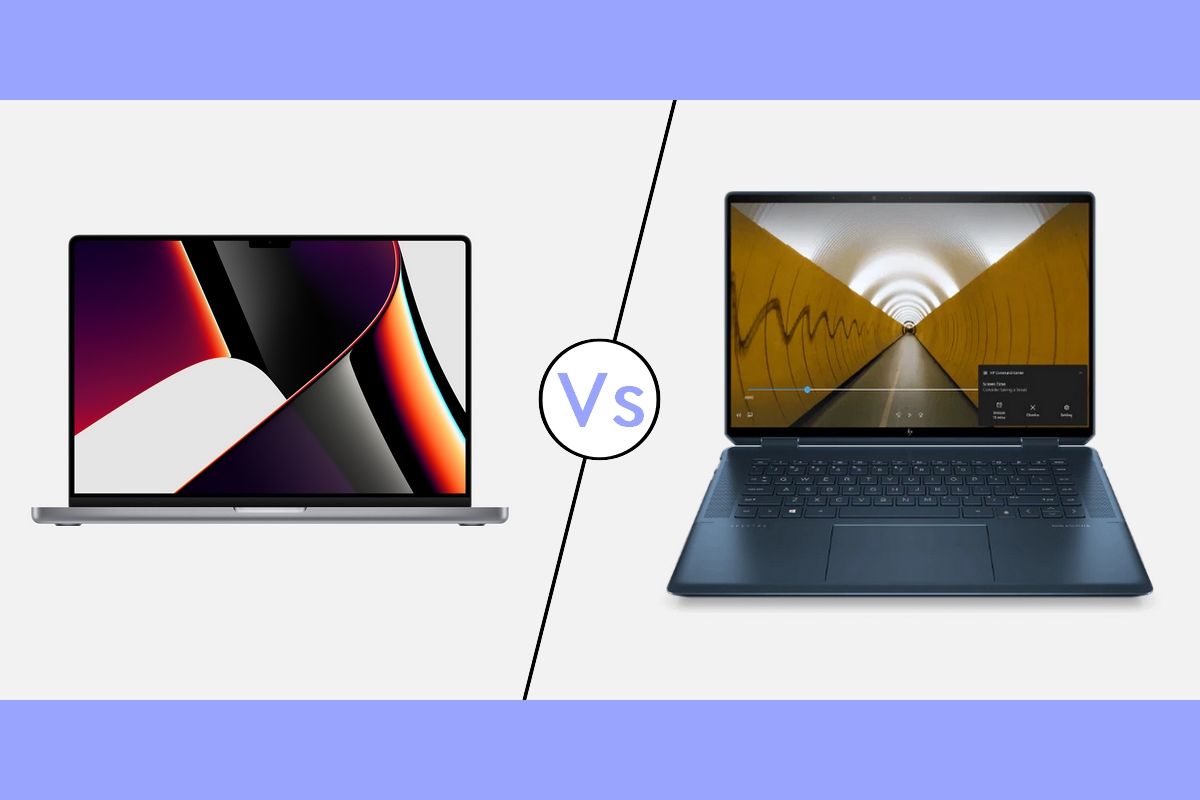

The Ultimate Showdown: MacBook Pro M4 vs. HP Spectre x360 Flagship – A Battle of Premium Computing Philosophies
In the ever-evolving landscape of high-performance laptops, two titans stand out, each representing a distinct philosophy in premium computing: Apple’s meticulously engineered MacBook Pro line, driven by its groundbreaking M-series silicon, and HP’s elegant, versatile, and feature-rich Spectre x360 series. As we look towards the anticipated release of the MacBook Pro powered by the M4 chip, the comparison with HP’s current flagship Spectre x360 becomes even more compelling. This isn’t merely a contest of specifications; it’s a deep dive into two different visions of what a top-tier laptop should be, catering to diverse professional and creative needs.
This comprehensive article will dissect every critical aspect of these two formidable machines, from their core processing power and design aesthetics to their display technologies, battery life, software ecosystems, and overall user experience. Our goal is to provide a nuanced understanding of where each device excels, helping discerning users make an informed decision about which premium laptop best aligns with their workflow and lifestyle.
1. Introduction: Two Paths to Premium Performance
The modern laptop market is saturated with options, but at the very apex, where performance, design, and user experience converge, the choices narrow significantly. The MacBook Pro has long been synonymous with professional-grade performance, especially in creative fields, and Apple’s transition to its in-house M-series chips has only solidified this reputation. The hypothetical MacBook Pro M4, building upon the formidable M3, M2, and M1 generations, is expected to push the boundaries of power efficiency and raw computational prowess even further, particularly in AI and machine learning tasks.
On the other side of the ring is the HP Spectre x360 flagship, a testament to Windows’ enduring versatility and HP’s commitment to design innovation. This convertible powerhouse blends the functionality of a traditional laptop with the flexibility of a tablet, often sporting cutting-edge Intel Core Ultra or AMD Ryzen processors, stunning OLED displays, and a host of premium features tailored for productivity, creativity, and multimedia consumption. It’s a device that doesn’t just aim to perform; it aims to adapt.
The choice between these two isn’t about which is objectively "better" in every single metric, but rather which ecosystem, design ethos, and feature set aligns more closely with an individual’s specific demands. Let’s embark on this detailed comparison.
2. Design & Build Quality: Aesthetics, Ergonomics, and Materials
Both the MacBook Pro M4 and the HP Spectre x360 flagship exude premium quality, but they achieve it through markedly different design languages.
MacBook Pro M4 (Anticipated Design):
Apple’s design philosophy is one of minimalist elegance and uncompromising structural integrity. The MacBook Pro is crafted from a single block of recycled aluminum, resulting in a unibody enclosure that feels incredibly solid, durable, and resistant to flex. Its iconic, clean lines and understated aesthetic have become a benchmark for laptop design. The anticipated M4 generation is unlikely to deviate significantly from this tried-and-true formula, focusing instead on internal refinements.
Key design elements include:
- Unibody Aluminum: Provides exceptional rigidity and a premium feel.
- Precision Engineering: Tight tolerances, seamless construction, and a sense of meticulous craftsmanship.
- Minimalist Aesthetic: Clean lines, subtle branding, and a focus on function over superfluous ornamentation.
- Portability (Relative): While not the lightest, the weight is evenly distributed, contributing to a sense of solidity rather than bulk.
- MagSafe: A return to the beloved magnetic charging port, enhancing safety and convenience.
HP Spectre x360 Flagship:
The Spectre x360, particularly its flagship models, takes a more flamboyant and distinctive approach to design. HP often incorporates a "gem-cut" or angular design, with sharp, chamfered edges and a two-tone finish that sets it apart from the more conservative designs of its competitors. Its defining feature is the 360-degree hinge, allowing it to transform from a laptop into a tablet, tent, or stand mode.
Key design elements include:
- CNC Machined Aluminum: High-quality metal construction, often with unique finishes (e.g., Nightfall Black with Copper Luxe accents).
- Gem-Cut Design: Distinctive angular edges and corners that are visually striking and aid in grip.
- 360-Degree Hinge: The central innovation, offering unparalleled versatility for various use cases.
- Thinner and Lighter: HP often prioritizes a more svelte profile, making it highly portable.
- Integrated Stylus: Many Spectre models include or support an active pen, often with magnetic attachment to the side.
Comparison:
The MacBook Pro offers a timeless, robust, and functional design that prioritizes build quality and a consistent user experience. It’s a workhorse that looks good doing it. The Spectre x360, on the other hand, is a design statement—bold, adaptable, and brimming with personality. Its convertible nature is a game-changer for those who need a device that can switch between roles seamlessly. While both are premium, the MacBook Pro feels like a precision instrument, whereas the Spectre x360 feels like a luxury gadget that offers more interactive modes.
3. Performance & Processor Architecture: Raw Power Meets Efficiency
This is arguably the most critical battleground, particularly with the anticipation surrounding Apple’s M4 chip and Intel’s advancements with its Core Ultra processors.
MacBook Pro M4 (Anticipated Performance):
The M4 chip will be the latest iteration of Apple’s ARM-based silicon, building upon the revolutionary performance-per-watt of its predecessors. Apple Silicon integrates the CPU, GPU, Neural Engine, unified memory architecture, and various media engines onto a single System on a Chip (SoC).
Expected M4 advancements:
- Enhanced CPU Performance: Further improvements in single-core and multi-core performance, likely through architectural refinements and potentially higher clock speeds or more efficient cores.
- Superior GPU Performance: Significant gains in graphical rendering, crucial for video editing, 3D modeling, and gaming (though macOS gaming is still niche). The unified memory architecture gives the GPU direct access to a large, fast memory pool, reducing latency.
- Next-Gen Neural Engine: A substantially more powerful Neural Engine designed for accelerating AI and machine learning tasks on-device, crucial for features like advanced image processing, video effects, and intelligent assistant capabilities.
- Unrivaled Power Efficiency: The hallmark of Apple Silicon, allowing for sustained high performance without excessive heat generation and delivering exceptional battery life.
- Specialized Media Engines: Dedicated hardware accelerators for video encoding/decoding (ProRes, H.264, HEVC), ensuring lightning-fast media workflows.
In real-world terms, the MacBook Pro M4 is expected to offer unparalleled performance for professional creative applications (Final Cut Pro, Logic Pro, DaVinci Resolve, Adobe Creative Suite), scientific computing, and complex software development, all while consuming remarkably little power.
HP Spectre x360 Flagship (Intel Core Ultra / AMD Ryzen):
HP’s flagship Spectre x360 models typically feature the latest generation of Intel Core Ultra processors (e.g., Meteor Lake, Lunar Lake) or high-end AMD Ryzen chips (e.g., Hawk Point, Strix Point). These processors represent the pinnacle of x86 architecture, with their own set of innovations.
Key aspects of current flagship x86 chips:
- Hybrid Architecture (Intel Core Ultra): Combining Performance-cores (P-cores) and Efficient-cores (E-cores) for optimized workload distribution and power management.
- Integrated NPU (Neural Processing Unit): Intel’s AI Boost NPU and AMD’s Ryzen AI engine are dedicated hardware for accelerating AI tasks, similar to Apple’s Neural Engine, enabling features like background blur, eye contact correction, and transcription.
- Improved Integrated Graphics: Intel’s Arc graphics (in Core Ultra) and AMD’s RDNA 3/3.5 graphics offer significantly better performance than previous generations, capable of handling light gaming and demanding creative tasks surprisingly well.
- Broad Software Compatibility: The x86 architecture ensures universal compatibility with virtually all Windows applications and games.
- Cooling Systems: HP employs sophisticated thermal management systems (vapor chambers, multiple fans) to ensure sustained performance under heavy load, though this often comes with more audible fan noise than a MacBook Pro.
Comparison:
For raw, sustained multi-core performance in professional applications, especially those optimized for Apple Silicon, the MacBook Pro M4 is likely to maintain its lead due to its unified memory architecture and superior power efficiency. The M4’s integrated GPU, benefiting from the unified memory, often outperforms even discrete GPUs found in some thin-and-light Windows laptops.
However, the HP Spectre x360 with its Core Ultra or Ryzen AI chip offers incredible versatility. Its NPU allows it to compete in on-device AI acceleration, and its integrated graphics are now very capable for mainstream tasks and even some gaming. For users who need specific x86-only software, or who prioritize gaming, the Spectre x360 remains the clear choice. The x360’s cooling systems are effective, but may lead to more fan noise than the typically silent MacBook Pro under similar loads.
4. Display & Visual Experience: Immersion and Interaction
The display is a primary interface for any laptop, and both Apple and HP equip their flagships with stunning visual technologies.
MacBook Pro M4 (Liquid Retina XDR):
Apple’s Liquid Retina XDR display is a marvel of engineering. Utilizing mini-LED backlighting, it delivers:
- Exceptional Contrast: Deep blacks and bright whites, approaching OLED-like contrast ratios.
- High Brightness: Sustained full-screen brightness for HDR content, making it ideal for creative professionals working with HDR video or photography.
- ProMotion Technology: Adaptive refresh rates up to 120Hz, providing incredibly smooth scrolling and responsiveness, while intelligently lowering the refresh rate for static content to save power.
- Superb Color Accuracy: Factory-calibrated with wide color gamut (P3), essential for color-critical work.
- The Notch: A controversial design choice that houses the webcam, but generally fades into the background during use.
HP Spectre x360 Flagship (OLED / IPS Options):
HP’s flagship Spectre x360 models typically offer stunning OLED panels, or occasionally high-resolution IPS alternatives:
- True Blacks (OLED): Each pixel emits its own light, allowing for perfect blacks and infinite contrast ratios. This results in incredibly vibrant and lifelike images.
- Vibrant Colors: OLED panels typically offer broader color gamuts and punchier colors, making media consumption and creative work a joy.
- Touchscreen & Stylus Support: A core advantage, allowing for direct interaction with the screen using fingers or the HP Pen for drawing, note-taking, and navigating Windows in tablet mode.
- High Resolution: Often QHD+ or 4K resolutions, providing incredible sharpness and detail.
- Anti-Reflection Coatings: HP often applies effective anti-glare coatings, improving usability in various lighting conditions.
Comparison:
Both offer truly magnificent visual experiences. The MacBook Pro’s mini-LED excels in sustained brightness and HDR performance, making it a professional’s dream for color grading and video editing. Its ProMotion is incredibly smooth. The Spectre x360’s OLED panel, however, delivers superior contrast and true blacks, which some users find more immersive for movies and general content consumption.
The most significant differentiator is the touchscreen and stylus support on the Spectre x360. For artists, designers, students who take digital notes, or anyone who values the direct, intuitive interaction a touchscreen provides, the Spectre x360 is undeniably superior. The MacBook Pro, despite its power, remains a traditional clamshell laptop in this regard, lacking touch input.
5. Keyboard, Trackpad & Input Methods: Tactile Feedback and Precision
The input devices are crucial for daily interaction, and both manufacturers provide top-tier experiences.
MacBook Pro M4 (Magic Keyboard & Force Touch Trackpad):
- Magic Keyboard: Apple’s scissor-switch mechanism offers a comfortable and consistent typing experience with good key travel and satisfying tactile feedback. It’s backlit and generally regarded as one of the best laptop keyboards.
- Force Touch Trackpad: Unrivaled in its size, precision, and haptic feedback. It uses pressure sensors and haptic engines to simulate clicks, offering consistent feedback across the entire surface. macOS gestures are incredibly intuitive and fluid.
- Touch ID: Integrated into the power button for secure and fast authentication.
HP Spectre x360 Flagship (Premium Keyboard & Haptic/Physical Trackpad):
- Backlit Keyboard: HP’s keyboards are generally well-regarded, offering comfortable key travel and a pleasant typing experience, though opinions can vary on the specific feel. Some models include dedicated privacy keys.
- Large Trackpad: Flagship Spectre models feature large, precise trackpads, often using a physical clicking mechanism or, in newer models, haptic feedback similar to Apple’s. Windows Precision drivers ensure excellent multi-touch gesture support.
- Touchscreen & HP Pen: As mentioned, the 2-in-1 design enables direct screen interaction. The HP Pen often boasts tilt support and pressure sensitivity, making it excellent for artistic endeavors or detailed note-taking.
- Windows Hello: Facial recognition via an IR camera and/or a fingerprint reader for secure login.
Comparison:
For pure typing and trackpad experience in a traditional laptop mode, the MacBook Pro’s combination of the Magic Keyboard and Force Touch trackpad is often considered the gold standard, particularly for its seamless gesture integration with macOS.
However, the Spectre x360 offers a more diverse input ecosystem. While its keyboard and trackpad are excellent, the added dimension of a high-quality touchscreen and active stylus makes it significantly more versatile for certain workflows. For artists, designers, or anyone who enjoys the flexibility of direct screen interaction, the Spectre x360 has a clear advantage.
6. Battery Life & Portability: Enduring Power and Mobile Design
Portability and battery longevity are paramount for users on the go.
MacBook Pro M4 (Anticipated Battery Life):
This is an area where Apple Silicon has consistently dominated. The M-series chips are incredibly power-efficient, leading to:
- Exceptional Battery Life: Expect the MacBook Pro M4 to offer industry-leading battery life, potentially exceeding 18-22 hours of mixed usage, depending on the model (14-inch vs. 16-inch). This means users can often go an entire workday, or even two, without needing to reach for a charger.
- Efficient Performance: Sustained high performance even on battery power, without significant throttling.
- MagSafe & USB-C Charging: Flexible charging options.
HP Spectre x360 Flagship:
HP’s Spectre x360 models, especially those with OLED displays and powerful Intel Core Ultra processors, have made significant strides in battery life, but they generally cannot match the endurance of Apple Silicon.
- Good to Excellent Battery Life: Typically offers 10-14 hours of mixed usage, which is very respectable for a Windows laptop of its caliber.
- Fast Charging: Often supports fast charging technologies, getting you a significant charge in a short amount of time via USB-C Power Delivery.
- Power Consumption: Powerful x86 chips and vibrant OLED screens can be more power-hungry than Apple’s integrated solution, especially under heavy load.
Comparison:
For sheer longevity away from a power outlet, the MacBook Pro M4 is expected to remain the undisputed champion. Its M-series chip architecture is simply more power-efficient. However, the Spectre x360 still offers excellent battery life for a Windows machine, and its fast-charging capabilities help mitigate the difference. In terms of physical portability, the Spectre x360 often has a slightly thinner and lighter profile, particularly the 14-inch models, making it marginally easier to slip into a bag. The 360-degree hinge also adds to its versatility in cramped spaces.
7. Software & Ecosystem: Operating Systems and Integration
The choice between macOS and Windows is often the most fundamental decision, influencing everything from app availability to workflow.
MacBook Pro M4 (macOS):
- Optimized Ecosystem: macOS is tightly integrated with Apple’s hardware, leading to exceptional performance, stability, and security. Updates are generally seamless.
- Professional Software: A strong reputation in creative industries, with highly optimized applications like Final Cut Pro, Logic Pro, DaVinci Resolve, and Adobe Creative Suite. Many pro apps are specifically tuned for Apple Silicon.
- Apple Ecosystem Integration: Seamless continuity features with iPhone, iPad, and Apple Watch (Handoff, Universal Clipboard, AirDrop, Sidecar for external display).
- Security & Privacy: Robust built-in security features and a strong emphasis on user privacy.
- Gaming: While improving, macOS remains a niche platform for gaming compared to Windows.
HP Spectre x360 Flagship (Windows 11):
- Universal Compatibility: Windows 11 offers unparalleled compatibility with a vast array of software, hardware peripherals, and, crucially, games.
- Versatility: The operating system is designed to work across various form factors, from traditional desktops to 2-in-1s like the Spectre, with dedicated tablet modes and touch optimizations.
- Gaming Powerhouse: The dominant platform for PC gaming, with access to the largest library of titles.
- Business & Productivity: Widely adopted in enterprise environments, offering robust tools for productivity and collaboration.
- HP Software: Often includes HP-specific utilities for managing performance, privacy (e.g., HP Command Center, HP Sure View Reflect privacy screen), and security.
- Openness: Greater freedom in customization and access to the file system.
Comparison:
This is a philosophical divide. macOS offers a polished, secure, and highly optimized experience, particularly for creative professionals within the Apple ecosystem. Its performance-per-watt is unmatched, making it ideal for sustained, intensive tasks.
Windows 11, on the other hand, is the king of versatility and compatibility. The Spectre x360 leverages Windows’ strengths with its touch and pen input, offering a more adaptable computing experience. For gamers, business users requiring specific enterprise software, or those who simply prefer the openness and vast software library of Windows, the Spectre x360 is the obvious choice. The HP-specific software also adds value, particularly for security and managing the convertible features.
8. Connectivity, Ports & Audio: Input/Output and Immersive Sound
Connectivity is vital for expanding a laptop’s utility.
MacBook Pro M4:
- Ports: Typically includes multiple Thunderbolt ports (USB-C), an HDMI port, an SDXC card slot, and a 3.5mm headphone jack. The number of Thunderbolt ports varies by model.
- Wireless: Wi-Fi 6E (or Wi-Fi 7 in the future) and Bluetooth 5.3 for robust wireless connectivity.
- Audio: Six-speaker sound system with force-cancelling woofers, supporting Spatial Audio with Dolby Atmos. Delivers exceptional clarity, bass, and an immersive soundstage for a laptop.
- Webcam: 1080p FaceTime HD camera, enhanced by the M-series ISP for improved image quality in low light.
HP Spectre x360 Flagship:
- Ports: Often more diverse, including multiple Thunderbolt ports (USB-C), at least one USB-A port (a welcome inclusion for legacy devices), an HDMI port, and a headphone/mic combo jack. Some models might include a microSD card slot.
- Wireless: Latest Wi-Fi standards (Wi-Fi 6E, potentially Wi-Fi 7) and Bluetooth 5.3.
- Audio: Tuned by Bang & Olufsen, often featuring dual or quad speakers. Delivers rich, clear audio, though perhaps not quite the bass presence of the MacBook Pro.
- Webcam: Typically a 5MP or 8MP webcam, often with advanced features like HP GlamCam, AI-powered auto framing, and privacy shutters (physical or electronic). Windows Hello IR camera for facial recognition.
Comparison:
The Spectre x360 often wins on port diversity, particularly the inclusion of a full-size USB-A port, which many users still find indispensable without needing a dongle. Both offer cutting-edge wireless standards.
In terms of audio, both are excellent. The MacBook Pro’s 6-speaker system and Spatial Audio are arguably class-leading for a laptop, offering a truly immersive experience. The B&O-tuned speakers on the Spectre x360 are also very good, delivering clear and balanced sound.
For webcams, the Spectre x360 often has a higher-resolution sensor (e.g., 5MP or 8MP vs. 1080p for MacBook Pro) and includes useful privacy features and AI enhancements, making it potentially better for video conferencing, especially with its Windows Hello capabilities.
9. Price, Value & Target Audience: Who Is It For?
Both are premium devices, commanding premium prices, but their value propositions differ.
MacBook Pro M4 (Anticipated Pricing):
- Premium Price Point: MacBook Pro models are notoriously expensive, especially when configured with higher RAM and storage. The M4 generation is expected to continue this trend.
- Long-Term Value: Excellent build quality, software support, and strong resale value contribute to its long-term value.
- Target Audience: Creative professionals (video editors, graphic designers, music producers), developers, researchers, and users who prioritize raw performance, power efficiency, and seamless integration within the Apple ecosystem. Those who need a highly reliable workhorse that can handle intensive tasks for hours on end.
HP Spectre x360 Flagship:
- Premium Price Point: Also a premium device, but often offers more configuration options and can sometimes be found with discounts, making it potentially more accessible at certain tiers.
- Versatility Value: Its 2-in-1 form factor, touchscreen, and stylus add significant value for specific workflows.
- Target Audience: Professionals who need versatility (laptop, tablet, tent modes), users who value touch and pen input, business users, students, multimedia enthusiasts, and those who require Windows compatibility for specific software or gaming. Individuals who appreciate cutting-edge design and a feature-rich experience.
Comparison:
The MacBook Pro M4 is an investment in pure, unadulterated performance and a highly refined, integrated ecosystem. Its value comes from its longevity, power, and efficiency for specific professional tasks. The Spectre x360 offers value through its incredible versatility, innovative design, and broader software compatibility, making it a compelling choice for a wider range of users who might benefit from its multi-modal functionality. While both are expensive, the Spectre x360 often presents more options for customization that can influence the final price, and its unique features might justify its cost for users who truly utilize them.
10. Conclusion: Choosing Your Premium Companion
The comparison between the anticipated MacBook Pro M4 and the HP Spectre x360 flagship is not about declaring a single "winner," but rather identifying which machine is the better fit for different users. Both represent the zenith of laptop engineering, offering unparalleled experiences in their respective domains.
Choose the MacBook Pro M4 if:
- You are a creative professional (video editor, music producer, graphic designer, 3D artist) who needs the absolute best in sustained performance, power efficiency, and seamless workflow within applications optimized for Apple Silicon.
- You prioritize industry-leading battery life, often working away from power outlets for extended periods.
- You are deeply invested in the Apple ecosystem and value its tight integration across devices.
- You prefer a minimalist, robust, and timeless design with an industry-leading trackpad and keyboard.
- You primarily use macOS-native applications and do not require extensive Windows-only software or PC gaming.
Choose the HP Spectre x360 Flagship if:
- You require the versatility of a 2-in-1 convertible laptop, utilizing tablet, tent, or stand modes for presentations, content consumption, or creative work.
- Touchscreen and active stylus support are crucial for your workflow (drawing, note-taking, annotating documents).
- You need universal compatibility with Windows software, including a vast library of games.
- You appreciate a bold, distinctive design with premium finishes and advanced privacy features.
- You need specific legacy ports (like USB-A) without relying on adapters.
- You want an excellent webcam experience for video conferencing with AI enhancements and robust security features like Windows Hello.
In essence, the MacBook Pro M4 is poised to be the ultimate performance and efficiency powerhouse for dedicated professionals within the Apple ecosystem, a refined instrument designed for peak output. The HP Spectre x360 flagship is the epitome of versatility and adaptability, a Swiss Army knife of premium computing that caters to a broader range of needs with its innovative design and comprehensive feature set.
Ultimately, the best laptop is the one that empowers you to do your best work, seamlessly integrating into your life and amplifying your capabilities. Both of these machines promise to do exactly that, albeit through different, yet equally compelling, paths. The future of premium computing is indeed bright, offering consumers more powerful and diverse options than ever before.


