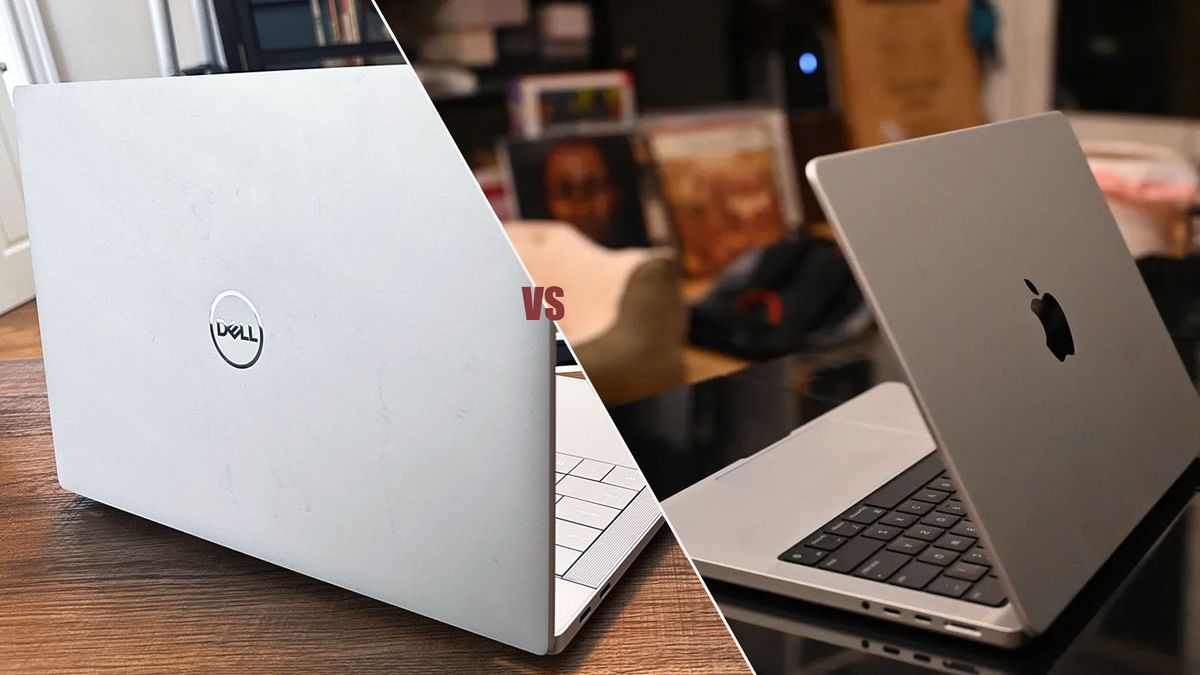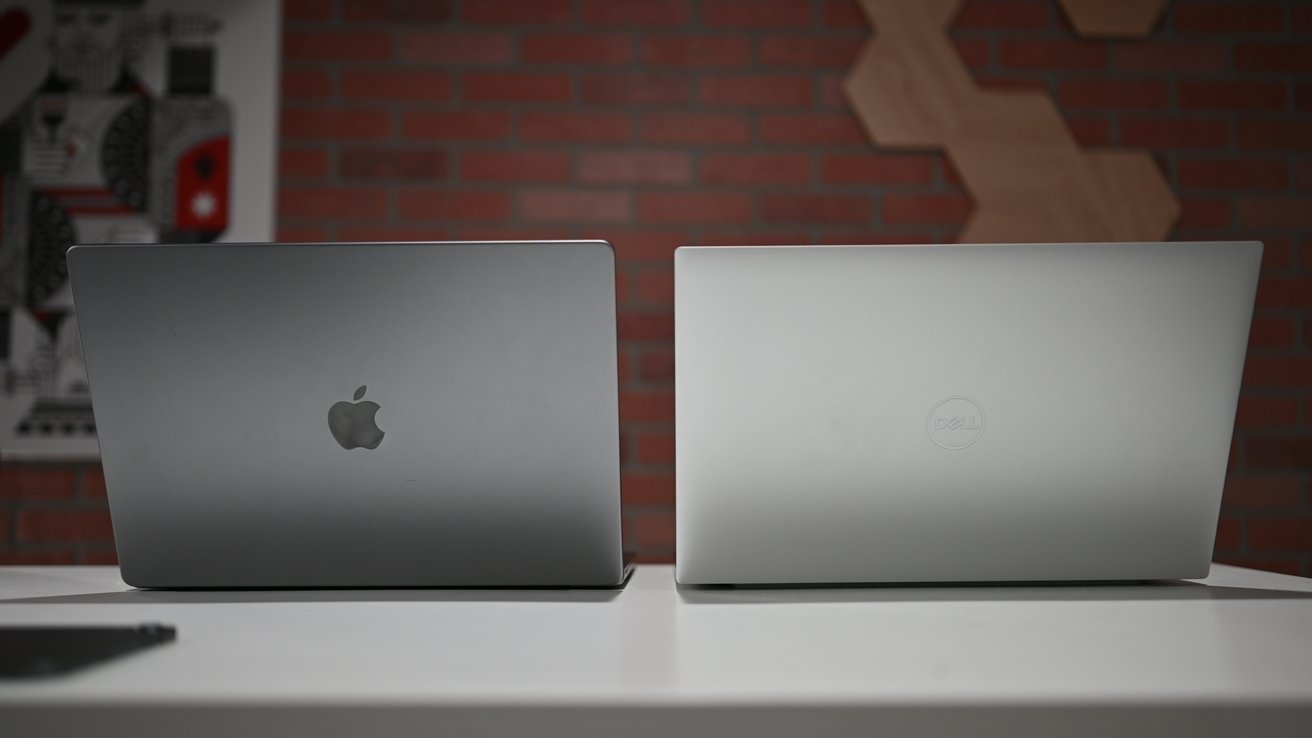

The Unseen Titan vs. The Established Behemoth: MacBook Pro M4 vs. Dell XPS 17 Head-to-Head Comparison
The world of high-performance laptops is a battleground where innovation, power, and design constantly clash. On one side, we have Apple’s meticulously engineered, vertically integrated ecosystem, poised to unleash its next-generation silicon. On the other, Dell’s XPS series, a long-standing titan of the Windows world, known for its blend of power, aesthetics, and user flexibility. As we anticipate the arrival of the MacBook Pro powered by the rumored M4 chip, a fascinating head-to-head comparison emerges against the formidable Dell XPS 17. This article delves deep into every facet of these two powerhouses, dissecting their strengths, weaknesses, and target audiences to determine which machine truly reigns supreme for the discerning professional.
1. Introduction: A Clash of Architectures and Philosophies
The landscape of premium laptops has undergone a seismic shift in recent years, largely driven by Apple’s transition to its custom-designed ARM-based silicon. The MacBook Pro, with its M-series chips, has redefined expectations for power efficiency, sustained performance, and battery life. Now, with the M4 chip on the horizon, promising even greater leaps in AI processing and overall performance, the stakes are higher than ever.
Standing in its formidable path is the Dell XPS 17, a Windows-powered workstation that has consistently pushed the boundaries of what a large-form-factor laptop can achieve. Known for its expansive InfinityEdge display, powerful Intel processors, and discrete NVIDIA graphics, the XPS 17 caters to a demanding professional user base that requires raw horsepower and Windows ecosystem flexibility.
This comparison isn’t merely about specifications; it’s a deep dive into two distinct philosophies of computing. Apple’s vertical integration offers a tightly controlled, optimized, and often more intuitive experience, while Dell’s Windows platform champions configurability, broader software compatibility, and a more open hardware ecosystem. As we pit the speculative, yet highly anticipated, MacBook Pro M4 against the latest iterations of the Dell XPS 17, we aim to provide a comprehensive guide for creatives, developers, engineers, and professionals grappling with this crucial purchasing decision.
2. Design and Build Quality: Aesthetics, Ergonomics, and Portability
Both the MacBook Pro M4 and the Dell XPS 17 represent the pinnacle of laptop design in their respective ecosystems. However, their approaches to form and function differ subtly yet significantly.
The MacBook Pro M4 will undoubtedly continue Apple’s legacy of minimalist, unibody aluminum construction. Its industrial design is iconic, characterized by clean lines, a robust feel, and precise engineering. The chassis is machined from a single block of aluminum, providing exceptional rigidity and a premium tactile experience. Apple’s attention to detail extends to the hinge, which offers smooth resistance and allows for easy one-handed opening. Despite its power, Apple has consistently strived to optimize the MacBook Pro’s weight and thickness, making it remarkably portable for a professional workstation. The expected design language for the M4 model will likely retain the distinctive notched display, offering more screen real estate while maintaining slim bezels.
The Dell XPS 17, on the other hand, presents a different kind of luxury. It combines a machined aluminum lid and base with a unique carbon fiber composite palm rest. This blend of materials not only looks sophisticated but also provides a comfortable, cool-to-the-touch surface for extended typing sessions. Dell’s signature "InfinityEdge" display, with its incredibly thin bezels on all four sides, is a marvel of engineering, making the 17-inch screen feel more expansive than its physical dimensions suggest. The XPS 17, by virtue of its larger screen and dedicated cooling for powerful discrete graphics, will naturally be thicker and heavier than a similarly specced MacBook Pro. While it’s designed to be portable for a 17-inch machine, it’s more of a "desk replacement" laptop that can be moved, rather than a featherlight companion for frequent travel.
Portability: The MacBook Pro M4 will likely hold an edge in terms of pure portability due to its potentially more compact footprint and lighter weight, especially when considering the sheer processing power it packs. The XPS 17, while impressive for its size, will remain the larger and heavier of the two, better suited for those who value screen real estate above all else and don’t require constant on-the-go mobility.
3. Performance: The Heart of the Beast – CPU, GPU, RAM, and Storage
This is where the architectural differences become most apparent and where the M4’s potential truly shines.
MacBook Pro M4 (Speculative Performance):
The M4 chip is expected to build upon the groundbreaking foundations laid by the M1, M2, and M3 series. Key improvements are anticipated across several fronts:
- CPU: We can expect further enhancements to Apple’s already industry-leading single-core performance, coupled with increased multi-core efficiency and power. The M4 is likely to feature an even more refined hybrid architecture, balancing high-performance cores with highly efficient cores. This translates to blistering speeds for demanding tasks like video editing, 3D rendering, and software compilation, while sipping power for everyday browsing and productivity. Benchmarks will likely show continued dominance in tasks that leverage Apple’s optimized software stack.
- GPU: Apple’s integrated GPUs have steadily improved with each generation, now offering hardware-accelerated ray tracing and mesh shading. The M4’s GPU is expected to deliver significant gains in raw graphical horsepower, making it even more capable for professional creative applications, light gaming, and complex simulations. The unified memory architecture, where CPU and GPU share the same high-bandwidth memory pool, remains a distinct advantage, eliminating data transfer bottlenecks often found in discrete GPU setups.
- Neural Engine: This is where the M4 is rumored to make its biggest leap. With an increasing focus on AI and machine learning across all applications, the M4’s Neural Engine is expected to be substantially more powerful, accelerating on-device AI tasks, real-time video processing, voice recognition, and generative AI workloads. This will be a critical differentiator for professionals working with AI-driven tools.
- Unified Memory: The MacBook Pro M4 will continue to leverage Apple’s unified memory architecture, offering incredibly fast and low-latency access to a single pool of RAM for the CPU, GPU, and Neural Engine. Configurations are expected to range from 8GB (though unlikely for Pro models) up to 128GB or even more in high-end configurations, providing immense bandwidth for large datasets and complex projects.
- Storage: Apple’s custom SSDs are among the fastest in the industry, offering blistering read and write speeds crucial for handling large files and quick application loading. Configurations will likely range from 512GB up to 8TB.
Dell XPS 17 (Latest Iteration Performance):
The XPS 17 takes a more traditional, yet incredibly potent, approach to performance:
- CPU: The latest XPS 17 models are typically equipped with Intel’s highest-end processors, such as the 13th or 14th generation Core i7 and i9 CPUs. These processors excel in raw clock speed and multi-threaded performance, particularly in applications that are heavily optimized for Intel’s architecture and can take advantage of the numerous P-cores and E-cores. They offer robust performance for demanding professional software, data analysis, and compilation.
- GPU: This is a major differentiator. The XPS 17 offers discrete NVIDIA GeForce RTX GPUs (e.g., RTX 4050, 4060, 4070, or even 4080 in high-end configurations). These GPUs provide dedicated VRAM and immense raw graphical processing power, making the XPS 17 a powerhouse for tasks that heavily leverage CUDA cores: professional 3D rendering, complex CAD applications, video editing with GPU acceleration, and of course, gaming. NVIDIA’s DLSS technology and ray tracing capabilities further enhance its graphical prowess.
- RAM: The XPS 17 typically features user-upgradable DDR5 RAM, allowing for configurations up to 64GB (and sometimes more depending on the generation and motherboard). While not "unified" in the Apple sense, the sheer capacity and speed of DDR5 RAM ensure ample memory for even the most memory-intensive tasks.
- Storage: Dell offers fast NVMe PCIe SSDs, often configurable up to 4TB, with some models even featuring dual M.2 slots for user expansion, providing excellent flexibility for storage-hungry professionals.
Performance Summary:
For tasks heavily reliant on raw GPU power (especially those optimized for NVIDIA’s CUDA cores, like certain CAD software or scientific simulations) and for high-refresh-rate gaming, the Dell XPS 17 with its discrete RTX GPU will likely maintain an advantage. Its Intel CPU also shines in applications that are highly parallelized for traditional x86 architectures.
However, for overall system responsiveness, power efficiency, video editing (especially in Final Cut Pro), graphic design, music production, and increasingly, AI/ML workloads, the MacBook Pro M4’s optimized architecture and powerful Neural Engine are expected to deliver a compelling and often superior experience, particularly with its sustained performance under load and impressive battery life. The M4’s unified memory bandwidth will also be a critical factor for applications dealing with very large files or complex scenes.
4. Display: A Window to Your Work
Both laptops offer truly exceptional displays, but with different underlying technologies and priorities.
The MacBook Pro M4 will undoubtedly feature Apple’s "Liquid Retina XDR" display, based on mini-LED technology. This display is renowned for its:
- Extreme Brightness: Up to 1000 nits sustained and 1600 nits peak brightness for HDR content, making it perfect for HDR video editing and viewing in bright environments.
- Stunning Contrast: With millions of local dimming zones, it achieves an incredible 1,000,000:1 contrast ratio, delivering true blacks and vibrant, lifelike colors.
- ProMotion Technology: Adaptive refresh rates up to 120Hz, providing buttery-smooth scrolling and responsiveness, while intelligently lowering the refresh rate to save power when static.
- Exceptional Color Accuracy: Supports P3 wide color gamut, factory-calibrated for professional color work.
- Resolutions: Typically offered in high-resolution panels (e.g., 3024×1964 for the 14-inch, 3456×2234 for the 16-inch), providing immense pixel density.
The Dell XPS 17 offers a choice of stunning "InfinityEdge" displays:
- UHD+ (3840×2400) Touch Display: This 4K+ panel offers incredible sharpness and detail, perfect for visual professionals. It typically boasts excellent color accuracy (100% Adobe RGB, 94% DCI-P3) and good brightness (around 500 nits). The touch functionality and stylus support (optional) add versatility for certain workflows.
- FHD+ (1920×1200) Non-Touch Display: A more battery-friendly option, still offering good color and brightness, ideal for productivity users who don’t need 4K resolution.
- OLED (potentially): While not always standard, Dell occasionally offers OLED options in its XPS line, which would provide perfect blacks and vibrant colors similar to mini-LED, albeit with potentially lower peak brightness and a different sub-pixel structure.
Display Summary:
For HDR content creation, extreme contrast, and peak brightness, the MacBook Pro’s Liquid Retina XDR mini-LED display is largely unmatched. Its ProMotion technology also offers a superior fluid experience. The XPS 17’s UHD+ panel, however, offers a larger canvas, often with touch capabilities, and still delivers superb color accuracy and sharpness, making it an excellent choice for general creative work and engineering. The choice here comes down to specific priorities: ultimate HDR/contrast (MBP) vs. larger touch canvas with excellent conventional display quality (XPS 17).
5. Keyboard and Trackpad: Inputting Your Genius
The interface through which you interact with your machine is paramount to productivity and comfort. Both laptops offer premium input experiences.
The MacBook Pro M4 will feature Apple’s Magic Keyboard, which has been refined over several generations to offer a comfortable and precise typing experience. It features a stable scissor mechanism, decent key travel, and well-spaced, backlit keys. While some users might prefer slightly more key travel, it’s widely regarded as one of the best laptop keyboards available. The Force Touch trackpad, however, remains in a league of its own. Its expansive glass surface, haptic feedback, and precise cursor control, combined with macOS’s intuitive multi-touch gestures, offer an unparalleled user experience that is difficult for any Windows laptop to match.
The Dell XPS 17 boasts a spacious, edge-to-edge keyboard that makes excellent use of the laptop’s width. The keys are well-sized, have good spacing, and offer a satisfying amount of travel for a comfortable typing experience, often preferred by those who type for long hours. The backlighting is consistent, and the layout is standard. Below the keyboard lies a very large, smooth glass trackpad. While it’s one of the best trackpads found on a Windows laptop, offering precise tracking and good gesture support, it generally doesn’t quite reach the same level of haptic feedback and seamless multi-touch integration as Apple’s Force Touch trackpad.
6. Ports and Connectivity: Bridging the Digital Divide
Connectivity is crucial for professionals who rely on external displays, storage, and peripherals.
The MacBook Pro M4 offers a focused yet comprehensive selection of ports:
- Multiple Thunderbolt 4 Ports (USB-C): These are incredibly versatile, supporting power delivery, DisplayPort, and high-speed data transfer (up to 40Gbps). Users can connect external GPUs, docks, and multiple high-resolution monitors.
- HDMI Port: A welcome return in recent generations, allowing for direct connection to monitors and TVs without an adapter.
- SDXC Card Slot: Essential for photographers and videographers.
- 3.5mm Headphone Jack: High-impedance support for professional headphones.
- MagSafe 3: A dedicated magnetic charging port that safely detaches if tugged, preventing accidental laptop damage.
The Dell XPS 17 also prioritizes modern connectivity but often includes a slightly different mix:
- Multiple Thunderbolt 4 Ports (USB-C): Similar to the MacBook Pro, these provide robust connectivity for high-speed peripherals and external displays.
- Full-size SD Card Slot: Also crucial for creatives.
- 3.5mm Headphone Jack: Standard.
- Potentially a USB-A Port: Some configurations might still include a traditional USB-A port, which can be convenient for older peripherals, though it’s becoming less common.
- Power Adapter: Typically uses a traditional barrel connector or USB-C power delivery.
Connectivity Summary: Both laptops offer excellent modern connectivity. The MacBook Pro’s dedicated HDMI and MagSafe are notable conveniences. The XPS 17 might occasionally offer a USB-A port for legacy support, but both heavily lean on Thunderbolt 4 for versatility. The key difference might be the sheer number of Thunderbolt ports available, which can vary by configuration.
7. Battery Life: The Endurance Race
This is an area where Apple Silicon has consistently set new industry benchmarks.
The MacBook Pro M4 is expected to continue this trend of exceptional battery life. The ARM-based architecture of Apple Silicon is inherently more power-efficient than traditional x86 processors, especially under sustained loads. This, combined with macOS’s highly optimized power management, allows MacBook Pros to achieve incredibly long runtimes – often 15-22 hours of mixed usage, depending on the model and workload. For professionals who work on the go or away from power outlets, this is a game-changer.
The Dell XPS 17, despite housing a large battery (often 97Whr), faces a tougher challenge due to its powerful Intel CPU and discrete NVIDIA GPU, both of which consume significantly more power, especially when under load. While the XPS 17 offers commendable battery life for a Windows machine of its caliber (typically 7-10 hours of mixed usage), it generally cannot match the endurance of the MacBook Pro. Users running demanding applications or gaming on battery will see these figures drop considerably faster.
8. Software and Ecosystem: macOS vs. Windows
The choice between these two laptops often boils down to the fundamental operating system and its surrounding ecosystem.
macOS (MacBook Pro M4):
- Pros: Known for its elegant, intuitive user interface, strong security features, and excellent integration with Apple’s ecosystem (iPhone, iPad, Apple Watch, AirPods). It’s a favorite among creative professionals (video editing, graphic design, music production) due to highly optimized software like Final Cut Pro, Logic Pro, and a robust app store. Developers often appreciate its UNIX-like underpinnings.
- Cons: Less open and configurable than Windows. Gaming options are more limited. Certain specialized professional software (e.g., specific engineering tools, niche scientific applications) might only be available on Windows or run better on it.
Windows (Dell XPS 17):
- Pros: The most widely used operating system globally, offering unparalleled software compatibility, including a vast library of professional applications, engineering tools, and of course, the largest library of PC games. It offers greater hardware flexibility, allowing users to connect a wider range of peripherals. Its open nature allows for more customization and direct access to system files.
- Cons: Can be more prone to viruses and malware (though security has improved significantly). Performance can vary more widely across different hardware configurations. Updates can sometimes be disruptive. The user interface, while improved, is often perceived as less polished or intuitive than macOS by some users.
Ecosystem Integration:
Apple’s ecosystem is a tightly woven web. Owning a MacBook Pro, iPhone, and iPad creates a seamless workflow with features like Handoff, Universal Clipboard, AirDrop, and Sidecar. Dell, while not having a proprietary ecosystem in the same way, benefits from the broader Windows ecosystem, which includes deep integration with Microsoft 365 services and a vast array of third-party hardware and software.
9. Audio and Webcam: Communication and Immersion
In an age of remote work and digital collaboration, audio and webcam quality are more important than ever.
The MacBook Pro M4 will undoubtedly continue Apple’s tradition of offering best-in-class audio. Its six-speaker sound system with force-cancelling woofers delivers incredibly rich, clear, and spacious sound with excellent bass, far exceeding most laptop speakers. It also supports Spatial Audio with Dolby Atmos. The studio-quality three-mic array provides exceptional clarity for calls and recordings, and the 1080p FaceTime HD camera, enhanced by the M-chip’s image signal processor, delivers sharp, well-exposed video even in challenging lighting conditions.
The Dell XPS 17 also offers a very good audio experience for a Windows laptop, featuring a quad-speaker design with Waves MaxxAudio Pro tuning. The sound is clear and loud, with decent bass for casual listening and video conferencing. Its dual array microphones are effective for calls, and the 1080p webcam provides good image quality, often with features like Windows Hello for facial recognition. While excellent by Windows standards, it typically doesn’t quite reach the immersive soundstage or the clarity of the MacBook Pro’s audio and mic setup.
10. Cooling and Thermals: Sustained Performance Under Pressure
High-performance components generate heat, and how a laptop manages this heat directly impacts sustained performance and user comfort.
The MacBook Pro M4, leveraging the inherent power efficiency of Apple Silicon, is expected to run remarkably cool and quiet even under significant load. The M-series chips are designed to deliver high performance within a relatively low thermal envelope. The MacBook Pro’s advanced thermal architecture, often featuring multiple fans and efficient heat pipes, allows for sustained performance without significant throttling, and the fans rarely spin up to noticeable levels during typical workloads. This makes for a very pleasant and quiet user experience.
The Dell XPS 17, housing powerful Intel CPUs and discrete NVIDIA GPUs, requires a more robust cooling solution. Dell has equipped the XPS 17 with an advanced thermal design, including dual opposite outlet fans, vapor chambers, and strategically placed vents to dissipate heat effectively. Under heavy loads (e.g., rendering, gaming, video encoding), the fans will undoubtedly become audible as they work to keep the powerful components cool. While the XPS 17 is designed to maintain high performance under sustained pressure, it will likely run warmer and louder than the MacBook Pro when pushed to its limits, which is a common characteristic of high-performance Windows laptops.
11. Price and Value: The Cost of Power
Both the MacBook Pro M4 and the Dell XPS 17 are premium devices that command a high price tag.
The MacBook Pro M4 will likely start at a similar price point to its predecessors, with configurations scaling up significantly based on the chosen M4 variant (M4, M4 Pro, M4 Max), unified memory, and SSD storage. Apple’s ecosystem and brand prestige contribute to a strong resale value, and the long software support cycle ensures longevity. While the initial investment is substantial, many users consider the long-term value, seamless integration, and optimized experience to justify the cost.
The Dell XPS 17 also falls into the premium price bracket, with its cost varying widely based on the chosen CPU, GPU, RAM, storage, and display options. Dell often provides more configuration flexibility, allowing users to tailor the machine more precisely to their budget and needs. While it may not retain its resale value as strongly as a MacBook Pro, the XPS 17 often sees discounts and sales, potentially offering a better price-to-performance ratio for certain configurations, especially during promotional periods.
12. Target Audience and Use Cases: Who is it For?
The choice between these two powerhouses ultimately depends on individual needs, preferences, and professional workflows.
Choose the MacBook Pro M4 if you are:
- Creative Professional (Video Editor, Graphic Designer, Music Producer): Especially those using Apple’s Pro Apps (Final Cut Pro, Logic Pro) or other highly optimized creative software.
- Software Developer: Appreciates the UNIX-like environment, robust performance, and excellent developer tools in macOS.
- Anyone Deeply Invested in the Apple Ecosystem: Values the seamless integration with iPhone, iPad, and other Apple devices.
- Seeking Unparalleled Battery Life and Portability: Needs a powerful machine that can last all day away from a charger.
- Prioritizing a Quiet and Cool Operating Experience: Dislikes fan noise and hot laptops.
- Working with AI/ML (especially on-device): The M4’s enhanced Neural Engine will be a significant advantage.
Choose the Dell XPS 17 if you are:
- Professional Requiring Raw GPU Power (3D Renderer, CAD Engineer, Data Scientist): Benefits from dedicated NVIDIA RTX graphics and CUDA core acceleration.
- Gamer (casual to serious): While not a primary gaming laptop, the XPS 17’s discrete GPU makes it capable of running modern titles at good frame rates.
- Windows-Specific Software User: Relies on applications only available or better optimized for the Windows platform.
- Seeking a Large, Immersive Display: Values the expansive 17-inch InfinityEdge screen for multitasking or detailed work.
- Requiring Hardware Configurability and Upgradability: Appreciates the ability to choose specific components and potentially upgrade RAM/storage later.
- Preferring a Touchscreen and/or Stylus Support: For annotation, sketching, or direct interaction.
13. Conclusion: A Battle of Best-in-Class
The comparison between the MacBook Pro M4 and the Dell XPS 17 is not about identifying a single "winner," but rather about understanding which machine is the superior tool for specific jobs and users. Both represent the pinnacle of laptop engineering within their respective ecosystems, offering immense power and premium experiences.
The MacBook Pro M4 will continue to push the boundaries of power efficiency, sustained performance, and AI acceleration, all wrapped in Apple’s signature elegant design and seamless ecosystem. Its Liquid Retina XDR display, industry-leading trackpad, and exceptional battery life make it an ideal choice for creative professionals, developers, and anyone who values a highly refined, integrated, and portable powerhouse.
The Dell XPS 17, on the other hand, stands as a testament to the versatility and raw power achievable within the Windows ecosystem. Its combination of high-end Intel CPUs, powerful NVIDIA RTX GPUs, and an expansive, often touch-enabled display makes it an undisputed champion for professionals requiring dedicated graphics horsepower, Windows-specific software compatibility, and a large working canvas. Its robust cooling system allows it to handle intense, prolonged workloads, making it a true workstation in laptop form.
Ultimately, the decision comes down to your priorities. If you are deeply embedded in the Apple ecosystem, prioritize extreme battery life, quiet operation, and are heavily involved in creative tasks or AI/ML, the MacBook Pro M4 will likely be your preferred choice. However, if your workflow demands powerful discrete graphics, specific Windows software, a larger screen for multitasking, or the flexibility of a more open platform, the Dell XPS 17 remains an incredibly compelling and capable option. Both machines are exceptional in their own right, and the discerning user will find that either can be a powerful ally in their professional endeavors.