
Is the MacBook Pro M4 Worth Buying in 2025? A Comprehensive Analysis
The technology landscape is an ever-shifting tapestry, woven with threads of innovation, speculation, and user demand. In this dynamic environment, Apple has carved a formidable niche, particularly with its transition to proprietary Apple Silicon. As we look ahead to 2025, the anticipated launch of the MacBook Pro featuring the M4 chip looms large, promising another leap in performance and efficiency. The crucial question for professionals, creators, and power users will be: Is the MacBook Pro M4 worth buying in 2025?
To answer this, we must transcend mere spec sheets and delve into a holistic analysis, considering not only the predicted capabilities of the M4 chip and the MacBook Pro hardware but also the evolving software ecosystem, the competitive landscape, the economic implications, and the diverse needs of potential users. This article will meticulously explore every facet to provide a definitive guide for making that critical purchasing decision.
The M4 Chip: Anticipating a New Benchmark in Performance
At the heart of any MacBook Pro lies its processor, and the M4 chip is expected to be nothing short of revolutionary, building upon the already impressive foundation laid by the M1, M2, and M3 series. By 2025, Apple will likely have refined its silicon architecture to an unprecedented degree, targeting specific areas for substantial improvement.
1. Architectural Advancements and Process Node:
The M3 chip was fabricated on a 3-nanometer (nm) process, a significant leap. For the M4, Apple could either refine this 3nm process further or, more ambitiously, transition to an even denser 2nm process node. A smaller process node means more transistors can be packed into the same area, leading to greater efficiency, higher clock speeds, and reduced power consumption. This translates directly into more powerful CPU and GPU cores operating with greater thermal headroom. We can anticipate an increased number of performance and efficiency cores, each benefiting from improved Instruction Per Cycle (IPC) performance, allowing tasks to be completed faster with less energy.
2. CPU and GPU Powerhouse:
While the M3 Max already offers desktop-class performance, the M4 will push these boundaries further. Expect a noticeable boost in multi-core CPU performance, crucial for demanding tasks like code compilation, 3D rendering, and complex scientific simulations. The integrated GPU is also set for a significant upgrade. With hardware-accelerated ray tracing and mesh shading becoming standard, the M4’s GPU will likely deliver even more realistic graphics and significantly accelerate professional applications such as video editing, motion graphics, and CAD software. Gaming, though not the primary focus of the MacBook Pro, will also see substantial improvements, making Mac a more viable platform for AAA titles.
3. The Ascendance of the Neural Engine (AI Focus):
Perhaps the most pivotal upgrade in the M4 will be its Neural Engine. By 2025, Artificial Intelligence (AI) will be even more deeply integrated into virtually every aspect of computing. Apple’s strategy has been to emphasize on-device AI processing for speed, privacy, and efficiency. The M4’s Neural Engine is predicted to feature a substantial increase in the number of cores and its overall Tera Operations Per Second (TOPS) capability. This enhanced AI prowess will unlock a new generation of intelligent features within macOS and third-party applications.
Imagine real-time, high-fidelity video upscaling, advanced natural language processing for dictation and translation, intelligent content creation tools, and sophisticated image analysis all running locally on your MacBook Pro without relying on cloud servers. For developers, this means faster training and inference of machine learning models, making the M4 MacBook Pro an unparalleled platform for AI research and development. This emphasis on AI will not just be a feature but a fundamental shift in how the machine interacts with the user and processes data.
4. Unified Memory and Bandwidth:
Apple’s unified memory architecture is a game-changer, providing the CPU, GPU, and Neural Engine with low-latency, high-bandwidth access to the same pool of RAM. For the M4, we can anticipate further increases in unified memory capacity options (potentially up to 192GB or even 256GB for the highest-end configurations) and, critically, even higher memory bandwidth. This is vital for handling massive datasets, multi-track audio projects, 8K video streams, and complex 3D scenes without bottlenecks.
5. Power Efficiency and Battery Life:
Apple’s silicon has consistently delivered industry-leading power efficiency. The M4 will undoubtedly continue this trend. Despite significant performance gains, the refined architecture and process node will ensure that the MacBook Pro M4 maintains, if not extends, its already impressive battery life. Professionals working on the go, away from power outlets, will find this an invaluable asset, allowing for full days of demanding work without compromise.
The MacBook Pro Hardware: Evolution and Refinement
While the M4 chip will be the brain, the MacBook Pro’s hardware is the body, and it too will see iterative, yet impactful, improvements by 2025. Apple rarely redesigns its Pro laptops drastically year-on-year, but rather refines and optimizes existing designs.
1. Display Technology: A Glimpse of the Future?
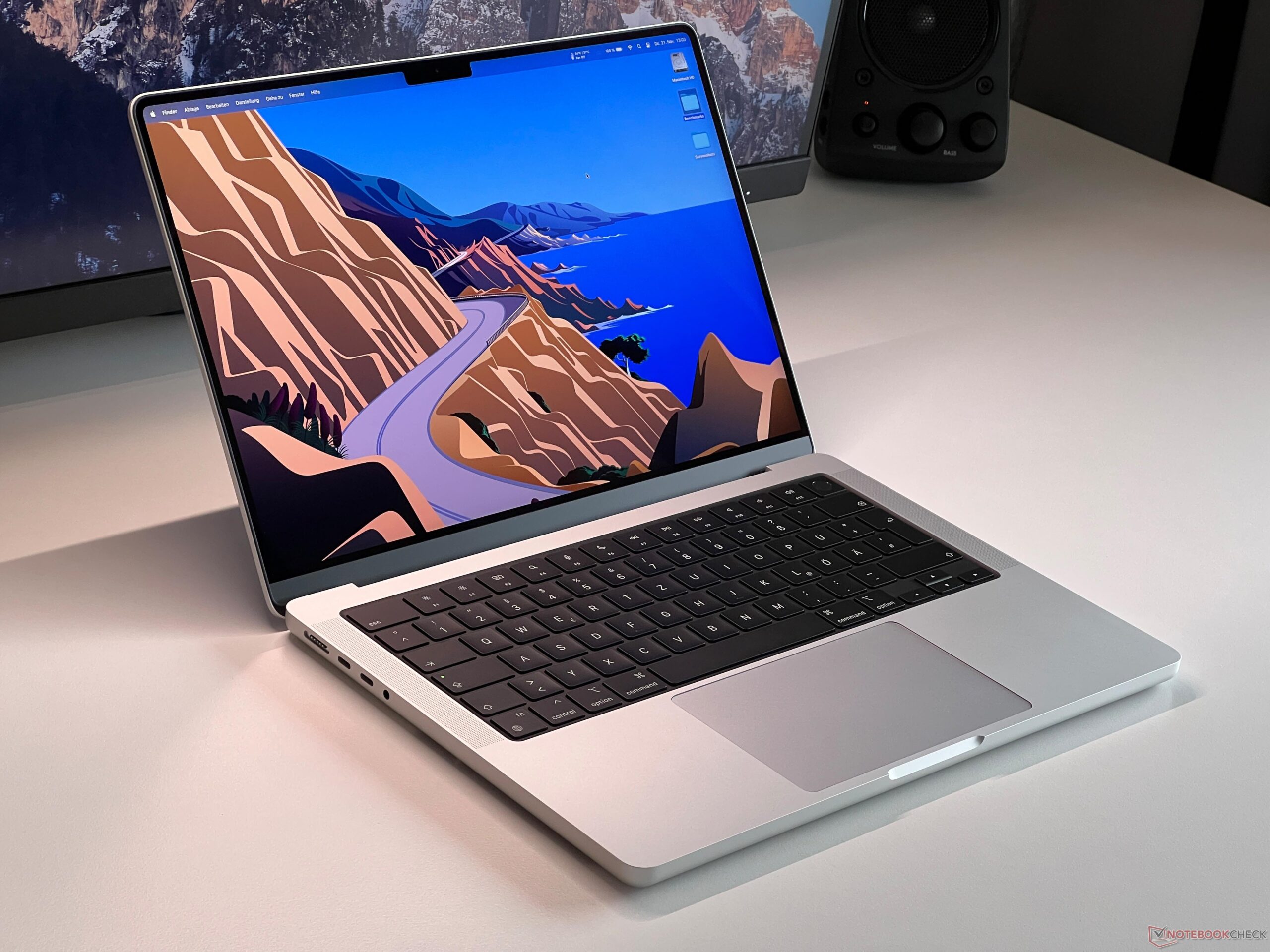
The current Liquid Retina XDR display, with its mini-LED backlight, offers phenomenal brightness, contrast, and color accuracy. For 2025, while a complete overhaul might be unlikely, we could see further refinements. This might include even higher peak brightness for HDR content, improved local dimming zones for deeper blacks, and potentially better power efficiency.
However, the major speculative leap for 2025 could be the introduction of OLED technology to the MacBook Pro line. Apple has already adopted OLED for its iPhones and Apple Watches, and the iPad Pro is rumored to get it. OLED offers perfect blacks, infinite contrast, and even faster response times, which would be a game-changer for professional color grading, video editing, and graphic design. If Apple manages to implement OLED without significantly impacting cost or burn-in concerns, it would solidify the MacBook Pro’s position as having the industry’s best laptop display.
2. Design and Ergonomics:
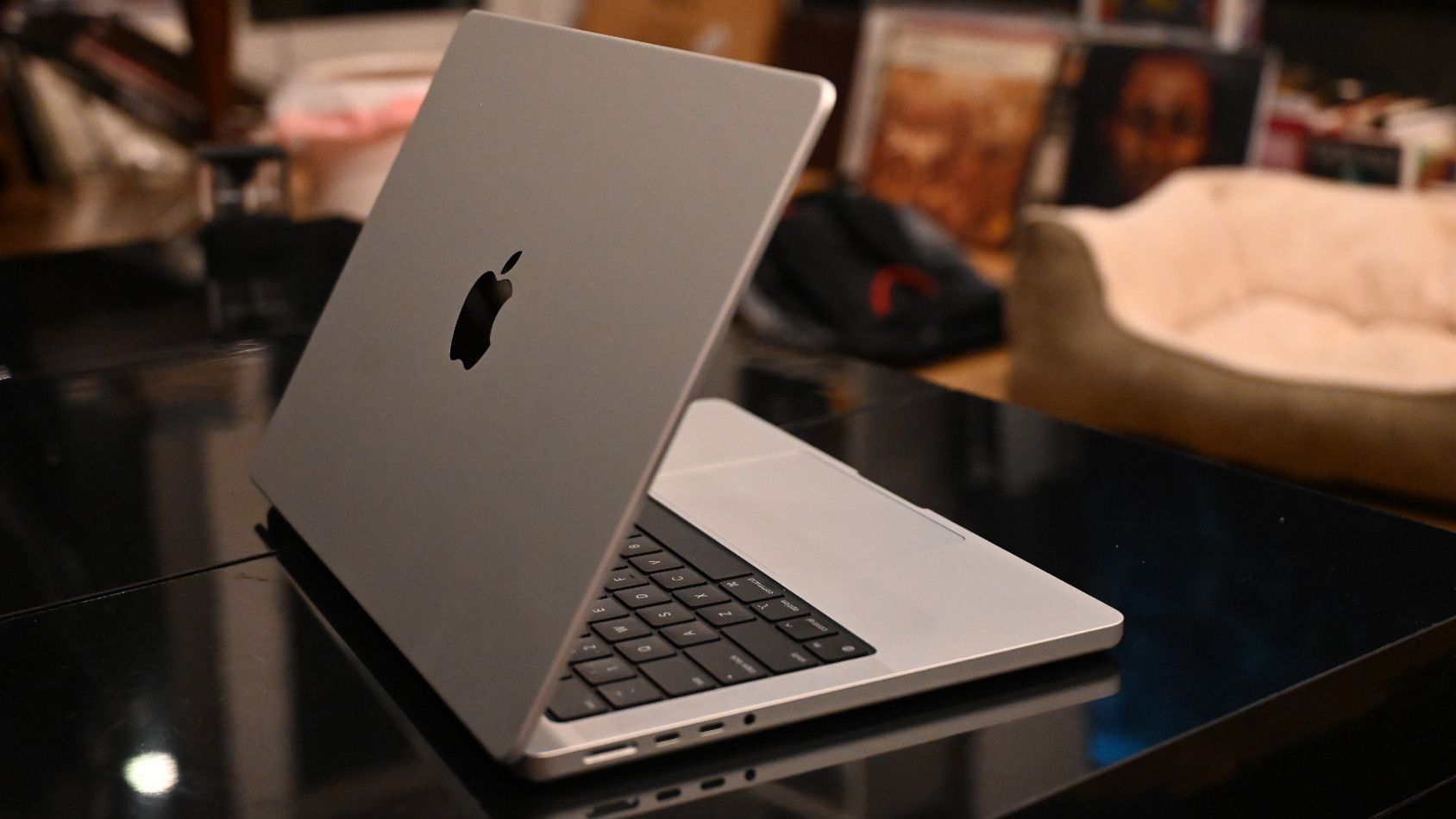
The current MacBook Pro design, with its flat edges, notch, and robust chassis, is highly functional. For 2025, expect a similar design language, perhaps with minor tweaks. This could include slightly thinner bezels, a marginal reduction in weight, or new material finishes. The keyboard (Magic Keyboard) and Force Touch trackpad are already best-in-class, and Apple will likely maintain their high standards. The 1080p webcam will likely remain, but its image quality will be significantly enhanced through M4’s advanced image signal processor (ISP) and Neural Engine, offering better low-light performance, noise reduction, and AI-powered features like enhanced Center Stage for video conferencing.
3. Port Selection and Connectivity:
Apple has largely reinstated essential ports on the MacBook Pro, including Thunderbolt 4, HDMI, and an SDXC card slot. For 2025, the most significant upgrade could be the transition to Thunderbolt 5. This next-generation standard promises even higher bandwidth (up to 120 Gbps in some configurations), enabling support for multiple 8K external displays, faster external storage, and more powerful eGPUs (if one chooses to use them, though less necessary with M4’s integrated GPU). We can also expect Wi-Fi 7 for ultra-fast wireless networking and an updated Bluetooth standard (e.g., Bluetooth 5.4 or 6.0) for improved accessory connectivity and audio quality.
4. Advanced Cooling System:
While Apple Silicon is incredibly efficient, sustained professional workloads still generate heat. The MacBook Pro M4 will feature an advanced thermal management system, likely involving sophisticated fan designs and heat pipes, to ensure the M4 chip can maintain its peak performance for extended periods without throttling. This is critical for users who push their machines to the limit daily.
The macOS Ecosystem and Software Synergy
A MacBook Pro is more than just hardware; it’s the seamless integration with macOS and Apple’s vast software ecosystem that truly defines the experience.
1. macOS in 2025: AI at the Core:
By 2025, the version of macOS accompanying the M4 MacBook Pro will undoubtedly be deeply intertwined with its AI capabilities. We can anticipate new system-level features leveraging the Neural Engine, such as proactive file organization, enhanced search functionalities, intelligent automation workflows, and perhaps even a more sophisticated virtual assistant that understands context and intent better than ever before. Developers will have access to powerful new APIs to integrate M4’s AI capabilities into their applications, leading to a new wave of innovative software.
2. Pro Application Performance:
For creative professionals, the M4 will translate into tangible workflow improvements.
- Video Editors: Faster 8K ProRes encoding/decoding, real-time effects rendering, and smoother playback in Final Cut Pro, DaVinci Resolve, and Adobe Premiere Pro. AI-powered features like intelligent object tracking, scene detection, and auto-color correction will become standard and exceptionally fast.
- 3D Artists: Quicker rendering times in Blender, Cinema 4D, and Maya, with improved viewport performance and complex simulation capabilities.
- Music Producers: Handling hundreds of tracks with multiple plugins in Logic Pro or Ableton Live without latency or dropouts. AI could assist with mastering, mixing, and even composition.
- Developers: Blazing-fast code compilation in Xcode, smoother virtualization for running multiple operating systems, and unparalleled performance for AI/ML model training on the device.
- Photographers: Rapid processing of high-resolution RAW files, AI-powered content-aware fill, intelligent subject selection, and advanced denoising in Adobe Photoshop and Lightroom.
3. Gaming on Mac: A Growing Frontier:
While not its primary selling point, the M4’s powerful GPU, coupled with Apple’s Metal API and MetalFX Upscaling, will further enhance the Mac’s gaming capabilities. More developers are bringing AAA titles to macOS, and the M4 will ensure these games run at high resolutions and frame rates, offering a surprisingly robust gaming experience for a professional laptop.
The "Worth It" Equation: Who is it For?
The "worth" of a MacBook Pro M4 in 2025 is highly subjective, depending entirely on the user’s needs, budget, and existing hardware.
1. The Professional Creator (Video Editors, 3D Artists, Music Producers, Designers):
For this demographic, the M4 MacBook Pro will likely be an indispensable tool. The performance gains, especially in AI-accelerated tasks, will translate directly into increased productivity, faster project turnaround times, and the ability to tackle more complex projects that might bottleneck lesser machines. Time is money, and the M4’s efficiency will justify the premium cost. The reliability, security, and integration with professional software will make it the go-to choice.
2. The Developer and Engineer:
Software developers, especially those working with large codebases, virtual machines, or machine learning, will find the M4 MacBook Pro a significant upgrade. The faster compilation times, enhanced virtualization performance, and powerful Neural Engine for AI/ML development will make their workflows smoother and more efficient.
3. The Power User:
Individuals who demand high performance for demanding everyday tasks – running multiple virtual desktops, juggling dozens of browser tabs, complex data analysis, or light content creation – will appreciate the M4’s raw power and future-proofing. While perhaps overkill for some, the longevity and smooth experience will make it a worthwhile investment for those who value performance above all else.
4. Students and General Users:
For most students or general users who primarily browse the web, handle documents, and consume media, the M4 MacBook Pro will be significant overkill. A MacBook Air (even an M2 or M3 Air) or a base model MacBook Pro M4 (if one exists) would be more than sufficient and considerably more budget-friendly. The value proposition here simply isn’t there.
5. Upgrade Cycle Considerations:
- From Intel Mac: A monumental upgrade. The M4 MacBook Pro will offer unparalleled performance, battery life, and efficiency compared to any Intel-based Mac. Absolutely worth it.
- From M1/M2 Mac: A substantial upgrade, particularly if you’re hitting performance limits in your current workflow or need the latest AI acceleration. The M4 will offer a significant leap in raw power and Neural Engine capabilities.
- From M3 Mac: A more incremental upgrade. Unless your professional workflow absolutely demands every ounce of the latest performance (e.g., you’re a leading-edge AI researcher or 8K video editor), it might be better to wait for the M5 or future generations. However, if the M4 introduces a killer feature like an OLED display or Thunderbolt 5, it might be compelling.
Value Proposition and Longevity
The "worth buying" question also encompasses long-term value and future-proofing.
1. Price Point:
The MacBook Pro M4 will undoubtedly command a premium price. Apple’s high-end laptops are an investment. Expect configurations to range from roughly $1,999 for a base 14-inch model to well over $4,000 for a fully specced 16-inch M4 Max variant. Understanding the pricing tiers and selecting the right configuration (RAM and storage are often more crucial than the base chip for professionals) will be key.
2. Resale Value:
One undeniable aspect of Apple products is their excellent resale value. A MacBook Pro M4, even after several years, will likely retain a significant portion of its original cost, making the initial investment less daunting over its lifespan.
3. Future-Proofing:
The M4 chip, particularly with its advanced Neural Engine, will be exceptionally future-proof. As AI integration becomes ubiquitous, a machine capable of handling complex on-device AI tasks will remain relevant for many years. Apple’s commitment to software updates for its silicon Macs ensures that the M4 MacBook Pro will receive macOS updates and security patches for at least 5-7 years, if not longer. This longevity means a lower total cost of ownership over time.
4. Ecosystem Integration and Reliability:
The seamless integration within Apple’s ecosystem (iPhone, iPad, Apple Watch, AirPods) offers unparalleled convenience and continuity. Furthermore, MacBook Pros are renowned for their build quality and reliability, reducing downtime and maintenance issues for professionals who rely on their machines daily.
Alternatives in 2025
No purchasing decision exists in a vacuum. By 2025, the competitive landscape will be vibrant.
1. Other Macs:
- MacBook Air M4: For most users, the M4 MacBook Air will offer exceptional performance in a lighter, more affordable package. It will be the ideal choice for portability and general productivity.
- M3 Pro/Max MacBook Pro (Refurbished/Older Stock): If budget is a concern, an M3 Pro/Max MacBook Pro will still be an incredibly powerful machine in 2025, often available at a discount.
- Mac Studio/Mac Pro (M4/M5 equivalent): For users needing ultimate desktop performance, multi-display setups, and expandability, Apple’s desktop offerings will remain the pinnacle.
2. Windows Laptops:
The Windows laptop market will be fierce.
- Intel and AMD Processors: By 2025, Intel’s Lunar Lake/Arrow Lake (or their successors) and AMD’s Strix Point/Halo (or their successors) will be highly competitive. They will likely feature powerful integrated GPUs and dedicated NPUs for AI acceleration. The key differentiators will be the Windows OS ecosystem, broader software compatibility (especially for certain niche professional software and gaming), and a wider range of hardware options from various manufacturers.
- Qualcomm Snapdragon X Elite Successors: Qualcomm will have had a couple of generations to mature its Snapdragon X Elite platform. By 2025, these ARM-based Windows laptops will be a significant challenger, potentially offering Apple Silicon-like efficiency and performance. The main hurdle will be software compatibility and optimization for ARM Windows, which will likely improve significantly but might still lag behind Apple’s mature ecosystem.
The choice between a MacBook Pro and a Windows laptop will often come down to operating system preference, specific software requirements (some professional tools are still Windows-only or perform better on Windows), and the desire for hardware variety.
Conclusion: A Professional’s Powerhouse, But Not for Everyone
In 2025, the MacBook Pro M4 will undoubtedly represent the pinnacle of Apple’s laptop engineering. Its anticipated M4 chip will deliver unprecedented performance, particularly in the realm of AI acceleration, making it an incredibly powerful and future-proof machine for demanding professional workflows. Coupled with a refined hardware design, potentially a groundbreaking OLED display, and the robust macOS ecosystem, it will be the go-to device for:
- Creative professionals: Video editors, 3D artists, music producers, and graphic designers who require raw power, speed, and reliability.
- Developers and engineers: Especially those in AI/ML, who need rapid compilation times and efficient on-device model training.
- Power users: Who demand the very best performance, longevity, and a seamless user experience.
So, is it worth buying?
For the vast majority of general users, casual consumers, or students, the answer is likely no. The M4 MacBook Pro will be overkill, and more affordable, yet highly capable, alternatives like the MacBook Air M4 will serve their needs perfectly.
However, for the target audience of professionals and power users who push their machines to the limit, the answer is a resounding yes. The M4 MacBook Pro will not just be a tool; it will be an investment in productivity, efficiency, and future-proofing. The time saved through faster renders, quicker compilations, and seamless AI-driven workflows will easily justify its premium price tag. It will be a machine designed to empower innovation, break creative barriers, and stand as a testament to Apple’s relentless pursuit of technological excellence.
The MacBook Pro M4 in 2025 won’t just be a laptop; it will be a statement – a powerful, efficient, and intelligently designed workstation for the next era of computing.