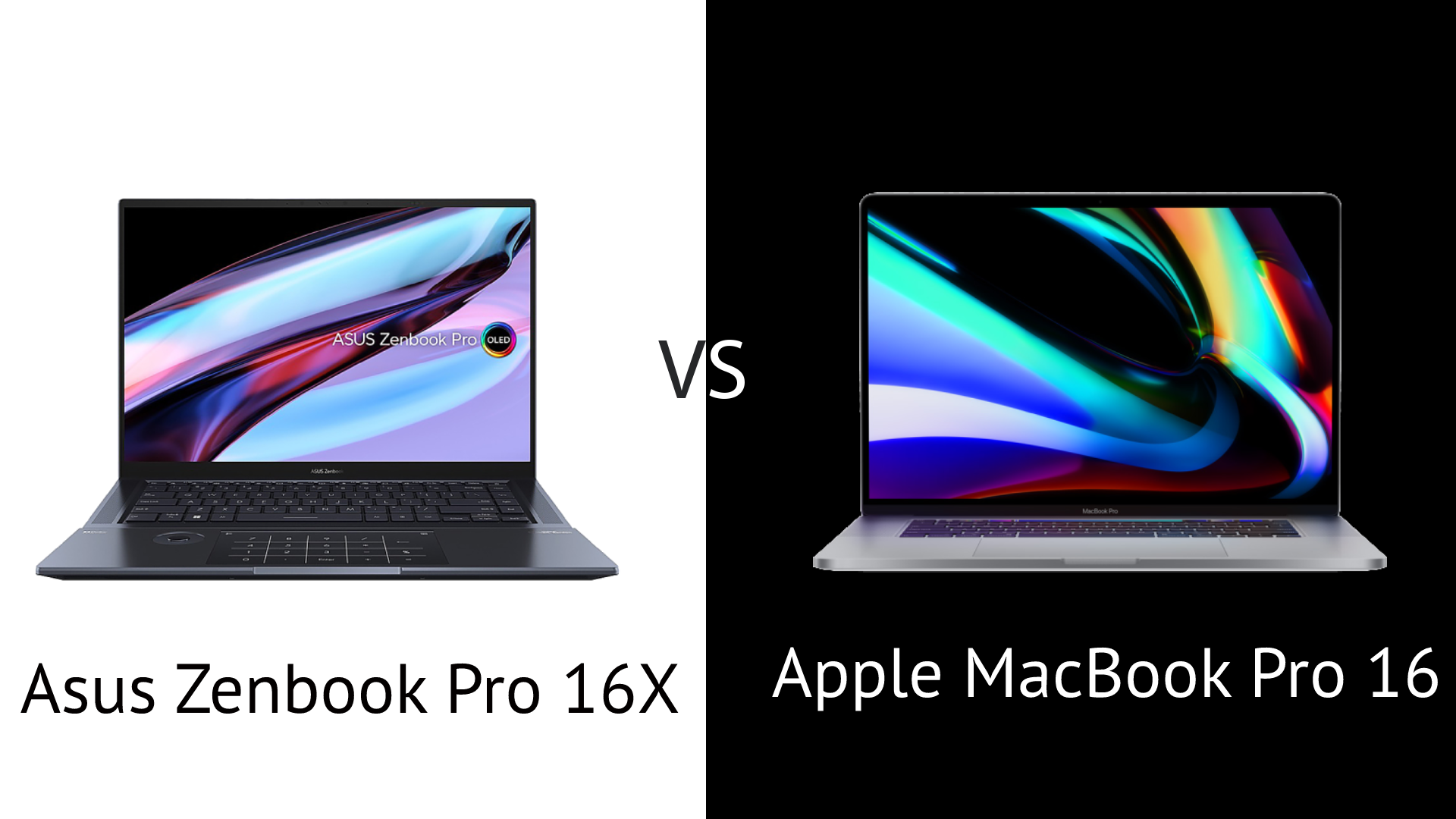

Okay, here is a comprehensive article comparing the hypothetical MacBook Pro M4 with the Asus ZenBook Pro 16X OLED, aiming for approximately 2100 words.
The Apex of Innovation: MacBook Pro M4 (Hypothetical) vs. Asus ZenBook Pro 16X OLED
In the rapidly evolving landscape of high-performance laptops, two titans stand poised to redefine what a professional-grade machine can achieve: Apple’s anticipated MacBook Pro, powered by the next-generation M4 chip, and the already formidable Asus ZenBook Pro 16X OLED. These machines represent the pinnacle of their respective ecosystems, offering unparalleled power, stunning displays, and innovative features designed for the most demanding creative professionals, developers, and power users.
While the MacBook Pro M4 remains a future prospect, its comparison with the current generation ZenBook Pro 16X OLED offers a fascinating glimpse into the diverging philosophies of premium laptop design and performance. Apple, with its vertically integrated hardware and software, focuses on seamless efficiency and a refined user experience. Asus, on the other hand, pushes the boundaries of raw power, unique input methods, and the sheer visual brilliance of OLED technology, all within the expansive Windows ecosystem.
This article will embark on an exhaustive journey, dissecting every facet of these two extraordinary laptops. From their design aesthetics and build quality to their display technologies, raw performance, user input mechanisms, connectivity, battery life, and software ecosystems, we will explore which machine is better suited for specific professional workflows and individual preferences.
1. Design and Build Quality: A Tale of Two Philosophies
Both the MacBook Pro M4 and the Asus ZenBook Pro 16X OLED exude premium craftsmanship, but their design philosophies are distinctly different.
MacBook Pro M4 (Anticipated):
Apple’s design language is iconic: minimalist, industrial, and instantly recognizable. We expect the M4 generation to retain the familiar unibody aluminum chassis, a design proven for its rigidity, durability, and elegant aesthetic. The clean lines, precisely machined edges, and understated branding contribute to a sense of sophisticated professionalism. The emphasis is on functional simplicity, with every element meticulously placed to create a cohesive and unobtrusive experience.
Expect the MacBook Pro M4 to continue offering a comfortable balance between screen size and portability. The weight distribution is typically excellent, making the device feel lighter than its actual mass. The lid opens smoothly with one hand, a small but significant detail that speaks volumes about Apple’s attention to refinement. The thermal management system, while largely internal and invisible, is a crucial part of the design, ensuring quiet operation even under load, thanks to the efficiency of Apple Silicon. Its timeless design means it will likely age gracefully, maintaining its premium look and feel for years.
Asus ZenBook Pro 16X OLED:
The ZenBook Pro 16X OLED, in contrast, embraces a more assertive and feature-rich design. While also utilizing an all-metal chassis, its aesthetic is more overtly "pro-grade" with subtle industrial touches and a larger footprint to accommodate its advanced cooling and larger display. The unique Active Aerodynamic System Ultra (AAS Ultra) is a cornerstone of its design, where the keyboard deck automatically tilts up by 7 degrees when the lid is opened. This not only enhances typing ergonomics but, more crucially, significantly improves airflow, allowing the powerful internal components to run cooler and sustain peak performance. This mechanical engineering marvel is a testament to Asus’s commitment to pushing performance boundaries.
The ZenBook Pro 16X OLED also features the signature ErgoLift hinge, which slightly raises the base of the laptop, further aiding cooling and providing a more comfortable typing angle. Its design is less about subtle elegance and more about showcasing its technological prowess. The machine feels robust and substantial, projecting an image of uncompromised power. The overall dimensions and weight are naturally greater than the MacBook Pro, a trade-off for its larger screen, more complex cooling system, and discrete GPU. The build quality is exceptional, with a sturdy feel that inspires confidence in its ability to withstand demanding professional use.
Comparison:
For users who prioritize sleek minimalism, robust unibody construction, and a more compact form factor, the MacBook Pro M4 will likely be the preferred choice. It’s a statement of understated power. The ZenBook Pro 16X OLED, with its innovative AAS Ultra and ErgoLift hinge, is for those who appreciate overt engineering solutions that directly contribute to performance and ergonomics, even if it means a slightly larger and heavier device. Both are premium, but one is a quiet powerhouse, the other a technological showcase.
2. Display Technology: Mini-LED vs. OLED Brilliance
The display is often the window to a professional’s soul, and both laptops offer exceptional visual experiences, albeit through different technologies.
MacBook Pro M4 (Anticipated): Liquid Retina XDR (Mini-LED)
Apple’s Liquid Retina XDR display, based on mini-LED technology, is renowned for its exceptional brightness, incredible contrast ratios, and superb color accuracy. Mini-LED backlighting allows for thousands of local dimming zones, enabling true blacks that rival OLED and dazzling HDR highlights up to 1600 nits peak brightness. This makes it ideal for HDR content creation and consumption, offering a dynamic range that feels truly cinematic.
The display also features ProMotion technology, providing adaptive refresh rates up to 120Hz. This ensures buttery-smooth scrolling, responsive cursor movement, and fluid animations, which is a significant boon for video editors and anyone spending long hours looking at their screen. Color accuracy is a hallmark, with support for the P3 wide color gamut, making it a reference-grade display for graphic designers, photographers, and video editors. The anti-reflective coating further enhances usability in varied lighting conditions.
Asus ZenBook Pro 16X OLED: 16-inch 4K OLED
The ZenBook Pro 16X OLED lives up to its name with a stunning 16-inch, 4K (3840 x 2400) OLED panel. OLED technology inherently offers perfect blacks because each pixel emits its own light and can be completely turned off. This results in an infinite contrast ratio, making images "pop" with incredible depth and vibrancy. Colors on an OLED are typically more saturated and vibrant, often covering 100% of the DCI-P3 color gamut, making it an excellent choice for color-critical work.
The ZenBook’s OLED panel also boasts incredibly fast response times (often less than 0.2ms), which minimizes motion blur and is a dream for fast-paced content or even light gaming. While its peak brightness might not match the mini-LED in certain HDR scenarios (typically around 500-600 nits for sustained brightness, with higher peaks for small areas), its pixel-level control delivers a different kind of visual impact. The 4K resolution on a 16-inch panel provides immense screen real estate and incredible sharpness, allowing for intricate detail in design work or multi-tasking with multiple windows. Asus also often calibrates these displays from the factory, ensuring professional-grade color accuracy out of the box.
Comparison:
Choosing between mini-LED and OLED is largely a matter of preference and specific workflow. Mini-LED (MacBook Pro) excels in overall peak brightness for HDR content, making bright scenes truly dazzling, and offers excellent contrast. OLED (ZenBook Pro) delivers absolute perfect blacks, infinite contrast, and vibrant, punchy colors, making it exceptional for visual media consumption and creative tasks where deep, rich colors are paramount. The "pop" of OLED is often perceived as more immersive, while mini-LED offers a more balanced and brighter overall picture. Both offer professional-grade color accuracy and high refresh rates (though the ZenBook’s might vary by configuration, often at 60Hz or 120Hz depending on the specific panel generation).
3. Performance: The Core Battleground
This is where the architectural differences between Apple Silicon and the traditional Intel/NVIDIA pairing become most apparent.
MacBook Pro M4 (Anticipated): Apple Silicon Architecture
The M4 chip is expected to be a generational leap, building upon the already stellar performance of the M3 series. Apple’s integrated architecture, featuring a unified memory system, allows the CPU, GPU, and Neural Engine to access the same high-bandwidth, low-latency memory pool. This minimizes data transfer bottlenecks and vastly improves efficiency, particularly for tasks involving large datasets or complex operations like video editing, 3D rendering, and machine learning.
- CPU: The M4 will likely feature an increased core count (both performance and efficiency cores) and further microarchitectural improvements, leading to significant gains in single-core and multi-core performance. This translates to faster compilation times for developers, quicker rendering in creative applications, and smoother multi-tasking. Its power efficiency will remain a key differentiator, delivering high performance per watt.
- GPU: The integrated GPU in the M4 is expected to see substantial improvements in core count, ray tracing capabilities, and overall graphics performance. While still an integrated solution, Apple’s GPUs have consistently demonstrated impressive performance, especially when optimized for specific applications like Final Cut Pro or DaVinci Resolve. The dedicated media engines for hardware-accelerated video encoding/decoding (ProRes, H.264, HEVC, potentially AV1) will be further enhanced, making it a video editing powerhouse.
- Neural Engine: The M4’s Neural Engine will likely boast even more cores and higher TOPS (Trillions of Operations Per Second), significantly boosting AI/ML workloads, image processing, and smart features within macOS and third-party applications.
- Unified Memory: The speed and efficiency of unified memory will be further refined, allowing applications to handle larger projects and datasets with greater fluidity.
Asus ZenBook Pro 16X OLED: Intel Core i9/i7 & NVIDIA GeForce RTX
The ZenBook Pro 16X OLED opts for a more traditional, yet incredibly powerful, approach: a high-end Intel Core i9 or i7 processor paired with a dedicated NVIDIA GeForce RTX graphics card.
- CPU: The latest generation Intel Core i9 (e.g., 14th Gen or newer) features a hybrid architecture with performance (P-cores) and efficiency (E-cores). These processors offer immense multi-threaded performance, making them excellent for demanding tasks like complex simulations, heavy compilation, and intensive rendering. Intel’s single-core performance is also top-tier, ensuring responsiveness in all applications.
- GPU: The inclusion of a dedicated NVIDIA GeForce RTX GPU (e.g., RTX 4070, 4080, or even 4090 in some configurations) is the ZenBook’s major performance differentiator. These GPUs come with their own dedicated VRAM (Video RAM), CUDA cores, RT cores (for ray tracing), and Tensor cores (for AI/ML acceleration). This makes the ZenBook an absolute beast for:
- Gaming: Unrivaled performance in the latest AAA titles.
- 3D Rendering: Significantly faster rendering in applications like Blender, Maya, 3ds Max, especially with GPU renderers like Octane or Redshift.
- AI/ML: CUDA acceleration is the industry standard for many AI frameworks, offering superior performance for model training and inference.
- Video Editing & VFX: Faster effects rendering, real-time playback of complex timelines, and hardware acceleration through NVIDIA’s NVENC/NVDEC.
- RAM & Storage: The ZenBook Pro 16X OLED typically offers user-upgradable or higher capacities of DDR5/LPDDR5 RAM and NVMe PCIe 4.0 SSDs, providing ample space and speed for large projects and data-intensive workflows.
Comparison:
For pure, unadulterated raw graphical power, especially in applications that heavily leverage NVIDIA’s CUDA cores or require dedicated VRAM (like high-end 3D rendering, professional gaming, or serious AI/ML development), the ZenBook Pro 16X OLED with its dedicated RTX GPU will likely outperform the integrated graphics of the MacBook Pro M4.
However, the MacBook Pro M4’s strength lies in its incredible efficiency and the tight integration between hardware and software. For video editing (especially with ProRes), general productivity, coding, and tasks optimized for Apple Silicon, it will deliver exceptional performance with significantly lower power consumption and often quieter operation. The unified memory architecture also gives it a unique advantage in handling large files and complex tasks without the traditional CPU-GPU bottlenecks.
Ultimately, the "better" performer depends on the specific workload. If your professional applications heavily rely on NVIDIA’s ecosystem or demand the absolute highest GPU horsepower for gaming/rendering, the ZenBook is the clear winner. If your work revolves around Apple’s optimized software, video production, or tasks that benefit from unparalleled CPU-GPU-memory synergy and efficiency, the MacBook Pro M4 will be a formidable contender.
4. Keyboard, Trackpad, and User Experience
Input devices are crucial for any professional, and both laptops aim for excellence.
MacBook Pro M4 (Anticipated):
Apple’s Magic Keyboard is widely considered one of the best laptop keyboards available, offering a comfortable and precise typing experience with good key travel and a satisfying tactile response. The backlighting is uniform and adaptive. The Force Touch trackpad remains the industry gold standard – incredibly large, smooth, and responsive, with haptic feedback that simulates physical clicks and allows for pressure-sensitive interactions. Its precision and gesture support are unmatched.
The audio experience is typically excellent, with a six-speaker sound system providing rich, spatial audio. The studio-quality three-mic array ensures clear voice capture for calls and recordings. The 1080p FaceTime HD camera provides crisp video for virtual meetings.
Asus ZenBook Pro 16X OLED:
The ZenBook Pro 16X OLED features Asus’s ErgoSense keyboard, which benefits from the AAS Ultra mechanism’s tilt for improved ergonomics. It offers a comfortable typing experience with decent key travel and a responsive feel. The keycaps often have a slightly dished shape for better finger placement.
The trackpad is where the ZenBook introduces a unique innovation: a large haptic trackpad that often integrates the ASUS Dial. The ASUS Dial is a physical rotary controller embedded in the top-left corner of the trackpad, providing intuitive control over creative applications. Users can program it to adjust brush size, zoom, scroll, or control specific functions in Adobe Creative Suite apps, DaVinci Resolve, and more. This is a significant advantage for artists and designers. The haptic feedback on the trackpad is generally excellent, mimicking the feel of a physical click.
The audio system, often tuned by Harman Kardon, provides good sound quality, though perhaps not reaching the spatial audio heights of the MacBook Pro. The webcam is typically a 1080p unit, often with IR for Windows Hello facial recognition, and the microphone array is designed for clear voice pickup.
Comparison:
For sheer typing comfort and trackpad precision, the MacBook Pro’s Magic Keyboard and Force Touch trackpad are hard to beat. They offer a refined and consistent experience. However, the ZenBook Pro 16X OLED introduces the game-changing ASUS Dial, which is a genuine innovation for creative professionals. If your workflow heavily involves precise adjustments in creative software, the ASUS Dial could be a massive productivity booster, making the ZenBook a more compelling choice despite the MacBook’s overall input refinement. Both offer excellent webcams and microphone arrays for modern communication needs.
5. Ports and Connectivity: Bridging the Divide
Connectivity options are crucial for professionals who often need to connect a variety of peripherals.
MacBook Pro M4 (Anticipated):
Apple has embraced a more generous port selection in recent generations. Expect multiple Thunderbolt 4 ports (which also support USB4 and USB-C), an HDMI port, an SDXC card slot, and the return of MagSafe 3 for charging. This combination offers excellent versatility, supporting high-speed external drives, multiple external displays, and direct media import. Wireless connectivity will include the latest Wi-Fi 6E (or Wi-Fi 7) and Bluetooth 5.3 for robust and fast wireless connections.
Asus ZenBook Pro 16X OLED:
The ZenBook Pro 16X OLED typically offers a robust selection of ports to cater to diverse professional needs. This often includes at least two Thunderbolt 4 ports, one or two USB 3.2 Gen 2 Type-A ports (for legacy devices), a full-sized HDMI 2.1 port, an SD Express card reader, and a 3.5mm audio jack. Some configurations might even include an Ethernet port via a dongle or built-in, though this is less common on premium thin-and-light models. The presence of USB-A ports is a significant convenience for many. Wireless connectivity will also feature Wi-Fi 6E (or Wi-Fi 7) and Bluetooth 5.3.
Comparison:
Both laptops offer excellent modern connectivity with multiple Thunderbolt 4 ports. The MacBook Pro’s inclusion of MagSafe is a practical safety and convenience feature. The ZenBook Pro 16X OLED, however, often scores points for its inclusion of traditional USB-A ports, eliminating the need for dongles for many common peripherals. For users with a mix of old and new accessories, the ZenBook might offer slightly better out-of-the-box compatibility without adapters. For those fully invested in USB-C/Thunderbolt, both are equally capable.
6. Battery Life and Cooling: Endurance vs. Sustained Power
Battery life and thermal management are critical for professional productivity and comfort.
MacBook Pro M4 (Anticipated):
Apple Silicon’s defining characteristic is its extraordinary power efficiency. The MacBook Pro M4 is expected to deliver class-leading battery life, easily extending into 15-20 hours or more for general productivity on a single charge. This is a monumental advantage for professionals who work on the go, travel frequently, or need to stay unplugged for extended periods.
Thermal management is also a strong suit. Thanks to the M-series chips’ efficiency, the MacBook Pro can often operate passively or with very quiet fan speeds even under moderate load. When pushed, the fans kick in, but they are typically well-tuned and less intrusive than many Windows counterparts. This results in a cooler and quieter user experience.
Asus ZenBook Pro 16X OLED:
The ZenBook Pro 16X OLED, with its high-power Intel CPU and dedicated NVIDIA RTX GPU, inherently consumes more power. While Asus equips it with a substantial battery (often 96Wh or larger), its battery life will realistically be in the 6-10 hour range for general use, significantly less than the MacBook Pro. This is a common trade-off for the higher raw performance provided by discrete components.
Cooling is a major engineering focus for the ZenBook, necessitated by its powerful internals. The AAS Ultra system (Active Aerodynamic System Ultra) with its tilting keyboard deck is designed to maximize airflow, pulling in cool air and expelling hot air efficiently. This, combined with multiple heat pipes and powerful fans, allows the ZenBook to sustain peak performance for longer durations without severe throttling. However, when the system is under heavy load (e.g., rendering, gaming), the fans will be noticeably louder than the MacBook Pro.
Comparison:
For unparalleled battery life and quiet operation, the MacBook Pro M4 will undoubtedly be the superior choice. Its efficiency is unmatched. For sustained peak performance in heavy workloads, particularly those that stress the CPU and dedicated GPU simultaneously, the ZenBook Pro 16X OLED’s advanced cooling system allows it to maintain higher clock speeds for longer, though at the expense of battery life and acoustic comfort. It’s a trade-off between endurance and raw, sustained power delivery.
7. Software and Ecosystem: macOS vs. Windows
The operating system and its surrounding ecosystem play a pivotal role in the user experience and application compatibility.
MacBook Pro M4 (Anticipated): macOS
macOS offers a refined, intuitive, and highly stable operating environment. Its deep integration with Apple’s hardware allows for exceptional performance optimization, particularly for creative applications like Final Cut Pro, Logic Pro, and professional photo editing software. The Apple ecosystem provides seamless continuity features (Handoff, Universal Clipboard, AirDrop) with iPhones, iPads, and other Apple devices, making it ideal for users embedded in that environment.
Security and privacy are core tenets of macOS. Developers often appreciate the Unix-based foundation, and the App Store offers a curated selection of professional tools. While some niche software or high-end games might be Windows-exclusive, macOS has a vast and growing library of professional applications.
Asus ZenBook Pro 16X OLED: Windows
Windows, with its unparalleled market share, offers the broadest software compatibility. This is especially true for enterprise applications, engineering software, and, crucially, high-end PC gaming. If specific professional tools are only available on Windows or rely heavily on NVIDIA’s CUDA platform, the ZenBook is the natural choice.
Windows also offers more customization and flexibility for power users. The Microsoft ecosystem, while not as tightly integrated as Apple’s, is robust, with services like Microsoft 365, OneDrive, and Xbox Game Pass. Asus also adds its own suite of utilities (e.g., MyASUS, ProArt Creator Hub) to enhance the user experience, optimize performance, and manage unique features like the ASUS Dial.
Comparison:
The choice between macOS and Windows is often a deeply personal one, influenced by existing workflows, software dependencies, and ecosystem preferences. If you’re a creative professional heavily invested in Apple’s pro apps or prefer the macOS workflow and ecosystem integration, the MacBook Pro M4 is the obvious fit. If you require broad software compatibility, specific Windows-only applications, high-end gaming, or leverage NVIDIA’s CUDA for your professional work, the ZenBook Pro 16X OLED running Windows is the more versatile option.
8. Price and Value Proposition
Both laptops reside at the premium end of the market, reflecting their advanced technology and build quality.
MacBook Pro M4 (Anticipated):
Apple products typically command a premium price point. The MacBook Pro M4, especially with higher RAM and storage configurations, will be a significant investment. However, Apple devices are known for their excellent resale value and long-term software support, which can mitigate the initial cost over several years of ownership. The value proposition lies in its unparalleled efficiency, robust ecosystem, and long-term reliability.
Asus ZenBook Pro 16X OLED:
The ZenBook Pro 16X OLED, with its cutting-edge Intel CPU, powerful NVIDIA RTX GPU, and stunning OLED display, also comes with a premium price tag. Depending on the configuration (CPU, GPU, RAM, storage), it can often be competitive with or even exceed the cost of a similarly spec’d MacBook Pro. Its value proposition is in delivering maximum raw power, a unique creative input device (ASUS Dial), and the visual splendor of an OLED screen within the Windows ecosystem.
Comparison:
Both are premium devices. The "better value" depends entirely on your needs. If efficiency, battery life, and integration are paramount, the MacBook Pro M4 offers excellent long-term value. If raw graphical power, specific software compatibility, and innovative input methods are your priority, the ZenBook Pro 16X OLED provides a compelling package. It’s crucial to compare specific configurations and consider the total cost of ownership, including potential accessories or software licenses.
9. Who Should Buy Which?
Choose the MacBook Pro M4 if:
- You are deeply embedded in the Apple ecosystem and appreciate the seamless integration with other Apple devices.
- Your primary professional applications are optimized for Apple Silicon (e.g., Final Cut Pro, Logic Pro, DaVinci Resolve).
- You prioritize exceptional battery life, quiet operation, and a highly portable yet powerful machine.
- You value a minimalist design, a class-leading trackpad, and a consistent user experience.
- You are a developer who benefits from the Unix-based macOS environment.
- You require top-tier CPU performance and impressive integrated GPU capabilities without needing a discrete gaming-level GPU.
Choose the Asus ZenBook Pro 16X OLED if:
- You require the absolute maximum raw graphical horsepower for 3D rendering, complex simulations, professional gaming, or AI/ML development that leverages NVIDIA CUDA.
- Your professional workflow relies on Windows-exclusive software or applications that perform better with NVIDIA GPUs.
- You are a creative professional (artist, designer, video editor) who would benefit immensely from the intuitive control offered by the ASUS Dial.
- You desire the absolute best visual experience for media consumption and color-critical work, provided by a stunning 4K OLED display with infinite contrast.
- You need traditional USB-A ports and prefer the flexibility and customization options of the Windows operating system.
- You prioritize sustained peak performance, even if it means sacrificing some battery life and tolerating louder fan noise under heavy load.
Conclusion
The anticipated MacBook Pro M4 and the existing Asus ZenBook Pro 16X OLED represent two distinct, yet equally impressive, visions for the ultimate professional laptop. The MacBook Pro M4, with its Apple Silicon heart, will likely continue to champion unparalleled efficiency, seamless ecosystem integration, and a refined, silent user experience, making it an ideal choice for a vast range of creative and professional tasks within the Apple ecosystem.
The Asus ZenBook Pro 16X OLED, on the other hand, is a testament to raw power and innovative design within the Windows realm. Its combination of a high-end Intel CPU, a powerful NVIDIA RTX GPU, a breathtaking 4K OLED display, and the revolutionary ASUS Dial makes it an uncompromising workstation for users who demand the utmost in graphical performance, specific software compatibility, and unique creative controls.
Ultimately, there is no single "best" laptop here. The choice hinges entirely on individual professional requirements, preferred operating system, and personal priorities. Both machines stand as monuments to modern laptop engineering, pushing the boundaries of what’s possible, and offering discerning professionals the tools they need to bring their most ambitious visions to life.


