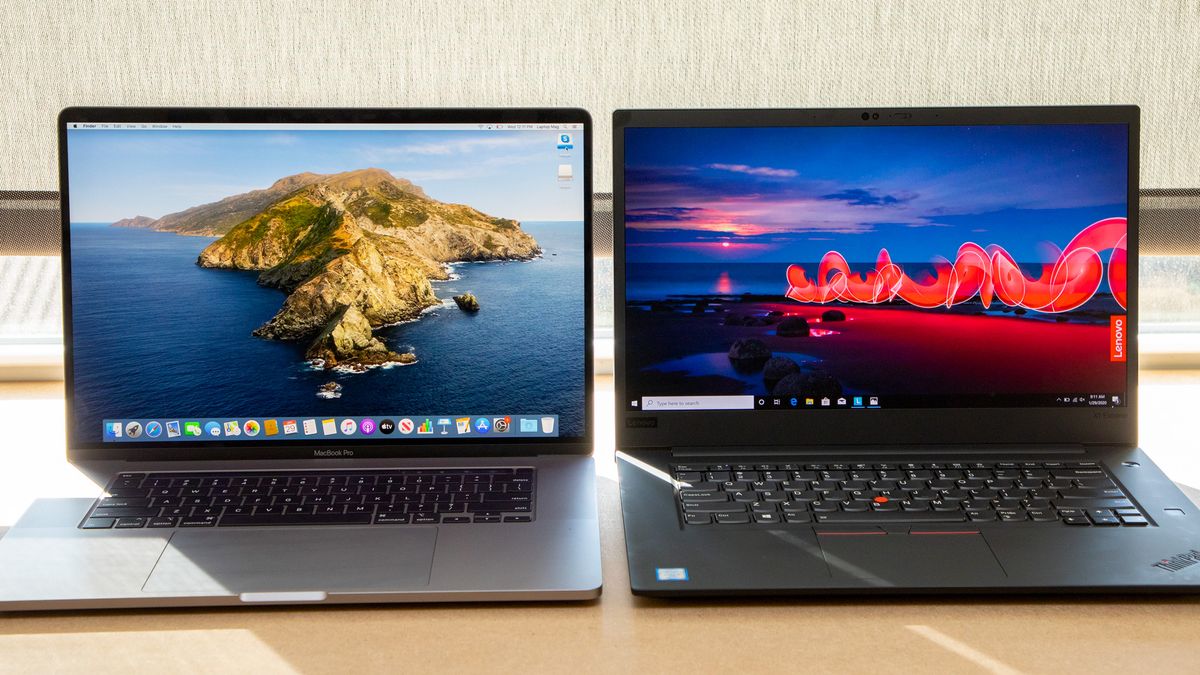

The Future Titans: MacBook Pro M4 vs. Lenovo ThinkPad X1 Extreme 2025 – A Speculative Showdown
The professional laptop market is a battleground of innovation, where raw power, exquisite design, and seamless user experience vie for supremacy. As technology relentlessly marches forward, the lines between mobile workstations and high-performance ultrabooks blur, catering to a diverse range of demanding users. Looking ahead to 2025, two titans are poised to dominate this arena: Apple’s anticipated MacBook Pro featuring the revolutionary M4 chip, and Lenovo’s next-generation ThinkPad X1 Extreme, likely the Gen 7 or Gen 8 iteration.
It is crucial to preface this comparison by acknowledging its speculative nature. Both the MacBook Pro M4 and the ThinkPad X1 Extreme 2025 are unreleased products, and their final specifications will undoubtedly hold surprises. However, by leveraging current technological trends, the established trajectories of both Apple Silicon and Intel/AMD processors, and the design philosophies of these venerable brands, we can construct a detailed and insightful forecast of what these machines might offer. This article will delve into a comprehensive, speculative analysis across key metrics, aiming to illuminate the distinct advantages and potential trade-offs of each, guiding future professionals in their critical purchasing decisions.
I. Design and Build Quality: Aesthetics vs. Enduring Practicality
The aesthetic and structural philosophies of Apple and Lenovo represent two distinct schools of thought, each refined over decades. The MacBook Pro M4 is expected to continue Apple’s unwavering commitment to minimalist design and premium materials. We anticipate a unibody enclosure crafted from aerospace-grade aluminum, presenting a sleek, uniform profile with precision-machined edges. The iconic design language, emphasizing thinness, lightness, and structural rigidity, will likely remain largely unchanged from its M3 predecessor, perhaps with minor refinements in thermal venting or port placement. The MacBook Pro’s design is an embodiment of modern luxury, exuding a high-tech, aspirational appeal. Its premium feel is undeniable, making it a statement piece as much as a workhorse.
In stark contrast, the Lenovo ThinkPad X1 Extreme 2025 will undoubtedly uphold the ThinkPad legacy of robust, business-centric design. While not as outwardly "glamorous" as the MacBook Pro, its aesthetic prioritizes functionality and durability. Expect a blend of high-strength carbon fiber and magnesium alloy in its construction, ensuring military-grade toughness capable of withstanding the rigors of frequent travel and demanding professional environments. The signature matte black finish, subtle red accents, and utilitarian lines will signal its professional intent. Lenovo’s design emphasizes ergonomics and repairability, often featuring a slightly thicker chassis to accommodate more robust cooling solutions and a greater array of ports. While the MacBook Pro aims for integrated elegance, the ThinkPad X1 Extreme seeks enduring practicality and a proven track record of reliability. Both will represent the pinnacle of their respective design principles, appealing to users with differing priorities for form and function.
II. Performance: The Engine Room – Apple Silicon vs. The x86 Evolution
This is arguably the most critical battleground, where the ARM-based Apple Silicon architecture faces off against the continuously evolving x86 processors from Intel and AMD, augmented by powerful discrete GPUs.
A. CPU Architecture and Core Performance
The MacBook Pro M4 is anticipated to push the boundaries of Apple Silicon further. Building on the efficiency and performance gains of the M1, M2, and M3 chips, the M4 will likely feature a more advanced fabrication process (e.g., 2nm or improved 3nm), leading to higher transistor density and improved power efficiency. We can expect an increased number of high-performance and high-efficiency cores, along with a significantly enhanced Neural Engine for AI tasks. Its unified memory architecture, where CPU, GPU, and NPU share a single, high-bandwidth memory pool, will continue to offer unparalleled efficiency and speed for memory-intensive workloads, eliminating data copying overhead. This architecture typically translates to exceptional sustained performance under heavy load, particularly in professional creative applications optimized for macOS.
The ThinkPad X1 Extreme 2025, on the other hand, will likely feature Intel’s next-generation processors (e.g., Lunar Lake or Arrow Lake, or their successors) or AMD’s Zen 5-based Ryzen chips. Both Intel and AMD are rapidly advancing their hybrid architectures, combining powerful performance cores with efficient cores to optimize power consumption and multi-threaded performance. These chips will boast significant IPC (Instructions Per Cycle) improvements, higher clock speeds, and advanced instruction sets tailored for Windows applications. While they won’t feature Apple’s unified memory, advancements in DDR5/DDR6 RAM and PCIe Gen 5 SSDs will provide substantial bandwidth and storage speed. The X1 Extreme’s x86 processors will offer broad compatibility with legacy software and specific enterprise applications that may not be available or optimized for macOS.
The fundamental difference lies in their approach: Apple’s M4 will focus on extreme efficiency and tightly integrated performance within its ecosystem, while the ThinkPad X1 Extreme’s CPU will offer raw computational muscle with broader compatibility and potentially higher peak single-core performance for certain tasks, particularly those not optimized for ARM.
B. Graphics Performance (GPU)
Here, the ThinkPad X1 Extreme traditionally holds a significant advantage for users requiring dedicated graphics power. The 2025 model is expected to feature discrete NVIDIA GeForce RTX GPUs (potentially from the RTX 50-series or its successor) or powerful AMD Radeon counterparts. These GPUs come with their own dedicated VRAM (Video Random Access Memory), offering immense parallel processing capabilities crucial for demanding tasks like 3D rendering, CAD, scientific simulations, video editing with complex effects, and of course, high-end gaming. The latest discrete GPUs will feature advanced ray tracing, AI-driven upscaling (DLSS/FSR), and massive CUDA/Stream Processor counts.
The MacBook Pro M4 will rely on its integrated Apple GPU, which is part of the M4 chip’s unified architecture. While Apple’s integrated GPUs have made astonishing progress, offering performance comparable to some discrete GPUs in specific workloads and excelling in power efficiency, they fundamentally operate with shared memory. The M4’s GPU will likely see a significant increase in core count, advanced hardware acceleration for video codecs (ProRes, H.264/H.265), and enhanced ray tracing capabilities. For applications optimized for Apple’s Metal API (like Final Cut Pro, Logic Pro, DaVinci Resolve), the M4 GPU will deliver exceptional performance per watt. However, for applications heavily reliant on NVIDIA CUDA or requiring vast amounts of dedicated VRAM, the ThinkPad X1 Extreme with its discrete GPU will likely remain the more powerful option.
C. Neural Processing Unit (NPU) and AI Capabilities
Both machines will heavily lean into Artificial Intelligence. The MacBook Pro M4 will feature an even more powerful Neural Engine, building on Apple’s expertise in on-device AI. This NPU will accelerate machine learning tasks, enhance intelligent features within macOS (e.g., Siri, Spotlight, photo analysis), and empower AI-driven capabilities in creative applications (e.g., object detection, smart editing, generative AI features). Apple’s Core ML framework ensures seamless integration of AI models into its ecosystem, providing a fast and secure environment for AI inference.
The ThinkPad X1 Extreme 2025’s Intel or AMD processor will also integrate next-generation NPUs, designed to accelerate AI workloads directly on the device. These NPUs will be critical for Windows Copilot integration, enhancing productivity features, improving video conferencing (e.g., background blur, eye contact correction), and accelerating various AI models used in professional software. With Microsoft’s push for "AI PCs," the ThinkPad X1 Extreme will be a prime example of how Windows leverages on-device AI for a smarter and more efficient user experience.
The difference here might be in the breadth and depth of ecosystem integration. Apple’s tightly controlled hardware-software stack allows for deep optimization of AI features, while Windows offers a more open platform for developers to utilize the NPU, potentially leading to a wider array of AI-powered applications.
D. Memory and Storage
The MacBook Pro M4 will continue to feature unified memory, likely in LPDDR5X or LPDDR6 variants, offering immense bandwidth and low latency. However, it will remain non-upgradable after purchase. Storage will be via extremely fast, soldered NVMe SSDs, with options likely up to 8TB or more, though also non-upgradable.
The ThinkPad X1 Extreme 2025 will likely offer more traditional memory options, supporting DDR5/DDR6 RAM, with the possibility of user-upgradable slots (a hallmark of ThinkPads). It will also feature fast NVMe SSDs, potentially with multiple M.2 slots for expanded storage, offering greater flexibility and future-proofing for users who need to upgrade components.
III. Display Technology: Visual Brilliance
Apple’s Liquid Retina XDR displays are a benchmark in laptop screens. The MacBook Pro M4 will undoubtedly feature a stunning Mini-LED display, offering incredible contrast ratios (local dimming zones), true blacks, and exceptional peak brightness (especially for HDR content). ProMotion technology will provide adaptive refresh rates up to 120Hz, ensuring buttery-smooth scrolling and responsiveness. Color accuracy, covering the P3 wide color gamut, will be top-tier, making it ideal for professional content creation (video editing, graphic design, photography).
The ThinkPad X1 Extreme 2025 will offer a range of display options, likely including high-resolution IPS panels (QHD+ or 4K) and potentially OLED options for superior contrast and vibrant colors. While some models may offer high refresh rates, the focus is often on color accuracy (with factory calibration) and practical features like touch support and anti-glare coatings, which are crucial for professional use in varying lighting conditions. The choice between an X1 Extreme’s display and a MacBook Pro’s often comes down to specific needs: the MacBook Pro excels in HDR and overall visual ‘pop’, while the ThinkPad might offer more flexibility (e.g., touch, matte finish) depending on configuration.
IV. Keyboard, Trackpad, and Input Methods: Tactile Feedback vs. Haptic Precision
The input experience is paramount for productivity. The MacBook Pro M4 will feature Apple’s Magic Keyboard, a refined scissor-switch mechanism known for its stable, consistent key feel and comfortable travel. The large Force Touch trackpad provides haptic feedback, precise cursor control, and multi-touch gestures, setting a high standard for trackpad usability.
The ThinkPad X1 Extreme 2025 will carry the legendary ThinkPad keyboard, renowned for its deep key travel, tactile feedback, and ergonomic design. Many professionals swear by its typing experience, finding it superior for extended typing sessions. The inclusion of the iconic TrackPoint (red pointing stick) alongside a large Mylar trackpad offers users dual navigation options. While the MacBook Pro’s trackpad is unmatched in haptics, the ThinkPad’s physical keyboard and TrackPoint often win over users prioritizing tactile feedback and precision without lifting hands from the home row.
V. Connectivity and Ports: Streamlined vs. Comprehensive
Apple’s philosophy has long favored fewer, more versatile ports. The MacBook Pro M4 will likely continue with a selection of Thunderbolt (USB4) ports, offering incredible bandwidth for external displays, storage, and eGPUs (though less needed with M4’s power). An HDMI port and an SDXC card slot will cater to common creative needs, complemented by MagSafe 3 for charging.
The ThinkPad X1 Extreme 2025, being a workstation-class machine, will offer a more comprehensive port selection. Expect multiple USB-A ports for legacy peripherals, several USB-C/Thunderbolt ports for modern connectivity, a full-size HDMI port, an SD card reader, and potentially an Ethernet port (or included adapter). This wider array caters to IT professionals, engineers, and users who frequently connect to various external devices without relying on dongles. Both will support the latest wireless standards, including Wi-Fi 7 and Bluetooth 5.4 or newer, for blazing-fast wireless communication.
VI. Battery Life and Power Efficiency: Endurance Champions
Apple Silicon has redefined laptop battery life. The MacBook Pro M4, with its advanced fabrication process and hyper-efficient architecture, is expected to deliver truly exceptional battery longevity, potentially offering 20+ hours of mixed usage on a single charge. This allows professionals to work a full day or more without needing to carry a charger.
The ThinkPad X1 Extreme 2025, while benefiting from significant power efficiency improvements in Intel/AMD processors and Windows optimizations, will likely still trail the MacBook Pro, especially when its discrete GPU is actively engaged. Expect solid all-day battery life (perhaps 10-15 hours for mixed use), but demanding tasks will consume power more rapidly. Lenovo will likely equip it with a large battery and fast-charging capabilities to mitigate this. For users constantly on the go and away from power outlets, the MacBook Pro M4 will likely be the undisputed champion.
VII. Software Ecosystem and User Experience: macOS vs. Windows
This is perhaps the most fundamental differentiator.
MacBook Pro M4 (macOS): Offers a Unix-based operating system known for its intuitive user interface, robust security, and tight integration with Apple’s hardware. macOS provides a highly polished, consistent user experience, with powerful native applications for creative professionals (Final Cut Pro, Logic Pro). The Apple ecosystem benefits (Continuity, Handoff, AirDrop) provide seamless integration with iPhones, iPads, and other Apple devices. Developers often appreciate its Unix underpinnings and robust developer tools. However, software compatibility can be a limiting factor for specific Windows-only applications or certain enterprise tools.
ThinkPad X1 Extreme 2025 (Windows): Windows 12 (or its next iteration) will be the operating system, offering unparalleled software compatibility across a vast ecosystem of applications, including specialized engineering software, enterprise solutions, and, crucially, a massive library of PC games. Windows offers greater customizability, more open-source software support, and a broader range of hardware peripherals. The integration with Microsoft 365 services and Azure cloud is seamless. For IT professionals, gamers, and users tied to specific Windows-only applications, the ThinkPad X1 Extreme is the only choice. The upcoming "AI PC" features will further enhance the Windows experience, bringing AI directly to the desktop.
The choice here is deeply personal and dependent on existing workflows, software dependencies, and ecosystem preferences.
VIII. Security and Privacy Features: Safeguarding Your Data
Both machines will offer robust security. The MacBook Pro M4 will leverage Apple’s Secure Enclave for biometric authentication (Touch ID), data encryption, and secure boot. macOS’s Gatekeeper and System Integrity Protection provide strong defenses against malware and unauthorized system modifications.
The ThinkPad X1 Extreme 2025 will feature a dTPM 2.0 chip for hardware-level encryption and security. Windows Hello will enable biometric login via fingerprint reader and potentially facial recognition. Lenovo’s ThinkShutter physical webcam cover, self-healing BIOS, and various enterprise security features (e.g., vPro support on Intel models) will cater to business and IT security requirements. Both will provide excellent security, with the ThinkPad often offering more physical and enterprise-specific security options.
IX. Upgradeability and Maintainability: Longevity vs. Integration
This is a clear point of divergence. The MacBook Pro M4, like its predecessors, will feature soldered RAM and SSDs. While this contributes to its thin design and unified memory performance, it means no user-serviceability or upgrades post-purchase. Any future memory or storage needs must be anticipated at the time of purchase.
The ThinkPad X1 Extreme 2025, true to ThinkPad tradition, is expected to offer a higher degree of user-serviceability. This typically includes upgradable RAM slots and multiple M.2 SSD slots, allowing users to expand memory and storage as their needs evolve. This design philosophy significantly enhances the machine’s longevity and total cost of ownership for businesses, who can easily upgrade or repair components.
X. Pricing, Configuration Options, and Value Proposition
The MacBook Pro M4 will command a premium price, with configurations offering higher RAM and storage significantly increasing the cost. Its value proposition lies in its long-term software support, exceptional performance-per-watt, and strong resale value, making it a sound investment for many creative professionals.
The ThinkPad X1 Extreme 2025 will likely offer a wider range of configuration options, allowing users to tailor the machine more precisely to their budget and performance needs. While high-end configurations can be equally expensive, Lenovo often provides more competitive pricing at entry and mid-levels, along with frequent sales and enterprise discounts. Its value comes from its repairability, robust build, and compatibility with a vast software ecosystem, making it a workhorse that can be maintained and upgraded over time.
XI. Target Audience and Use Cases
MacBook Pro M4:
- Creative Professionals: Video editors, graphic designers, music producers, photographers who benefit from macOS-optimized apps (Final Cut Pro, Logic Pro) and the M4’s powerful media engines.
- Developers: Especially those in the Apple ecosystem (iOS/macOS app development) or those who prefer a Unix-like environment.
- General Power Users: Those who prioritize premium design, exceptional battery life, and a seamless Apple ecosystem experience.
- Academics/Researchers: Users needing high computational efficiency and reliable performance for data analysis or simulations.
Lenovo ThinkPad X1 Extreme 2025:
- Engineers and Architects: Users of CAD, 3D modeling, and simulation software that often requires powerful discrete GPUs and Windows compatibility.
- Data Scientists and AI/ML Professionals: Who may need specific GPU frameworks (e.g., CUDA) and prefer the flexibility of Windows for various libraries and toolchains.
- IT Professionals and Enterprise Users: Valuing robust security, manageability features, repairability, and broad software compatibility.
- Gamers: Who also require a powerful workstation for work, leveraging the discrete GPU for both.
- Power Users: Needing maximum hardware flexibility, upgradability, and compatibility with a wide range of peripherals and software.
XII. Conclusion: A Choice of Ecosystems and Priorities
The speculative showdown between the MacBook Pro M4 and the Lenovo ThinkPad X1 Extreme 2025 highlights a fascinating divergence in the professional laptop landscape. Both machines will undoubtedly represent the pinnacle of their respective categories, offering immense power and sophisticated features.
The MacBook Pro M4 will likely appeal to creative professionals, developers within the Apple ecosystem, and users who prioritize a seamless, integrated, and highly efficient computing experience. Its strengths will lie in its unparalleled power efficiency, industry-leading battery life, stunning display, and the tightly optimized macOS environment, particularly for Apple’s own creative applications. It is a premium, integrated tool designed for focused, high-performance work within its curated ecosystem.
The Lenovo ThinkPad X1 Extreme 2025, on the other hand, will cater to engineers, data scientists, power users, and IT professionals who require maximum hardware flexibility, robust build quality, and the extensive software compatibility of the Windows ecosystem. Its likely inclusion of a powerful discrete GPU will make it the superior choice for graphics-intensive tasks, gaming, and specific professional software. Its upgradability and enterprise-focused features also present a compelling total cost of ownership for businesses and users who value long-term adaptability.
Ultimately, the decision will hinge on individual priorities: the operating system preference, specific software requirements, the need for dedicated graphics power, the importance of battery life versus component upgradability, and the value placed on design aesthetics versus enduring practicality. Both the MacBook Pro M4 and the ThinkPad X1 Extreme 2025 are poised to be exceptional machines, but they will serve distinct masters in the professional computing world of tomorrow.


