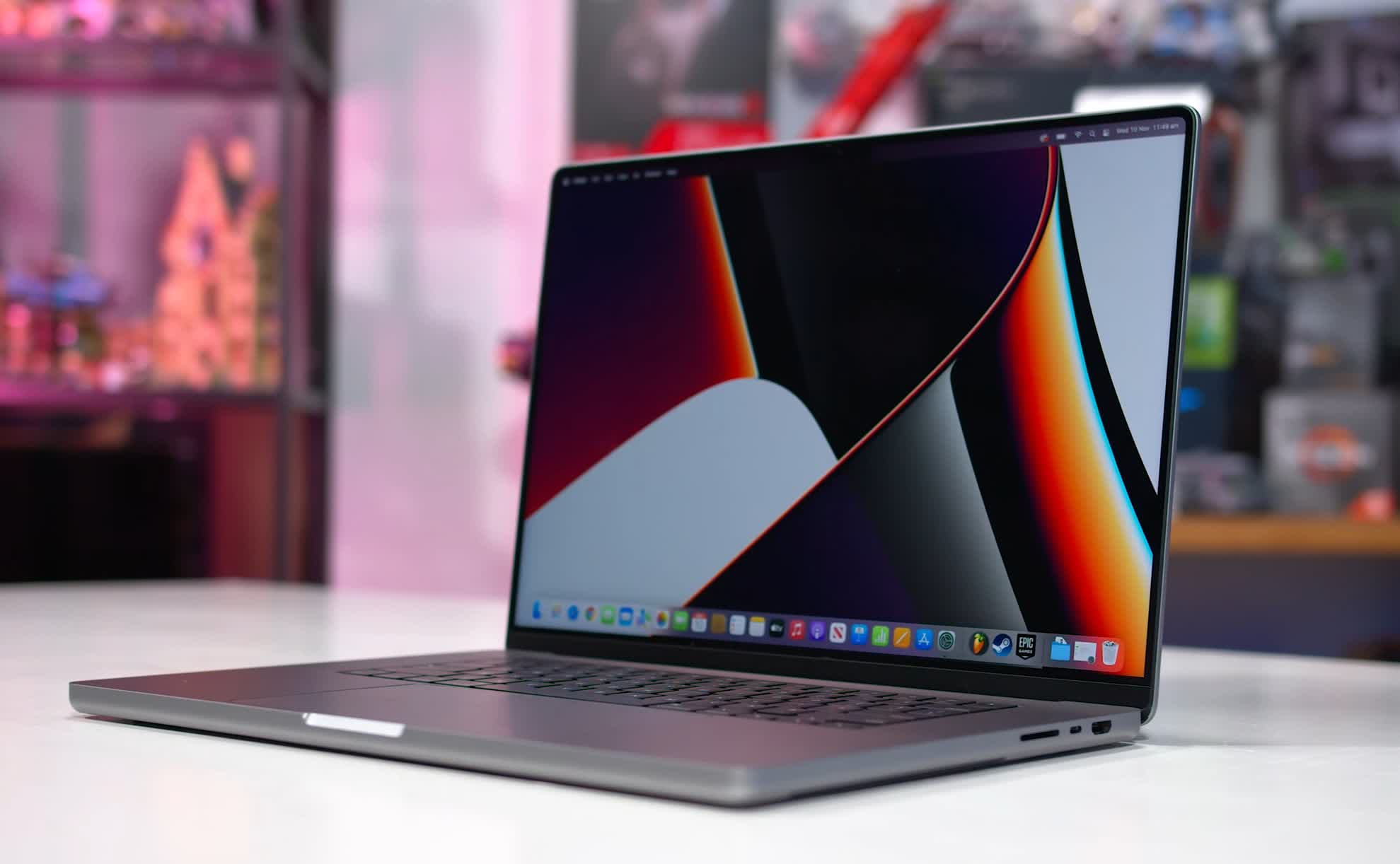

The Canvas of Innovation: A Deep Dive into the MacBook Pro M4’s Anticipated Liquid Retina XDR Display
In the realm of professional computing, the display is not merely an output device; it is the window to a creator’s vision, the canvas for a developer’s code, and the portal to immersive experiences. For years, Apple has set a high bar for display technology in its MacBook Pro lineup, culminating in the groundbreaking Liquid Retina XDR. As the tech world buzzes with anticipation for the upcoming MacBook Pro models potentially powered by the M4 chip, the focus inevitably sharpens on what improvements, if any, will grace its visual interface. While the M4 MacBook Pro is yet to be officially unveiled, we can confidently project its display capabilities based on the stellar foundation laid by the current M3 generation, understanding that Apple’s philosophy is one of continuous refinement rather than radical, unannounced overhauls.
This article will embark on an exhaustive journey into the heart of the MacBook Pro’s display technology, dissecting the intricate components that comprise the Liquid Retina XDR. We will explore its revolutionary Mini-LED backlighting, the fluidity of ProMotion, the stunning impact of Extreme Dynamic Range, and the unwavering commitment to color accuracy. Furthermore, we will delve into the profound implications these features have for a diverse array of professional workflows, anticipate the M4’s potential role in elevating this experience, and ultimately, evaluate why the MacBook Pro’s display remains a benchmark against which others are measured.
A Legacy of Visual Excellence: The Evolution of MacBook Pro Displays
To truly appreciate the Liquid Retina XDR, it’s essential to understand the path Apple has trodden in display innovation. The original MacBook Pro models relied on conventional LCD panels, impressive for their time but lacking the pixel density and color fidelity that would become Apple’s hallmark. The paradigm shifted dramatically with the introduction of the "Retina display" in 2012. This marked a pivotal moment, ushering in an era where individual pixels became indistinguishable to the naked eye at normal viewing distances, revolutionizing readability and visual sharpness.
Subsequent iterations brought enhancements like P3 wide color gamut support, offering a broader spectrum of colors crucial for professional creative work. However, the most significant leap arrived in 2021 with the redesigned MacBook Pro, which debuted the Liquid Retina XDR display. This was not merely an incremental upgrade; it was a fundamental re-engineering of the display architecture, integrating Mini-LED backlighting and ProMotion technology. This established the current gold standard, a foundation that the M4 MacBook Pro is expected to inherit and potentially refine, further cementing its status as the ultimate portable workstation for visual professionals.
Deconstructing the Liquid Retina XDR Display: A Symphony of Technologies
The Liquid Retina XDR is not a single feature but a sophisticated amalgamation of cutting-edge display technologies working in concert. Each component plays a crucial role in delivering the unparalleled visual experience that MacBook Pro users have come to expect.
1. Mini-LED Backlighting: The Foundation of XDR
At the core of the Liquid Retina XDR’s brilliance lies its Mini-LED backlighting system. Unlike traditional LCDs that use a few large LEDs to illuminate the entire panel, Mini-LED employs tens of thousands of microscopic LEDs, often numbering over 10,000, distributed across the display. These tiny LEDs are grouped into thousands of individually controllable local dimming zones – for instance, the 14-inch MacBook Pro boasts 2,556 zones, and the 16-inch model features 10,240 zones.
How it Works: When a scene requires dark areas, the Mini-LEDs in those specific local dimming zones can be dimmed or completely turned off, while adjacent zones remain brightly lit. This granular control allows for an astonishingly precise manipulation of light.
Benefits:
- Incredible Contrast Ratio: By dimming individual zones, the display can achieve a staggering 1,000,000:1 contrast ratio, rivaling the "perfect blacks" typically associated with OLED technology. This means true, inky blacks appear alongside dazzling whites and vibrant colors, adding depth and realism to any content.
- Reduced Blooming: While some level of "blooming" (light bleed from bright objects into dark areas) can be inherent in any local dimming system, Apple’s advanced algorithms and high number of dimming zones significantly minimize this effect, making it largely imperceptible in most viewing scenarios.
- Superior Brightness Consistency: The distributed nature of Mini-LEDs ensures more uniform illumination across the screen compared to edge-lit or even full-array local dimming (FALD) LCDs with fewer zones.
2. ProMotion Technology: Fluidity Redefined
Introduced to the MacBook Pro alongside Mini-LED, ProMotion is Apple’s adaptive refresh rate technology. It dynamically adjusts the display’s refresh rate from a power-efficient 24Hz up to an ultra-smooth 120Hz, depending on the content being displayed.
How it Works:
- Dynamic Adaptation: When you’re scrolling through a webpage, watching a high-frame-rate video, or playing a game, ProMotion ramps up to 120Hz, making movements incredibly fluid and responsive.
- Power Efficiency: When viewing static content like a document or an image, the refresh rate drops to as low as 24Hz, conserving battery life without compromising the visual experience.
Benefits:
- Silky Smooth Visuals: Scrolling, animations, cursor movements, and video playback are remarkably fluid, reducing motion blur and providing a more comfortable viewing experience, especially during extended use.
- Enhanced Responsiveness: For tasks requiring precision, such as graphic design with a stylus (if an external display like the Studio Display is used) or fast-paced video editing, the higher refresh rate translates to more immediate feedback.
- Optimized for Creative Workflows: Video editors can view their footage at native frame rates (e.g., 24fps, 30fps, 60fps), ensuring accurate representation. Gamers (though a niche for MacBook Pro) also benefit from reduced input lag and smoother gameplay.
3. Extreme Dynamic Range (XDR): The Brilliance of Light
The "XDR" in Liquid Retina XDR stands for Extreme Dynamic Range, a testament to the display’s exceptional brightness capabilities. This feature is paramount for viewing and creating High Dynamic Range (HDR) content.
Key Specifications:
- Sustained Brightness: The display can maintain a consistent 1000 nits of full-screen brightness. This is crucial for professional HDR workflows, ensuring that editors can work with bright scenes without the display dimming.
- Peak Brightness: For specular highlights and brief bursts of intense light in HDR content, the display can reach an astonishing 1600 nits. This means explosions, sun glares, or reflections appear incredibly vivid and lifelike.
Benefits:
- Lifelike HDR Content: XDR transforms HDR movies, TV shows, and games, bringing out incredible detail in both the brightest and darkest parts of a scene simultaneously, replicating what the human eye perceives more accurately.
- Professional HDR Grading: For video editors and colorists, the XDR display provides a reliable and accurate reference monitor for HDR grading, eliminating the need for expensive external reference displays for many tasks.
- Enhanced Realism: Whether it’s the subtle glow of a distant star or the blinding glare of a car headlight, the XDR display renders these elements with breathtaking realism, adding a new dimension to visual storytelling.
4. Wide Color (P3): A Spectrum of Professional Hues
The Liquid Retina XDR display supports the P3 wide color gamut, which is a significantly larger color space than the traditional sRGB (standard Red Green Blue) used in most consumer displays.
How it Works: The P3 gamut encompasses a broader range of greens and reds, allowing for the display of more vibrant and accurate colors, particularly those found in professional photography, videography, and graphic design.
Benefits:
- Color Accuracy: The display is factory-calibrated, ensuring out-of-the-box color accuracy that professionals demand. This means that the colors you see on screen are a true representation of the final output.
- Creative Freedom: For artists and designers, P3 support provides a richer palette to work with, ensuring their creations are displayed with the intended vibrancy and nuance.
- Consistency Across Devices: With P3 becoming a standard in professional content creation and increasingly common on Apple’s ecosystem, creators can expect consistent color representation across their Apple devices.
5. True Tone Technology: Adaptive Comfort
True Tone technology, while seemingly subtle, contributes significantly to user comfort and visual accuracy in varying environments.
How it Works: Using advanced multi-channel sensors, True Tone measures the ambient light color and intensity in your environment. It then automatically adjusts the white balance and brightness of the display to match, making images appear more natural and reducing eye strain.
Benefits:
- Reduced Eye Strain: By adapting the display’s white point to the surrounding light, True Tone makes reading and viewing more comfortable, especially during long working sessions.
- Natural Viewing Experience: Images and text retain a consistent appearance, whether you’re working under warm incandescent lights or cool fluorescent lighting, or even outdoors.
- Unobtrusive Operation: The adjustments are seamless and happen in the background, making the technology feel intuitive rather than distracting.
The "M4" MacBook Pro Display: Anticipating Continued Excellence
While the M4 chip’s primary focus will be on raw processing power, AI capabilities, and energy efficiency, its impact on the display experience, though indirect, will be profound. It is highly probable that the M4 MacBook Pro will carry forward the existing Liquid Retina XDR display technology, given its already industry-leading status. Apple rarely introduces entirely new display technologies in consecutive generations.
However, the M4 chip’s advanced display engine and enhanced neural processing could lead to subtle yet meaningful refinements:
- Improved Local Dimming Algorithms: The M4’s more powerful neural engine could potentially drive even more sophisticated local dimming algorithms, further reducing blooming artifacts and enhancing contrast precision.
- Enhanced Power Efficiency: While Mini-LED is already efficient, the M4’s overall power management capabilities could squeeze even more battery life out of the display, allowing professionals to work longer on demanding visual tasks.
- Faster Response Times: Although already excellent, the M4 could contribute to marginal improvements in pixel response times, further enhancing the fluidity of ProMotion.
- Future-Proofing: The M4’s raw processing power ensures that the display can continue to handle increasingly complex HDR and high-resolution content without compromise, even as industry standards evolve.
In essence, the M4 MacBook Pro’s display will likely be a continuation of the Liquid Retina XDR’s established excellence, with the new chip serving to drive it with unparalleled efficiency and a potential for even greater algorithmic refinement.
A Professional’s Canvas: Real-World Applications and Benefits
The true measure of a display’s quality lies in its utility for the professionals who rely on it daily. The Liquid Retina XDR on the MacBook Pro is designed from the ground up to empower creators across a multitude of disciplines.
1. Content Creation: Unlocking Visual Potential
- Video Editing and Color Grading: For filmmakers, videographers, and colorists, the XDR display is a game-changer. The 1,000,000:1 contrast ratio and 1600 nits peak brightness allow for accurate HDR grading directly on the laptop, a feat previously requiring dedicated, expensive reference monitors. ProMotion ensures smooth playback of various frame rates, and P3 wide color guarantees fidelity in color correction. The ability to see true blacks and brilliant highlights simultaneously transforms the editing process, making creative decisions more informed and precise.
- Photography and Image Manipulation: Photographers benefit immensely from the display’s detail and color accuracy. Editing RAW files, retouching images, or preparing prints demands a screen that can render subtle gradients and vibrant hues with precision. The P3 color gamut ensures that the colors seen on the screen match the intended output, while the high resolution allows for meticulous pixel-peeping.
- Graphic Design and Illustration: For graphic designers and illustrators, the Liquid Retina XDR provides a consistent and vibrant canvas. Whether designing logos, creating marketing materials, or illustrating intricate artwork, the P3 wide color and crisp resolution ensure that every detail and color choice is accurately represented. The smooth scrolling and responsive nature of ProMotion also contribute to a more enjoyable and efficient workflow.
- 3D Rendering and Animation: Animators and 3D artists rely on accurate visual feedback. The display’s ability to render complex scenes with precise lighting, shadows, and textures, combined with the smooth motion provided by ProMotion, makes the viewport experience significantly more immersive and productive. HDR content creation in 3D also benefits from the XDR’s dynamic range.
2. Software Development: Clarity and Precision
While not always considered "visual" professionals, software developers, UI/UX designers, and data scientists benefit immensely from a high-quality display. The sharp text rendering reduces eye strain during long coding sessions, and the ample screen real estate (especially on the 16-inch model) allows for multiple windows and code editors to be open simultaneously without feeling cramped. For UI/UX designers, the P3 color accuracy and XDR capabilities are crucial for ensuring that app interfaces look their best across various devices and lighting conditions.
3. Science and Engineering: Detailed Visualization
Scientists, engineers, and architects often work with highly detailed schematics, complex data visualizations, and intricate CAD models. The MacBook Pro’s high-resolution display renders these with exceptional clarity, allowing for precise examination of minute details. The wide color gamut can also be beneficial for distinguishing between different data sets or material properties represented by color.
4. General Productivity and Media Consumption
Beyond professional applications, the Liquid Retina XDR elevates everyday tasks. Reading documents, browsing the web, or multitasking across various applications becomes a more pleasant experience due to the sharp text and fluid scrolling. For media consumption, the display is simply breathtaking. Watching movies or TV shows, especially those in HDR, is an immersive experience, with deep blacks, vibrant colors, and dazzling highlights that rival dedicated home theater setups.
Comparing with Competitors: Apple’s Edge
While other manufacturers have introduced laptops with impressive displays, including OLED and Mini-LED panels, Apple’s Liquid Retina XDR often stands out due to its holistic implementation and ecosystem integration.
- OLED vs. Mini-LED: OLED displays offer "perfect blacks" because each pixel is self-emissive. However, they can struggle with full-screen sustained brightness and are susceptible to burn-in, a concern for static professional workflows. Apple’s Mini-LED, while not pixel-perfect, achieves incredibly deep blacks and superior full-screen sustained brightness, making it ideal for HDR content creation and long-term professional use without burn-in worries.
- Consistency and Calibration: Apple’s displays are renowned for their factory calibration and color accuracy, ensuring that what you see is a true representation. This level of consistency is not always guaranteed across all competing brands.
- Hardware-Software Integration: The seamless integration of the display hardware with macOS and the M-series chips ensures optimal performance, power efficiency, and a refined user experience that is difficult for multi-vendor PC ecosystems to match.
Potential Areas for Future Refinement
While the Liquid Retina XDR is already phenomenal, innovation is ceaseless. Future iterations, perhaps beyond the M4, could explore:
- Even Finer Local Dimming: An increased number of Mini-LEDs and dimming zones could further reduce blooming and enhance micro-contrast.
- Under-Display Camera: While a significant engineering challenge, integrating the webcam under the display would allow for truly bezel-less designs.
- Touchscreen/Stylus Support: While Apple has historically resisted touchscreens on macOS, the success of the iPad Pro with the Apple Pencil makes this a persistent request from some creative professionals.
Conclusion: The Unrivaled Visual Powerhouse
The MacBook Pro’s Liquid Retina XDR display, a marvel of modern engineering, stands as a testament to Apple’s unwavering commitment to visual excellence. Its innovative Mini-LED backlighting, fluid ProMotion technology, breathtaking Extreme Dynamic Range, and meticulous color accuracy combine to create an unparalleled visual experience.
As we look ahead to the M4 MacBook Pro, we anticipate a continuation of this legacy, with the new silicon likely refining the display’s performance through enhanced algorithms and efficiency. For professionals across every creative and technical discipline, this display is more than just a screen; it is a critical tool that unlocks creative potential, ensures precision, and transforms the way work is perceived and produced. It is the canvas upon which the next generation of innovations will be brought to life, solidifying the MacBook Pro’s position as the definitive portable workstation for those who demand nothing less than visual perfection. The M4 MacBook Pro, inheriting and subtly enhancing this magnificent display, will undoubtedly continue to set the benchmark for what a professional laptop display can achieve.


