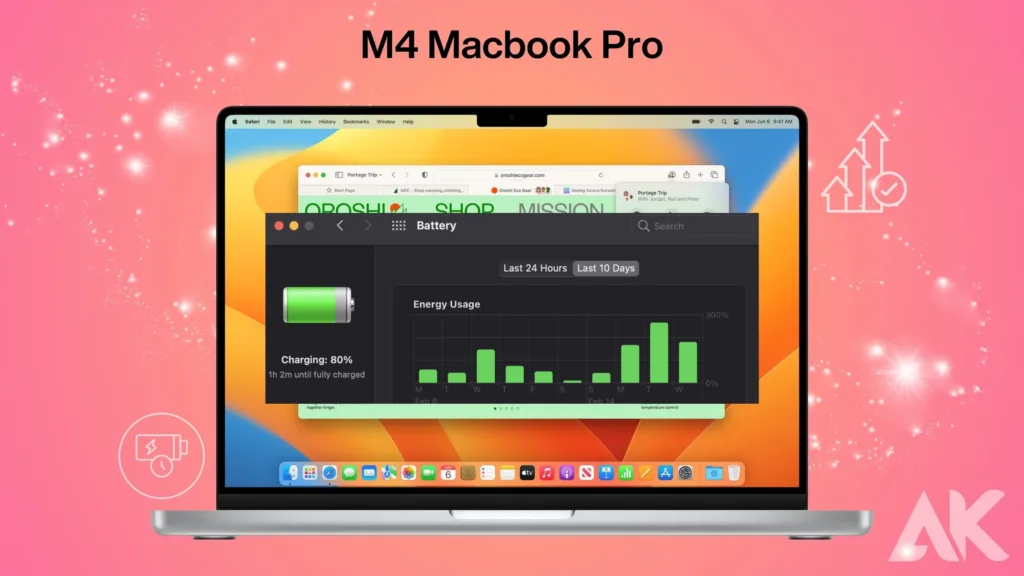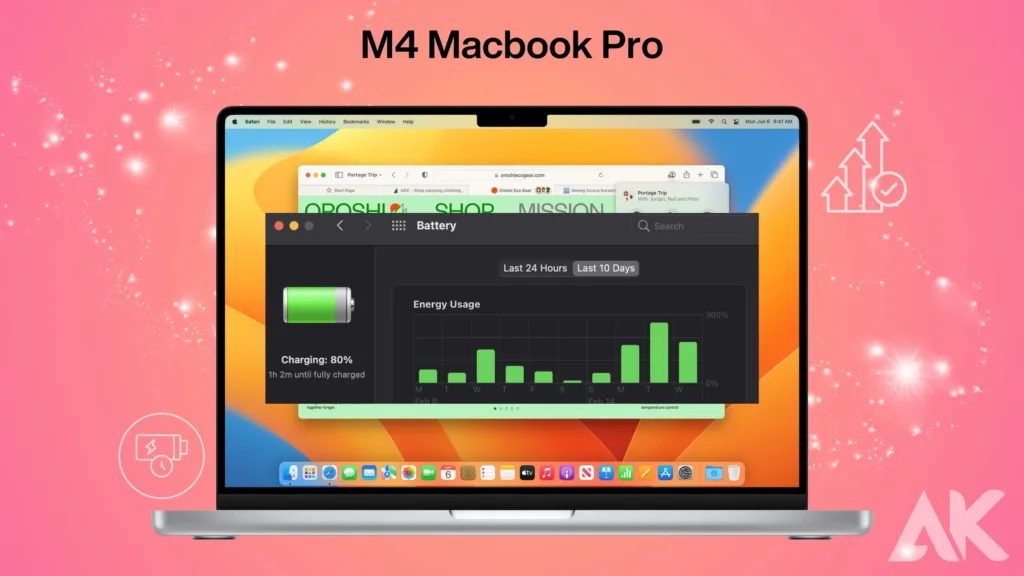

The Untamed Power: A Speculative Deep Dive into MacBook Pro M4 Battery Life and Efficiency
Introduction: The Dawn of a New Era (Anticipated)
Apple’s Silicon journey has been nothing short of revolutionary, fundamentally redefining what’s possible in portable computing. From the groundbreaking M1 to the formidable M3 Max, each iteration has pushed the boundaries of performance-per-watt, delivering desktop-class power in whisper-quiet, incredibly efficient designs. Now, with the M4 chip having made its debut in the iPad Pro, the tech world is abuzz with anticipation: what will the M4 bring to the MacBook Pro? While an M4-powered MacBook Pro is yet to be officially announced, the M4’s capabilities in the iPad Pro offer tantalizing clues about the future of Apple’s flagship laptops. This article embarks on a speculative, yet thoroughly researched, exploration of what we can expect from the MacBook Pro M4’s battery life and efficiency, projecting potential benchmarks, real-world performance, and the underlying architectural advancements that will likely make it Apple’s most efficient and powerful professional laptop yet. Our aim is to construct a comprehensive hypothetical test, envisioning the methodology and the expected outcomes for a device that, while currently residing in the realm of future possibility, is poised to set new industry standards.
The Apple Silicon Legacy: A Foundation of Efficiency
Before diving into the M4, it’s crucial to acknowledge the bedrock upon which its potential rests. The M1 chip, introduced in 2020, marked a radical departure from Intel processors, offering unprecedented leaps in performance and, more critically for portable devices, phenomenal power efficiency. Users accustomed to a few hours of battery life under heavy loads suddenly found their MacBooks lasting an entire workday, often longer. The M2 and M3 generations continued this trajectory, refining the architecture, adding more powerful CPU and GPU cores, enhancing the Neural Engine, and introducing new process nodes (like the M3’s 3nm technology). Each chip has maintained or improved upon the previous generation’s battery life, even as raw performance metrics soared. This relentless focus on efficiency, coupled with a deep integration between hardware and macOS, is the secret sauce behind Apple Silicon’s success. The M4, therefore, isn’t just another chip; it’s the next chapter in this efficiency-first philosophy, designed to deliver even more power without compromising on the legendary battery endurance users have come to expect.
The M4 Chip: Insights from the iPad Pro
The M4, as seen in the latest iPad Pro, introduces several key advancements that provide a roadmap for its potential implementation in a MacBook Pro:
- Second-Generation 3nm Technology: While the M3 was Apple’s first 3nm chip, the M4 likely leverages an even more refined version of this process. Smaller transistors mean more transistors packed into the same area, consuming less power for the same amount of work, and generating less heat. This is the fundamental engine of efficiency gains.
- New CPU Architecture: The M4 boasts a new CPU, featuring up to 10 cores (4 performance cores, 6 efficiency cores in the higher-end configuration). Apple claims it offers up to 50% faster CPU performance than the M2 (which was in the previous iPad Pro). More importantly, it achieves this at significantly lower power consumption. This "performance-per-watt" leadership is paramount for battery life.
- Next-Generation 10-Core GPU: Building on the M3’s architecture, the M4’s GPU introduces features like Dynamic Caching, hardware-accelerated mesh shading, and ray tracing. For a MacBook Pro, this translates to dramatically improved graphics performance for demanding applications (video editing, 3D rendering, gaming) while still optimizing power usage.
- Powerful Neural Engine: With 16 cores and capable of 38 trillion operations per second, the M4’s Neural Engine is 60 times faster than Apple’s first Neural Engine. This is crucial for on-device AI workloads, which are becoming increasingly prevalent. Offloading AI tasks to a dedicated, highly efficient Neural Engine prevents the CPU and GPU from consuming excessive power for these operations.
- Enhanced Media Engine: The Media Engine, responsible for video encoding and decoding, is vital for professional users. The M4’s updated engine will likely support even more formats and higher resolutions more efficiently, reducing power drain during intensive video workflows.
Translating these advancements from an iPad Pro (a fanless tablet with a smaller battery) to a MacBook Pro (a device with active cooling, a much larger battery, and higher sustained power envelopes) suggests a truly transformative leap in capability and endurance.
Hypothetical Test Methodology for MacBook Pro M4 Battery Life and Efficiency
To rigorously assess the M4 MacBook Pro’s battery life and efficiency, a multi-faceted testing approach would be employed, encompassing synthetic benchmarks, real-world simulations, and long-duration endurance tests.
Phase 1: Synthetic Benchmarks & Power Profiling
- CPU Performance (Geekbench 6, Cinebench 2024):
- Test: Run single-core and multi-core CPU tests multiple times in succession to measure peak performance and sustained performance under load.
- Efficiency Metric: Monitor power consumption using specialized hardware (e.g., Watts Up? Pro, System Power Controller) and macOS power logging tools (
powermetrics) during these tests. Calculate performance-per-watt.
- GPU Performance (GFXBench, 3DMark Wildlife Extreme, Blender Benchmark):
- Test: Execute demanding graphics benchmarks, including ray tracing and complex scene rendering.
- Efficiency Metric: Similar to CPU, monitor GPU power draw and temperature, assessing sustained performance and thermal throttling behavior.
- Neural Engine Performance (ML Inference Benchmarks):
- Test: Utilize frameworks like Core ML to run on-device AI inference tasks (e.g., image recognition, natural language processing).
- Efficiency Metric: Measure the speed and power consumption for these dedicated AI workloads, highlighting the Neural Engine’s efficiency compared to CPU/GPU execution of the same tasks.
- Unified Memory Bandwidth & Latency (AIDA64, custom benchmarks):
- Test: Evaluate the speed at which data can be accessed and processed by the CPU, GPU, and Neural Engine.
- Efficiency Metric: While not directly battery life, efficient memory access reduces the time components spend active, indirectly contributing to efficiency.
Phase 2: Real-World Stress Tests & Professional Workloads
- 4K Video Editing (Final Cut Pro, Adobe Premiere Pro):
- Test: Edit a complex 10-minute 4K ProRes RAW video project with multiple tracks, effects, and color grading. Export the project to H.264/HEVC. Repeat the export process continuously until the battery drains.
- Efficiency Metric: Record total battery life during continuous editing/exporting, observe fan noise, CPU/GPU utilization, and power draw.
- 3D Rendering (Blender, Cinema 4D):
- Test: Render a demanding 3D scene continuously.
- Efficiency Metric: Measure battery life, rendering speed, and sustained power consumption under extreme load.
- Software Development (Xcode, VS Code):
- Test: Compile a large, complex open-source project (e.g., WebKit, LLVM) multiple times. Run intensive unit tests.
- Efficiency Metric: Monitor battery drain during prolonged compilation and debugging sessions.
- Virtualization (Parallels Desktop, VMWare Fusion):
- Test: Run multiple virtual machines (e.g., Windows, Linux) concurrently, performing various tasks within them.
- Efficiency Metric: Assess battery life impact of virtualized environments, which can be particularly power-hungry.
- Gaming (Baldur’s Gate 3, Lies of P, No Man’s Sky – native Apple Silicon versions):
- Test: Play graphically demanding games at high settings and native resolution until the battery is depleted.
- Efficiency Metric: Record total gaming time on battery, frame rates, and thermal performance.
Phase 3: Everyday Usage & Endurance Tests
- Web Browsing (Safari, Chrome):
- Test: Simulate typical web browsing (mix of static pages, dynamic content, video playback – 1080p YouTube/Netflix) with Wi-Fi on, screen brightness at 75%, and keyboard backlight off. Use a custom script to automate page loading every 30 seconds.
- Efficiency Metric: Measure total battery life until automatic shutdown.
- Video Playback (Apple TV App, Netflix Offline):
- Test: Play a looped 4K HDR movie from local storage or stream continuously until the battery is depleted. Screen brightness at 75%.
- Efficiency Metric: Record total video playback time. This is typically the least demanding test.
- Productivity Suite (Microsoft 365, Pages, Numbers, Keynote):
- Test: Simulate a workday with a mix of document editing, spreadsheet calculations, presentation creation, and email management.
- Efficiency Metric: Assess realistic workday endurance.
- Idle/Sleep Test:
- Test: Leave the MacBook Pro idle with the lid open (screen on, minimal background tasks) and then with the lid closed (sleep mode) for extended periods.
- Efficiency Metric: Measure hourly battery drain in both states to assess standby efficiency.
Expected M4 Battery Life & Efficiency Gains: Projections
Based on the M4’s architectural improvements and Apple’s track record, we can project significant gains across all usage scenarios for a MacBook Pro M4.
- Core Architectural Improvements (Second-Gen 3nm):
- Impact: This is the bedrock. Even if the M4 had the same number of cores as the M3, the refined 3nm process would inherently lead to lower power consumption for the same performance, or higher performance at the same power envelope. This means more instructions executed per watt.
- Projection: Expect a 10-15% improvement in base power efficiency across all CPU and GPU tasks compared to the M3.
- Enhanced CPU Performance-per-Watt:
- Impact: The M4’s new CPU cores are designed for higher performance at lower power. This is crucial for sustained professional workloads. The efficiency cores, in particular, will handle background tasks and lighter loads with even greater frugality.
- Projection: For light to moderate tasks (web browsing, document editing, video playback), the M4 MacBook Pro could potentially push battery life close to the 22-24 hour mark, surpassing the current M3 models by 2-4 hours.
- Next-Gen GPU Efficiency:
- Impact: The M4’s GPU brings advanced features like hardware-accelerated ray tracing and mesh shading, which are typically power-intensive. However, the design goal is to deliver these features more efficiently. Dynamic Caching, for instance, optimizes memory usage, reducing the need for constant data transfers and thus power.
- Projection: For demanding graphics workloads (4K video editing, 3D rendering, AAA gaming), the M4 MacBook Pro could offer up to 20-30% more sustained performance on battery compared to the M3, or maintain similar performance for significantly longer (e.g., 2-3 hours more during continuous heavy rendering).
- Neural Engine for AI Workloads:
- Impact: As AI becomes integrated into more applications (photo editing, video effects, smart search, coding assistants), offloading these tasks to the ultra-efficient Neural Engine is a game-changer.
- Projection: Applications heavily leveraging AI (e.g., denoising in photo editors, AI-driven video upscaling, live transcription) will see a substantial reduction in power consumption compared to running these tasks on the CPU/GPU, translating to longer battery life during such specific workflows.
- Optimized Media Engine:
- Impact: Crucial for video professionals. Faster and more efficient encoding/decoding means less time spent on these power-intensive operations and lower power draw while they are active.
- Projection: For continuous 4K/8K video playback or encoding, an M4 MacBook Pro could see an additional 1-2 hours of battery life compared to its M3 predecessor, making it even more suitable for on-location work without power.
- macOS Synergy:
- Impact: Apple’s vertical integration ensures macOS is finely tuned to extract maximum efficiency from its silicon. Background process management, power-saving modes, and dynamic resource allocation will continue to evolve, optimizing for the M4’s specific architecture.
- Projection: Subtle but continuous improvements in overall system efficiency, contributing to incremental gains across all usage patterns.
Scenario-Based Battery Life Projections:
- Light Usage (Web browsing, email, word processing, streaming video):
- M3 Pro/Max: 15-18 hours
- M4 Pro/Max Projection: 18-22 hours. The refined 3nm process and more efficient cores for background tasks will significantly extend endurance for casual use.
- Moderate Usage (Productivity apps, light photo/video editing, casual gaming, multiple browser tabs):
- M3 Pro/Max: 10-14 hours
- M4 Pro/Max Projection: 13-17 hours. The M4’s ability to handle bursts of activity more efficiently and its optimized Neural Engine for AI-assisted tasks will provide a noticeable boost.
- Heavy Usage (4K video editing, 3D rendering, intensive software compilation, sustained AAA gaming):
- M3 Pro/Max: 6-9 hours
- M4 Pro/Max Projection: 8-12 hours. This is where the M4’s performance-per-watt leadership truly shines. Delivering professional-grade sustained performance for 10+ hours on battery for such demanding tasks would be a monumental achievement, significantly reducing the need for a power adapter in the field.
- Standby Time:
- M3 Pro/Max: Weeks
- M4 Pro/Max Projection: Weeks, with even lower power drain. Apple Silicon MacBooks are renowned for their minimal power draw in sleep mode. The M4 will likely further optimize this.
The "Efficiency" Aspect Beyond Just Battery Life
Efficiency in an M4 MacBook Pro extends beyond mere battery runtime. It encompasses a holistic user experience:
- Thermal Performance and Fan Noise: More efficient chips generate less heat for the same amount of work. This means the M4 MacBook Pro will likely run cooler, requiring its fans to spin up less frequently or at lower speeds, even under heavy load. This translates to a quieter, more comfortable computing experience, especially critical for professionals working in quiet environments.
- Sustained Performance: Lower heat generation also means less thermal throttling. The M4 MacBook Pro will be able to maintain peak performance for longer periods during demanding tasks (e.g., continuous video exports, long rendering jobs) without sacrificing speed due to overheating.
- Instant-On/Instant-Off: A hallmark of Apple Silicon, the M4 will continue this tradition, waking from sleep almost instantly and returning to sleep with minimal power drain, mimicking the responsiveness of an iPhone or iPad.
- Environmental Impact: Improved efficiency directly correlates with reduced power consumption over the product’s lifespan, leading to a smaller carbon footprint. This aligns with Apple’s broader environmental goals.
- Charging Speed: While not directly tied to the chip, advancements in battery and charging technology alongside the M4’s efficiency could lead to faster charging cycles or smarter battery management to extend overall battery health.
Comparison to Previous Generations (M1, M2, M3)
The M4 will represent an iterative, yet significant, leap.
- From M1: The M4 will offer a generational leap in CPU and GPU performance (likely 2-3x faster in some metrics) while maintaining or exceeding the M1’s groundbreaking battery life.
- From M2: The M4 will show substantial gains in both raw performance and performance-per-watt, particularly in GPU-intensive and AI workloads, extending battery life by several hours for many users.
- From M3: The M4 will be a more refined jump. While the M3 brought the 3nm process, the M4 leverages a "second-generation" 3nm, along with entirely new CPU and GPU architectures. This means efficiency gains might be less dramatic than M1 to M2, but still very tangible, especially in areas like Neural Engine and sustained high-power workloads. The M4 will likely be the first Apple Silicon chip truly optimized for on-device AI in a laptop context.
Potential Challenges and Considerations
While the M4’s prospects are bright, a few factors could influence real-world battery life:
- Higher-Resolution Displays: If future MacBook Pros incorporate even more advanced or brighter mini-LED displays, or push into higher refresh rates more aggressively, this could offset some of the chip’s efficiency gains.
- More Powerful Peripherals: Connecting multiple high-resolution external monitors, fast external storage, or power-hungry docks can draw significant power, regardless of the M4’s efficiency.
- Software Optimization: While macOS is optimized, third-party applications still need to be updated to fully leverage the M4’s specific architectural enhancements, especially its Neural Engine.
- Battery Degradation: All batteries degrade over time. While initial battery life will be stellar, long-term usage will see a natural reduction.
Conclusion: The Future is Efficiently Powerful
The MacBook Pro M4, when it inevitably arrives, is poised to redefine the portable workstation experience once again. Building on the formidable legacy of Apple Silicon, the M4’s refined 3nm process, advanced CPU and GPU architectures, and vastly more powerful Neural Engine promise a laptop that is not only faster and more capable but also profoundly more efficient. Our speculative deep dive suggests that users can expect unprecedented battery life, pushing into the 20+ hour range for everyday tasks, and extending sustained professional workload endurance to levels previously unimaginable without being tethered to power.
This leap in efficiency will translate into a quieter, cooler, and ultimately more productive experience for professionals across creative, scientific, and development fields. The M4 MacBook Pro won’t just be about raw speed; it will be about delivering that speed intelligently, sustainably, and for an extraordinary duration, truly untethering the pro user from the desk. While we eagerly await official announcements and the opportunity for real-world testing, the M4’s debut in the iPad Pro provides a compelling glimpse into a future where power and endurance coalesce into a truly remarkable portable computing device. The untamed power of the M4, harnessed within the MacBook Pro, is set to be a game-changer, reaffirming Apple’s leadership in the silicon race and setting new benchmarks for efficiency in high-performance laptops.