
The Ultimate Showdown: MacBook Pro M4 vs. Razer Blade 16 – A Deep Dive into Performance
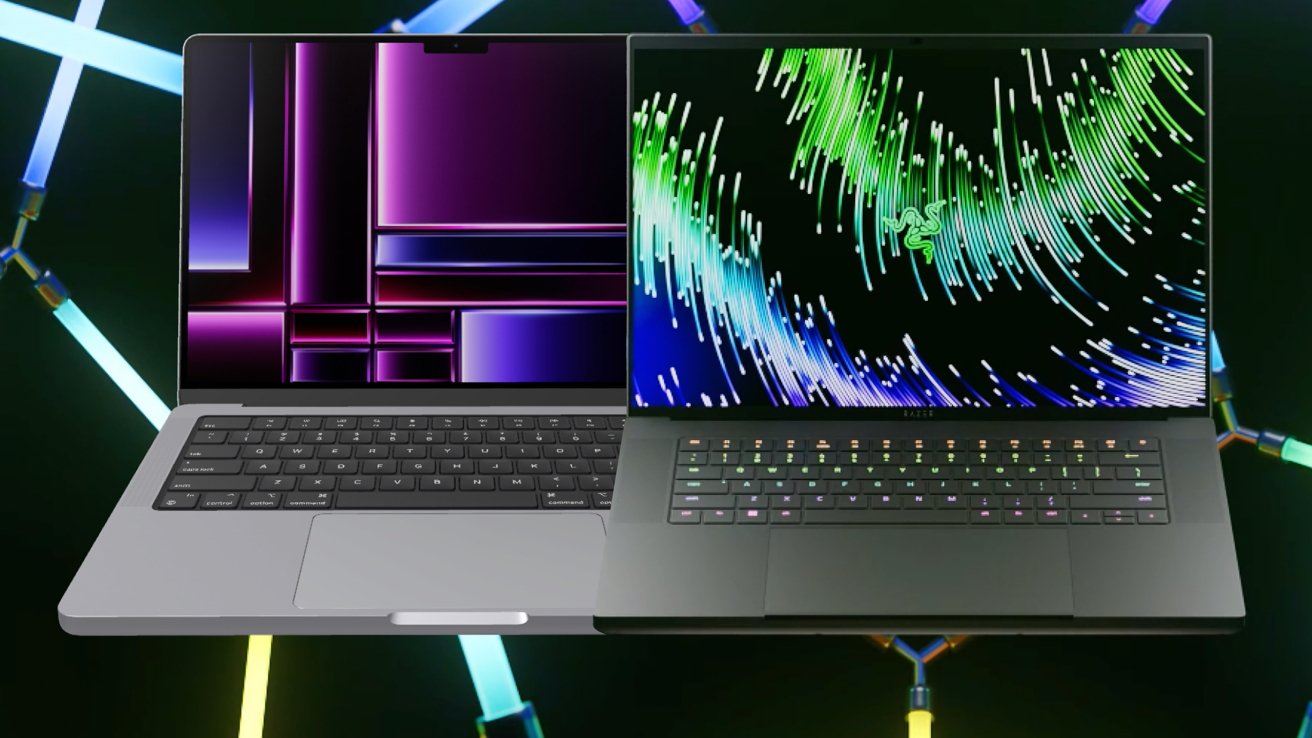
The landscape of high-performance laptops is a battleground of philosophies. On one side, Apple’s meticulously engineered MacBook Pro, driven by its bespoke Apple Silicon, promises unparalleled efficiency, integrated power, and a seamless ecosystem. On the other, the Razer Blade 16 stands as a testament to raw, unadulterated power, housing the latest x86 CPUs and NVIDIA’s discrete GPUs, all within a sleek, gamer-centric chassis. As we look towards the horizon, the anticipated MacBook Pro with the M4 chip will undoubtedly push Apple Silicon’s capabilities further, setting the stage for an intriguing comparison against the formidable Razer Blade 16.
This article aims to dissect the performance capabilities of these two titans, exploring their strengths, weaknesses, and ideal use cases across various demanding workloads. While the M4 chip is currently speculative, our analysis will extrapolate from the impressive trajectory of Apple’s M-series chips (M1, M2, M3) and apply these trends to what an M4-powered MacBook Pro would likely offer, pitting it against the cutting-edge hardware found in the latest Razer Blade 16 models.
Contender Profiles: Two Paths to Power
Before diving into the granular details of performance, let’s briefly understand the core identity of each machine.
MacBook Pro M4 (Anticipated): The Apex of Apple Silicon
The MacBook Pro, especially with an M4 chip, represents Apple’s vision for the future of computing. It’s an integrated system where hardware and software are designed in perfect harmony. The M-series chips are System-on-a-Chip (SoC) designs, meaning the CPU, GPU, Neural Engine, unified memory, and various controllers are all on a single die, optimized for power efficiency and high-bandwidth communication. The M4 would be expected to further refine this formula, offering more cores, higher clock speeds, improved ray tracing capabilities, and even greater neural processing power for AI workloads, all while maintaining Apple’s signature efficiency and quiet operation. Its target audience primarily comprises creative professionals – video editors, graphic designers, music producers, and software developers – who demand sustained performance, exceptional battery life, and a robust, secure operating system.
Razer Blade 16: The Enthusiast’s Powerhouse
The Razer Blade 16, conversely, is a monument to brute force. It packs the most potent components available in the PC world: top-tier Intel or AMD x86 processors and the latest NVIDIA GeForce RTX discrete GPUs. Designed for both hardcore gamers and creative professionals who need uncompromising graphical horsepower, the Blade 16 prioritizes raw frame rates, complex 3D rendering, and the ability to run any demanding application or game at maximum settings. Its thermal design, while often robust, is necessarily more aggressive, featuring advanced vapor chambers and multiple fans to dissipate the significant heat generated by its powerful components. The Blade 16 runs on Windows, offering unparalleled software compatibility and a vast ecosystem of peripherals and customization options.
The Head-to-Head Performance Battleground
Our comparison will span critical performance metrics, from raw processing power to real-world application efficiency.
1. CPU Performance: Efficiency vs. Raw Core Count
MacBook Pro M4 (Expected):
The M4 chip would build upon the ARM architecture, known for its outstanding performance-per-watt. We would anticipate an M4 Pro, Max, and Ultra, each scaling in core count (performance and efficiency cores) and GPU capabilities. The M4’s CPU is likely to feature an even more refined microarchitecture, potentially offering higher single-core performance than its predecessors, crucial for tasks that don’t scale well across multiple cores. Its multi-core performance, driven by a higher number of performance cores and improved inter-core communication, would continue to excel in heavily threaded workloads like video encoding (especially ProRes), code compilation, and scientific simulations. The unified memory architecture also plays a significant role here, providing extremely low-latency access to data for the CPU.
- Strengths: Exceptional performance-per-watt, leading to cooler and quieter operation. Strong single-core performance. Highly optimized for macOS and Apple’s Pro applications. Unified memory reduces bottlenecks.
- Likely Benchmarks: Expect Geekbench 6 single-core scores to be competitive with, or even surpass, the highest-end x86 desktop CPUs. Multi-core scores would be in the upper echelons, especially considering its thermal envelope. Cinebench R23/24 scores would demonstrate impressive sustained performance due to superior thermal management.
Razer Blade 16 (Intel Core i9/AMD Ryzen 9):
The Razer Blade 16 typically features the latest and greatest Intel Core i9 or AMD Ryzen 9 processors. These x86 chips boast a hybrid architecture with a high number of performance (P-cores) and efficiency (E-cores) cores, often exceeding 20 cores in total. These CPUs are designed for maximum burst performance, capable of achieving very high clock speeds for short durations, which is excellent for gaming and quick compile times. While their performance-per-watt is lower than Apple Silicon, their sheer core count and high clock speeds deliver immense raw power.
- Strengths: Extremely high multi-core performance for demanding tasks. Broad software compatibility with legacy applications. Excellent for tasks that can leverage many threads.
- Likely Benchmarks: Top-tier Geekbench 6 and Cinebench R23/24 scores, particularly in multi-core, often pushing the limits of what a laptop cooling system can sustain. However, sustained workloads can lead to thermal throttling, reducing their peak performance over time compared to the M4’s more consistent delivery.
2. GPU Performance: Integrated Efficiency vs. Discrete Dominance
MacBook Pro M4 (Expected):
The M4’s integrated GPU will be a significant leap from previous generations. Apple has consistently improved its GPU performance, adding features like hardware-accelerated ray tracing (introduced with M3) and dynamic caching. The M4 GPU would be expected to offer more cores, higher clock speeds, and further refinements to its architecture, making it even more capable for professional creative tasks. Its advantage lies in its tight integration with unified memory, allowing the CPU and GPU to share the same high-bandwidth memory pool, which is incredibly efficient for tasks like video editing, color grading, and certain types of 3D rendering where data needs to be rapidly accessed by both components. For applications optimized for Metal API, the M4’s GPU will deliver exceptional performance.
- Strengths: Outstanding performance-per-watt. Excellent for Metal-optimized applications (Final Cut Pro, Logic Pro, DaVinci Resolve). Hardware-accelerated video encoders/decoders (ProRes, H.264/H.265). Ray tracing capabilities improving with each generation. Unified memory benefits.
- Likely Benchmarks: In specific professional benchmarks (e.g., PugetBench for Premiere Pro/DaVinci Resolve, Blender Metal renderer), the M4 would show highly competitive, if not superior, results, especially in video-centric tasks. Gaming performance, while improving, would still lag behind a top-tier discrete GPU in raw FPS for demanding titles, though it would handle most games at playable frame rates, especially with MetalFX upscaling.
Razer Blade 16 (NVIDIA GeForce RTX 4080/4090 Laptop):
This is where the Razer Blade 16 truly shines. Equipped with a top-of-the-line NVIDIA GeForce RTX 4080 or even the flagship RTX 4090 Laptop GPU, the Blade 16 boasts an order of magnitude more raw graphical horsepower than any integrated GPU. These discrete GPUs feature thousands of CUDA cores, Tensor Cores for AI acceleration (DLSS), and RT Cores for dedicated ray tracing. This translates to superior performance in:
- Gaming: Highest frame rates, resolutions, and graphics settings, with advanced features like ray tracing and DLSS enabled.
- 3D Rendering: Significantly faster render times in applications like Blender, Octane Render, V-Ray, and Cinema 4D (especially with CUDA/OptiX acceleration).
- AI/Machine Learning: Far greater compute power for training models, data science, and AI development due to dedicated Tensor Cores and CUDA.
- Video Editing (GPU-accelerated): While the M4 excels in ProRes, the RTX GPUs can offer faster real-time effects and complex rendering in applications like Adobe Premiere Pro, DaVinci Resolve (especially with Studio Drivers), and often provide more flexibility with various codecs.
- Strengths: Unmatched raw graphical performance. Superior gaming experience. Dominant in 3D rendering and heavy GPGPU compute. Advanced features like DLSS and dedicated RT cores.
- Likely Benchmarks: Demolishes the M4 in synthetic gaming benchmarks (3DMark Time Spy/Port Royal) and real-world game FPS. Significantly faster in GPU-accelerated rendering benchmarks (Blender Cycles CUDA/OptiX).
3. Memory & Storage: Unified vs. Discrete, Speed vs. Upgradability
MacBook Pro M4 (Expected):
Apple’s unified memory architecture is a cornerstone of its performance. The M4 would likely offer configurations up to 128GB (or more for an M4 Ultra) of high-bandwidth, low-latency unified memory. Because the CPU, GPU, and Neural Engine share the same memory pool, data transfer is incredibly efficient, eliminating the need for data duplication between separate CPU and GPU memory. This is a massive advantage for large datasets in creative applications. The SSDs are also among the fastest in the industry, offering sequential read/write speeds that minimize load times and accelerate file transfers.
- Strengths: Extremely low-latency, high-bandwidth unified memory. Prevents data duplication. Industry-leading SSD speeds.
- Considerations: Memory is not user-upgradable. Max capacity, while high, is fixed at purchase.
Razer Blade 16:
The Razer Blade 16 typically uses standard DDR5 RAM, configurable up to 64GB (sometimes 96GB or 128GB depending on configuration and generation) and usually user-upgradable. While DDR5 offers high bandwidth, it’s not "unified" in the same way as Apple Silicon, meaning the discrete GPU has its own dedicated VRAM (up to 16GB for an RTX 4090). For tasks that heavily rely on large textures or complex 3D scenes, having dedicated VRAM can be beneficial. The Blade 16 also features fast PCIe Gen 4 or Gen 5 NVMe SSDs, often with two M.2 slots for user expansion, offering competitive speeds though perhaps not always matching Apple’s absolute top-tier.
- Strengths: User-upgradable RAM (usually). Dedicated VRAM for the GPU. Multiple M.2 slots for storage expansion.
- Considerations: Higher latency between CPU and GPU memory. Less efficient data transfer compared to unified memory for shared tasks.
4. Display: Visual Fidelity for Different Purposes
Both laptops offer stunning displays, but with different priorities.
MacBook Pro M4 (Expected):
Apple’s Liquid Retina XDR displays (Mini-LED) are renowned for their exceptional color accuracy, high brightness (up to 1600 nits peak for HDR content), incredible contrast ratios (1,000,000:1), and ProMotion adaptive refresh rates (up to 120Hz). They are color-calibrated at the factory, making them ideal for professional creative work where color fidelity is paramount.
- Strengths: Industry-leading color accuracy, contrast, and HDR performance. Perfect for video editing, photo retouching, and graphic design.
- Considerations: While 120Hz is great, it’s not the ultra-high refresh rate of some gaming displays.
Razer Blade 16:
The Blade 16 often offers a choice of high-resolution, high-refresh-rate displays. Options include QHD+ (2560×1600) or UHD+ (3840×2400) panels with refresh rates up to 240Hz, or even dual-mode displays that switch between a high-resolution, standard refresh rate for creativity and a lower-resolution, ultra-high refresh rate for competitive gaming. Some models also offer OLED options for infinite contrast. While color accuracy is generally excellent, it’s often geared towards vibrant gaming visuals.
- Strengths: Ultra-high refresh rates (up to 240Hz) for buttery-smooth gaming. High resolution options. Excellent for competitive gaming and immersive media consumption.
- Considerations: While good, factory calibration might not be as precise as Apple’s for color-critical work. Higher refresh rates consume more battery.
5. Thermal Management & Sustained Performance
This is a critical differentiator.
MacBook Pro M4 (Expected):
Apple Silicon’s efficiency means less heat generation. The MacBook Pro often runs silently or with minimal fan noise, even under significant load. Its thermal design prioritizes sustained, consistent performance without aggressive throttling, largely due to the low power draw of the M-series chips. While it might not hit the peak burst performance of an x86 chip with a dedicated GPU, it maintains a remarkably high level of performance over long durations, which is crucial for professional workflows like long video renders or large code compilations.
- Strengths: Exceptionally quiet operation. Excellent sustained performance. Minimal thermal throttling. Cool to the touch.
- Considerations: Fanless or low-fan designs can eventually lead to throttling if the workload is extremely GPU-intensive and prolonged, though less aggressively than most Windows laptops.
Razer Blade 16:
With an Intel Core i9/AMD Ryzen 9 and an RTX 4090, the Blade 16 generates substantial heat. Razer employs advanced cooling solutions, including vapor chambers and multiple high-RPM fans, to manage this. When pushed, the Blade 16 will get warm, and the fans will spin up to audible levels, sometimes quite loudly. While it can deliver incredible peak performance, prolonged, intensive tasks (e.g., hours of 3D rendering or gaming) can lead to some degree of thermal throttling as the system tries to prevent overheating, potentially reducing clock speeds from their absolute maximums.
- Strengths: Aggressive cooling allows for maximum peak performance from powerful components.
- Considerations: Can become very noisy under load. Generates significant heat. Potential for thermal throttling during extended heavy use.
6. Battery Life & Efficiency
MacBook Pro M4 (Expected):
This is arguably Apple Silicon’s most significant advantage. The M4 chip, building on the M3’s efficiency, would be expected to deliver truly exceptional battery life – potentially 18-22 hours or more for general usage. This is thanks to the ARM architecture’s inherent power efficiency, the tight integration of all components, and macOS’s superb power management. Professionals can work a full day or longer on battery, even with demanding applications.
- Strengths: Industry-leading battery life, often double or triple that of its Windows counterparts. Allows for full-day mobile productivity.
- Considerations: Performance might be slightly reduced on battery compared to plugged in for extremely demanding tasks, though less so than Windows laptops.
Razer Blade 16:
Despite advancements in power efficiency for x86 CPUs and NVIDIA GPUs, the Razer Blade 16’s battery life is a compromise for its immense power. Expect around 4-7 hours of general usage, significantly less under heavy load (gaming or rendering). The high-resolution, high-refresh-rate displays and powerful components are inherently power-hungry.
- Strengths: Can still offer a few hours of unplugged work.
- Considerations: Significantly shorter battery life compared to the MacBook Pro. Requires frequent charging, especially for gaming or creative work on the go.
7. Software Ecosystem & Optimization
MacBook Pro M4 (Expected):
macOS offers a polished, intuitive user experience. Apple’s own Pro applications (Final Cut Pro, Logic Pro, Xcode) are meticulously optimized for Apple Silicon, offering unparalleled performance. Other major creative suites like Adobe Creative Cloud (Photoshop, Premiere Pro) and DaVinci Resolve are also highly optimized. The Metal API provides a low-level interface for developers, allowing for efficient use of the integrated GPU.
- Strengths: Excellent software optimization, especially for Apple’s first-party apps. Strong ecosystem for creative professionals. Robust security and privacy features.
- Considerations: Limited gaming library compared to Windows. Some specialized engineering or niche software might not be available or fully optimized.
Razer Blade 16:
Windows is the undisputed king of software compatibility. It runs virtually every piece of software imaginable, from business applications to scientific tools, engineering CAD, and the vast majority of PC games. NVIDIA’s Studio Drivers also provide excellent optimization for creative applications, leveraging the discrete GPU’s power. DirectX and Vulkan APIs are standard for gaming, offering broad support.
- Strengths: Unrivaled software compatibility. Vast gaming library. Excellent for specialized engineering, scientific, and business applications.
- Considerations: Windows can be more prone to bloatware. Less polished out-of-the-box user experience than macOS for some. Driver management can be more complex.
8. Connectivity & I/O
Both machines offer modern connectivity options.
MacBook Pro M4 (Expected):
Typically features multiple Thunderbolt 4 ports, HDMI, an SD card slot, and a MagSafe charging port. Thunderbolt 4 offers immense bandwidth for external displays, eGPUs (though less needed now), and high-speed storage.
Razer Blade 16:
Offers a comprehensive array of ports, often including multiple Thunderbolt 4/USB-C ports, several USB-A ports, HDMI 2.1, Ethernet, and an SD card slot. This versatility caters to a broader range of peripherals without needing adapters.
Target Audiences and Use Cases: Who Wins for Whom?
Choose the MacBook Pro M4 if you are:
- A Video Editor: Especially if you work with ProRes. Final Cut Pro on Apple Silicon is a dream. DaVinci Resolve also runs incredibly well.
- A Music Producer: Logic Pro is highly optimized, and the silent operation is invaluable for recording.
- A Graphic Designer/Illustrator: Excellent color-accurate display, smooth performance in Adobe apps, and great battery life for working on the go.
- A Software Developer: Especially for iOS/macOS development (Xcode). Excellent for general development, with long battery life.
- A General Professional: Who needs a powerful, reliable, silent, and long-lasting laptop for productivity, presentations, and light creative tasks.
- Prioritizing: Efficiency, battery life, quiet operation, and a tightly integrated ecosystem.
Choose the Razer Blade 16 if you are:
- A Hardcore Gamer: Demanding the highest frame rates, resolutions, and graphics settings in the latest AAA titles, with features like ray tracing and DLSS.
- A 3D Artist/Animator: Requiring extreme GPU power for rendering complex scenes quickly in Blender, Cinema 4D, Maya, etc., especially with CUDA/OptiX acceleration.
- An Engineer/Architect: Running CAD software, simulation tools, or other specialized applications that heavily rely on discrete GPU power and Windows compatibility.
- An AI/Machine Learning Researcher: Needing dedicated Tensor Cores and CUDA for training models and heavy computation.
- A Power User: Who needs maximum raw performance and the flexibility of the Windows ecosystem for a diverse range of demanding tasks.
- Prioritizing: Raw graphical power, maximum gaming performance, broad software compatibility, and user-upgradability.
Price & Value Proposition
Both machines occupy the premium segment of the laptop market, often starting at well over $2,500 and easily exceeding $4,000 for top-tier configurations.
- MacBook Pro M4 (Expected): Offers exceptional long-term value due to its robust build quality, excellent software support, and sustained performance over many years. Its efficiency often translates to lower running costs (less power consumption). The tightly integrated hardware and software often lead to fewer compatibility issues and a smoother user experience.
- Razer Blade 16: Delivers immense power for its price, especially considering the cutting-edge discrete GPU. Its value lies in offering desktop-class performance in a portable form factor, catering to specific professional and gaming needs that demand that level of raw power. However, its faster component cycles in the PC world might mean it feels "older" sooner, and its battery life is a trade-off.
Conclusion: No Single Victor, Only the Right Choice
The comparison between the anticipated MacBook Pro M4 and the Razer Blade 16 is not about declaring a single "winner," but rather identifying which machine reigns supreme in its specific domain. They represent two fundamentally different approaches to high-performance computing, each with distinct advantages and compromises.
The MacBook Pro M4 will likely continue to be the paragon of efficiency, integrated performance, and silent operation. It’s the ideal choice for creative professionals who value seamless workflows, exceptional battery life, and a refined user experience within the Apple ecosystem. Its prowess in video editing, music production, and general professional work is unparalleled, especially for tasks that leverage its unified memory and highly optimized software.
The Razer Blade 16, on the other hand, is the quintessential powerhouse for those who crave unadulterated graphical performance. For hardcore gamers, 3D artists, engineers, and anyone needing the raw compute of a top-tier discrete GPU and the boundless compatibility of Windows, the Blade 16 is an undeniable force. It sacrifices some battery life and quiet operation for the ability to crush any task thrown its way, from ray-traced gaming to complex scientific simulations.
Ultimately, the choice hinges entirely on your specific needs, primary workloads, and preferred operating system. Both the MacBook Pro M4 and the Razer Blade 16 are engineering marvels, pushing the boundaries of what’s possible in a portable form factor. Your ideal laptop is the one that empowers you to do your best work or enjoy your favorite entertainment without compromise, tailored to your unique demands.